 Save Pin
 There's something almost meditative about butternut squash season. One October afternoon, I was wandering through the farmers market when the smell of roasted squash from a nearby vendor's sample stand hit me, and suddenly an entire bowl of soup materialized in my mind. That evening, I peeled my first squash, nervously working around its thick skin, and by dinner I'd created something so silky and warm that my partner asked for seconds before finishing the first bowl.
I made this for my in-laws last Thanksgiving when I showed up with only a borrowed pot and stubborn determination. Watching my mother-in-law taste it and actually pause, then ask me to write down the recipe, was the moment I realized this wasn't just lunch—it was something worth repeating.
Ingredients
- Butternut squash (1 large, about 2.5 lbs): Roasting brings out its natural sweetness far better than boiling; the caramelization at the edges adds depth.
- Yellow onion (1 medium, chopped): The base that holds everything together—don't skip the sautéing, it transforms the flavor entirely.
- Garlic (2 cloves, minced): A whisper rather than a shout; just enough to make you wonder what you're tasting.
- Vegetable broth (4 cups): Use the best quality you can find, because it's essentially half the soup.
- Olive oil (2 tbsp total): Split between roasting and sautéing for even distribution of flavor.
- Sea salt (1 tsp): Salt drawn out the squash's sweetness and rounds out the spices.
- Ground black pepper (1/4 tsp): A touch of bite against all that richness.
- Ground nutmeg (1/2 tsp): The secret that makes people ask what's in it; warmth without being obvious.
- Dried sage (1 tsp, or 1 tbsp fresh): This is the herb that makes butternut squash soup taste like itself—non-negotiable.
- Heavy cream or coconut milk (1/4 cup, optional): For swirling; use whichever fits your preference, both are equally beautiful.
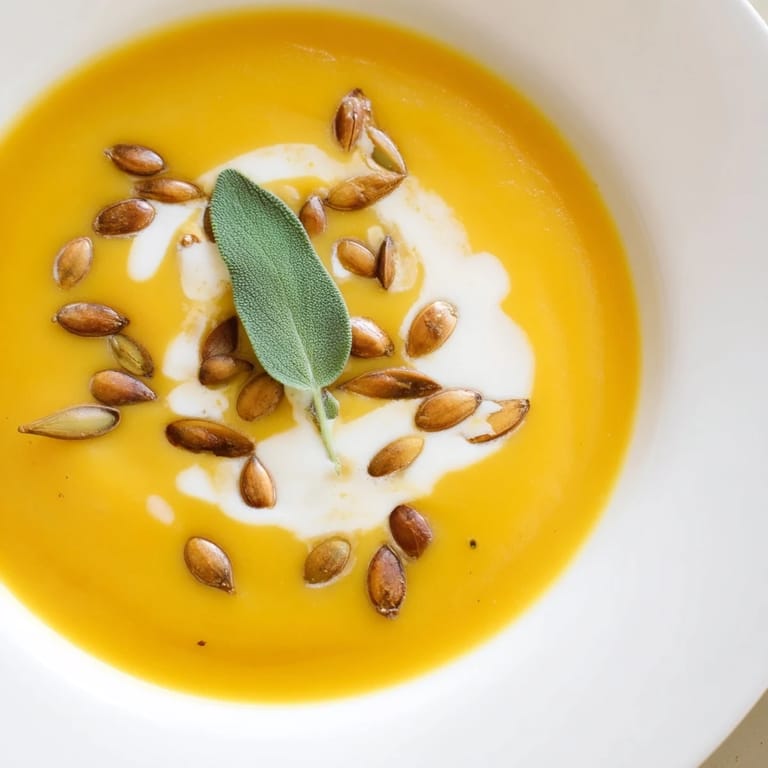
- Roasted pumpkin seeds and fresh sage leaves: Garnish that adds texture and a final reminder of what you're eating.
Tired of Takeout? 🥡
Get 10 meals you can make faster than delivery arrives. Seriously.
One email. No spam. Unsubscribe anytime.
Instructions
- Prep your squash:
- Preheat your oven to 400°F. While it heats, toss your cubed squash with a tablespoon of olive oil, a pinch of salt, and a grind of pepper.
- Get it golden:
- Spread the squash across a parchment-lined baking sheet in a single layer and roast for 30 to 35 minutes, stirring halfway through. You'll know it's ready when the edges turn amber and a fork slides through with no resistance.
- Build your base:
- While the squash roasts, heat the remaining tablespoon of oil in a large pot over medium heat. Sauté the onion until it softens and turns translucent, about 4 to 5 minutes, then add the garlic and cook just long enough to smell it.
- Bring it together:
- Add the roasted squash to the pot with the onions, stir in the sage and nutmeg, then pour in the broth. Bring everything to a boil, then lower the heat and let it simmer gently for about 10 minutes.
- Blend into silk:
- Turn off the heat and use an immersion blender to purée the soup until it's completely smooth. If you don't have an immersion blender, carefully blend it in batches in a countertop blender.
- Taste and adjust:
- Give it a try and add more salt or pepper if it needs it—trust your mouth here, not the recipe.
- Serve with warmth:
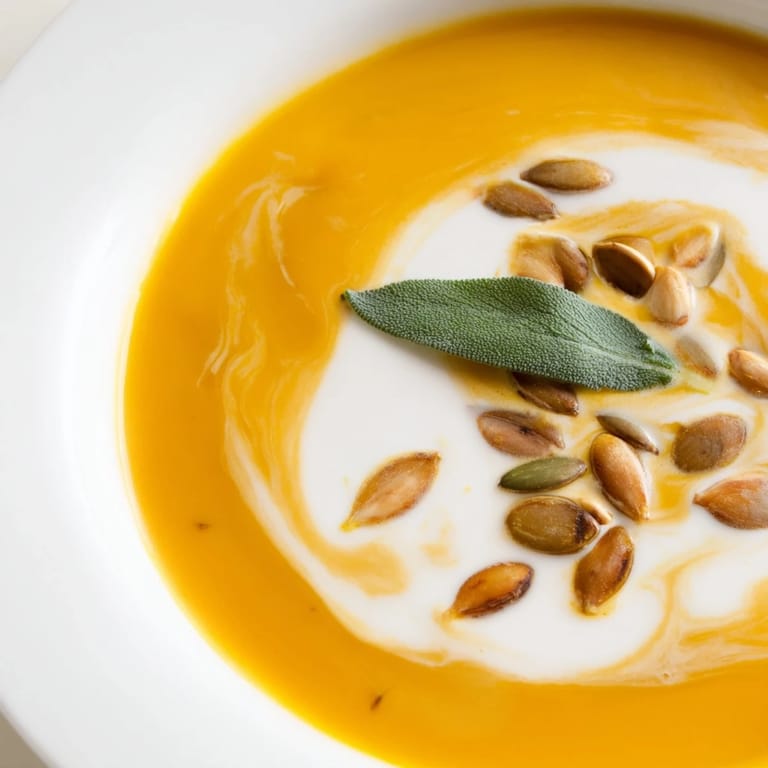
- Ladle the soup into bowls and swirl in a bit of cream or coconut milk if you're using it, then scatter pumpkin seeds and fresh sage on top.
 Save Pin
 My roommate in grad school was going through a rough patch, and I showed up at her apartment with a pot of this soup and some bread. She cried a little, and not because it was sad, but because someone had thought to bring her something warm.
Why Roasting Changes Everything
The difference between a roasted and boiled butternut squash is the difference between a memory and a fact. Roasting concentrates the sugars, deepens the color, and creates those crispy caramelized edges that boiling can never achieve. When the squash goes into the blender, it becomes silk instead of paste, and the flavor shifts from merely sweet to genuinely complex.
The Spice Balance
Nutmeg and sage are partners in this soup, not competitors. The nutmeg provides warmth and roundness while the sage adds an herbaceous backbone that keeps the sweetness from becoming cloying. It's easy to overthink the amounts, but the measurements here are calibrated to let each flavor exist without drowning out the squash itself.
Serving and Storage
This soup is happiest served immediately, while the steam rises and the flavors are at their brightest. It reheats beautifully and will keep in the refrigerator for about four days, though the roasted pumpkin seeds should go on fresh each time. It also freezes well for up to three months if you want to make a double batch and save it for busier weeks.
- Add the cream or coconut milk just before serving for the best visual swirl and texture.
- If the soup thickens too much over time, thin it with a splash of broth or water when reheating.
- Toast your own pumpkin seeds if you have the time; store-bought work fine, but homemade adds a personal touch that your guests will notice.
 Save Pin
 Butternut squash soup is one of those dishes that feels fancy enough to serve to guests but simple enough that you can make it on a Tuesday night for yourself. It reminds you that comfort food doesn't need to be complicated to be meaningful.
Questions & Answers
- → How do I roast butternut squash evenly?
Cut the squash into uniform cubes and toss with oil and salt. Spread in a single layer on a baking sheet to ensure even caramelization.
- → Can I use fresh sage instead of dried?
Yes, fresh sage adds a vibrant herbal note. Use about three times the amount of fresh leaves compared to dried for balanced flavor.
- → What can I substitute for heavy cream?
Coconut milk is a great dairy-free alternative, lending creaminess while maintaining a subtle richness.
- → How can I adjust the spice level?
Add a pinch of cayenne pepper or black pepper to introduce mild heat without overpowering the flavors.
- → What is the best way to blend the soup smoothly?
Use an immersion blender directly in the pot or blend in batches in a countertop blender until silky smooth.