 Save Pin
 There's something magical about the first farmers market trip in spring, when bundles of bright green asparagus start appearing at the stalls. I picked up a bunch one afternoon, still dewy from the morning, and decided to make soup instead of the usual roasted side dish. The kitchen filled with this clean, grassy smell as everything simmered together, and I realized I'd stumbled onto something quietly elegant—nothing fussy, just pure vegetable goodness transformed into silk.
I made this for my neighbor one chilly April evening when she'd mentioned craving something healthy but comforting. She closed her eyes after the first spoonful and said it tasted like someone bottled spring itself. That moment stuck with me—it's rare when something this straightforward becomes memorable just by letting the ingredients speak for themselves.
Ingredients
- Fresh green asparagus (500 g): Look for firm stalks with tight tips; the greener and fresher they look, the brighter your soup will taste.
- Leek: Use only the white and light green parts for a mild, sweet onion flavor that won't overpower the delicate asparagus.
- Potato (1 medium): This isn't just filler—it adds body and helps create that silky texture without needing excess cream.
- Vegetable broth (1 L): Good quality matters here; a thin or salty broth will show in every spoonful.
- Heavy cream (150 ml): The soul of this soup, stirred in at the end to create a luxurious finish without drowning out the asparagus flavor.
- Unsalted butter (2 tbsp): Toasts the vegetables gently and carries flavors in a way oil can't quite match.
- Lemon juice (1 tbsp): This is crucial—it wakes everything up and makes the green taste even greener.
- Nutmeg: Just a whisper, almost invisible, but it adds an unexpected warmth that makes people wonder what that lovely note is.
Tired of Takeout? 🥡
Get 10 meals you can make faster than delivery arrives. Seriously.
One email. No spam. Unsubscribe anytime.
Instructions
- Build your flavor base:
- Melt butter over medium heat and add the chopped onion, sliced leek, and diced potato. Let them soften for about 4 to 5 minutes, stirring occasionally, until they smell sweet and have lost their raw edge but haven't started to brown.
- Add the asparagus stalks:
- Chop your asparagus into pieces, remembering to save those pretty tips for garnish. Add the stalks to the pan and cook for another 2 minutes until they begin to soften and release that bright green smell.
- Simmer until tender:
- Pour in the vegetable broth, turn up the heat until it bubbles, then lower to a gentle simmer. Let everything cook together for about 15 minutes until the vegetables break apart easily when you press them with a spoon.
- Blanch the reserved tips:
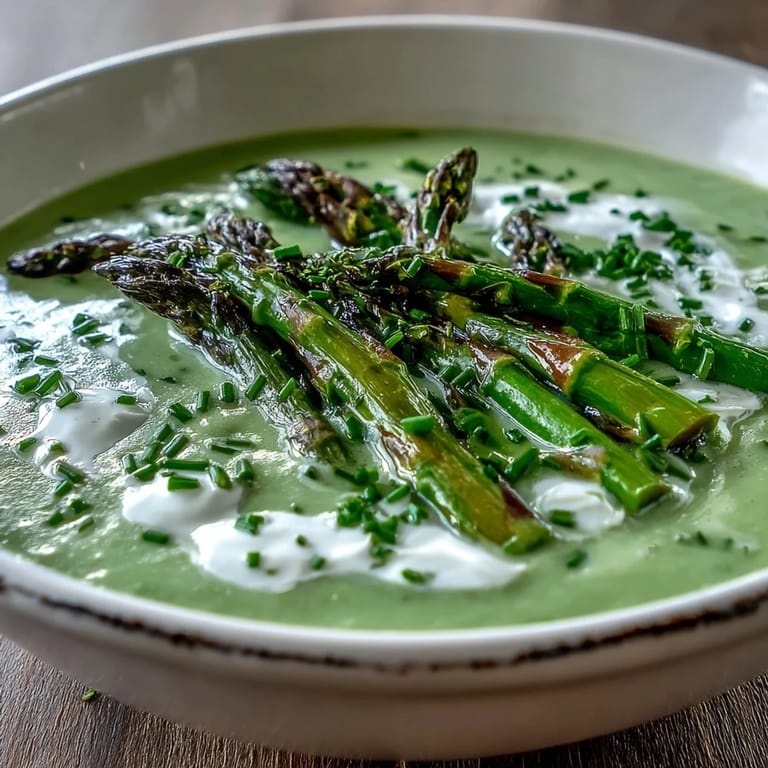
- While the soup simmers, bring a small pot of salted water to a boil and add those asparagus tips you set aside. They need just 1 to 2 minutes—you want them tender but still bright green and holding their shape for garnish.
- Puree to silky perfection:
- Using an immersion blender directly in the pot, blend until the soup is completely smooth. If you're using a countertop blender, work in batches and be careful with the heat.
- Finish with cream and seasoning:
- Stir in the heavy cream and bring the soup back to a gentle simmer. Taste it, then season with salt and pepper—and add that pinch of nutmeg if you like warmth. Finish with lemon juice, which should make the whole thing come alive on your tongue.
- Serve with grace:
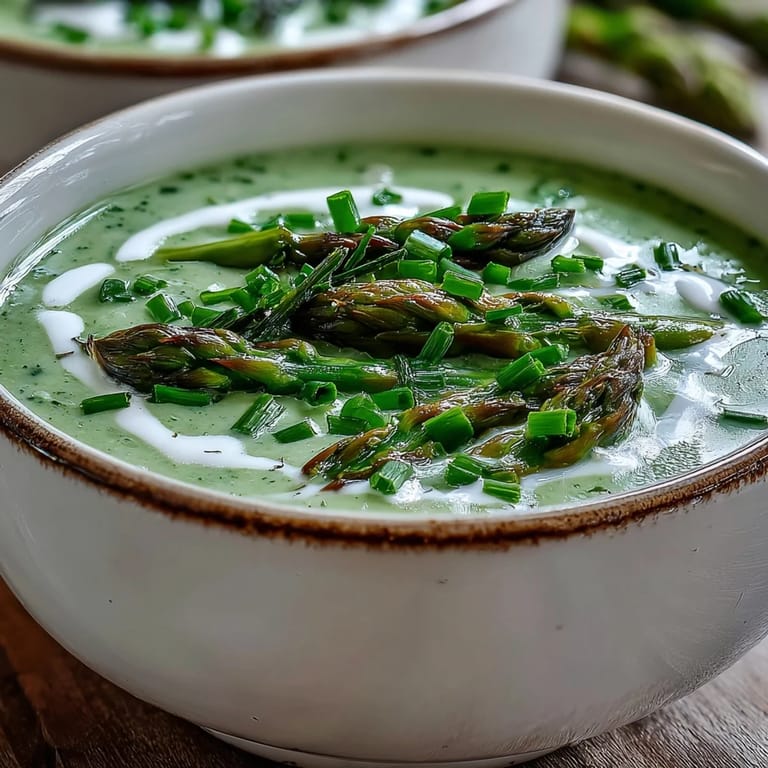
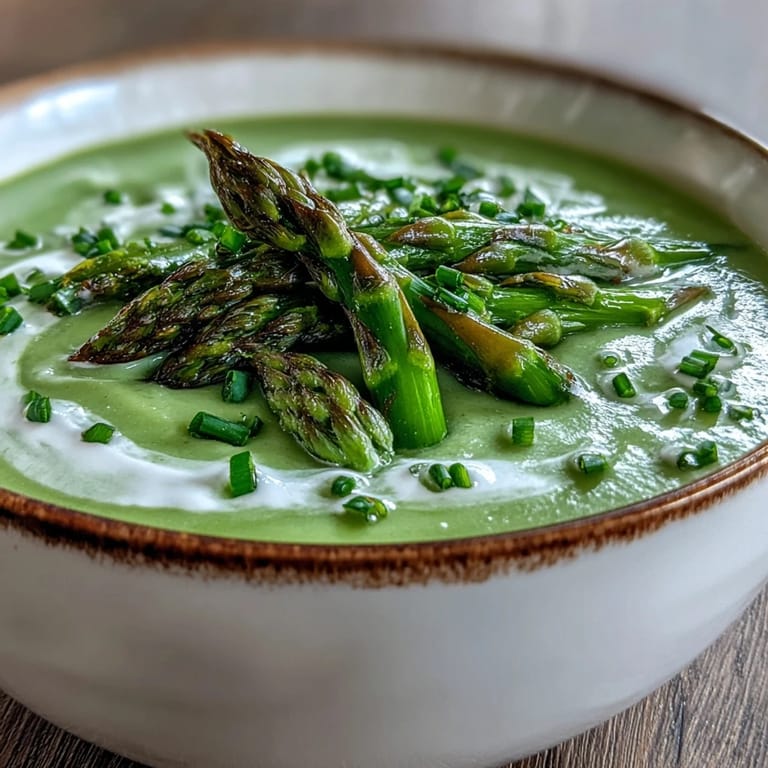
- Ladle into bowls and crown each one with a few blanched asparagus tips and a scatter of fresh chives or parsley.
 Save Pin
 My daughter asked for seconds the first time I made this, which never happens with her and soup. She said it didn't taste like anything she'd had before—fancy somehow, but also honest. That's when I understood this recipe isn't about being complicated; it's about respecting what asparagus already is and just helping it shine.
Why Asparagus Deserves More Than the Side Plate
Asparagus gets roasted and grilled and forgotten most of the year, but in spring when it's sweet and tender, it deserves center stage. Turning it into soup lets you taste every whisper of that delicate flavor without any distraction. The broth becomes infused with green essence, and by the time you blend it all together, you've created something that tastes far more complex than what you put in.
The Cream Question
Heavy cream gets a bad reputation, but in soups like this, it's not about richness overload—it's about texture and balance. The cream softens the earthy notes from the potato and asparagus stalks, creating a velvety body that makes every spoonful feel almost luxurious. You could use less if you prefer it lighter, or skip it entirely for a vegan version, but those 150 milliliters are what transform this from vegetable broth with blended vegetables into something that feels special.
Timing and Temperature Tips
This soup respects a gentle touch throughout. Start with medium heat for the vegetables so they don't fry, keep the simmer low and lazy so flavors blend instead of burning, and bring it back just to a gentle bubble after adding cream—boiling will make it break or separate. Timing matters here, and it's all about patience rather than heat.
- Don't rush the initial sauté; those 4 to 5 minutes build the foundation everything else rests on.
- Keep the immersion blender running until you can't feel any grain between your teeth when you taste a tiny spoonful.
- Taste before serving and adjust lemon juice and seasoning, because every pot of vegetables tastes slightly different.
 Save Pin
 This is the kind of soup that feels like someone really cared about your dinner, even if you're the one making it for yourself. Serve it warm in shallow bowls with crusty bread, or pair it with a crisp white wine and you've got an elegant first course that took almost no time at all.
Questions & Answers
- → Can I freeze this asparagus soup?
Yes, you can freeze this soup for up to 3 months. Allow it to cool completely before transferring to airtight containers. Thaw overnight in the refrigerator and reheat gently over low heat, stirring occasionally. Note that the texture may be slightly thinner after freezing, so you might want to add a splash of fresh cream when reheating.
- → How do I know when the asparagus is properly cooked?
The asparagus stalks should be tender enough to pierce easily with a fork after simmering for 15 minutes. Avoid overcooking, as this can cause the vibrant green color to fade and develop an unpleasant flavor. The reserved tips are ready when they turn bright green and are just tender after 1-2 minutes of blanching.
- → What's the purpose of the potato in this soup?
The potato serves as a natural thickener that helps create the silky smooth texture without needing flour or other starches. As it breaks down during cooking and blending, it adds body to the soup while remaining neutral in flavor, allowing the asparagus taste to shine through.
- → Can I use frozen asparagus instead of fresh?
While fresh asparagus provides the best flavor and texture, frozen asparagus can work in a pinch. Thaw it completely before using and skip the initial 2-minute sauté step. Be aware that frozen asparagus may yield a slightly softer final texture and less vibrant color compared to fresh stalks.
- → Why add lemon juice at the end?
The lemon juice serves to brighten the flavors and balance the richness of the cream. Acidity helps awaken the palate and makes the asparagus taste fresher and more vibrant. Add it gradually and taste as you go, as too much can overpower the delicate flavor profile.
- → What other herbs work well as garnish?
Beyond chives and parsley, try fresh tarragon for an anise-like note that pairs beautifully with asparagus, or dill for a fresh, spring-like flavor. Mint leaves can add unexpected brightness, while a drizzle of good quality olive oil and cracked black pepper creates a simple but elegant finish.