 Save Pin
 The first time I made zaatar bread, my kitchen filled with this warm, herbaceous aroma that made me pause mid-knead and just breathe it in. My neighbor—who grew up in Beirut—had handed me a small bag of zaatar from her pantry with the casual confidence of someone who'd eaten this bread a hundred times. I was nervous about the yeast, about whether I'd mess up the timing, but she'd laughed and said, "It's just bread with a fancy hat." Watching those rounds puff up in the oven and turn golden felt less like cooking and more like being let in on a secret.
Years later, I made this for a small dinner party on a Sunday evening when everything had gone slightly wrong—I'd burned the appetizer, spilled wine on my shirt, and arrived at the table convinced the night was a disaster. Then I pulled these breads from the oven, broke one open at the table, and watched everyone's faces light up. My friend Maria tore off a piece and closed her eyes like she was remembering something important. That moment taught me that sometimes a simple, honest thing—warm bread, good oil, the right spices—says more than anything you could have planned.
Ingredients
- All-purpose flour (2 cups/250 g): The foundation of your dough—use good quality flour if you have it, though standard grocery store flour works perfectly fine.
- Instant dry yeast (1 teaspoon): This is what gives you rise and aroma; keep yours in an airtight container so it stays alive and active.
- Sugar (1 teaspoon): A tiny bit of sweetness to feed the yeast and help it wake up.
- Salt (3/4 teaspoon): Don't skip this—it anchors all the other flavors and strengthens the dough structure.
- Olive oil (2 tablespoons for dough, plus 1/3 cup for topping): Use your best olive oil for the topping; the difference is noticeable and worth it.
- Warm water (2/3 cup/160 ml): Warm but not hot—around body temperature is perfect, or test it on your wrist like you're checking a baby's bathwater.
- Zaatar spice blend (1/4 cup/30 g): This Middle Eastern mix of thyme, sumac, and sesame is the soul of the bread; buy it from a good spice supplier or Middle Eastern market if you can.
- Toasted sesame seeds (2 tablespoons): Buy them already toasted to save yourself a step, or toast raw ones in a dry pan for two minutes—the smell tells you when they're done.
Tired of Takeout? 🥡
Get 10 meals you can make faster than delivery arrives. Seriously.
One email. No spam. Unsubscribe anytime.
Instructions
- Wake up your dough:
- Pour your flour, yeast, sugar, and salt into a large bowl and give everything a gentle mix. Then add the olive oil and begin pouring in your warm water, a little at a time, stirring with your hand or a wooden spoon until a shaggy, soft dough forms.
- Build strength through kneading:
- Turn the dough out onto a lightly floured surface and knead for five to seven minutes. You'll feel it transform under your hands—it goes from rough and sticky to smooth and elastic, almost silky. Stop when it feels alive and springs back when you poke it.
- Let time do the work:
- Place your dough in an oiled bowl, drape a damp cloth over it, and find a warm spot in your kitchen—a sunny windowsill, the top of the fridge, anywhere that feels like the bread's perfect napping place. Come back in an hour when it's doubled in size.
- Shape with intention:
- Heat your oven to 220°C (425°F) and line two baking sheets with parchment paper. Divide your dough into four equal pieces and gently form each into a ball. Then flatten each ball with your hands or a rolling pin until it's about six to seven inches across—rustic is better than perfect here.
- Build the flavor layer:
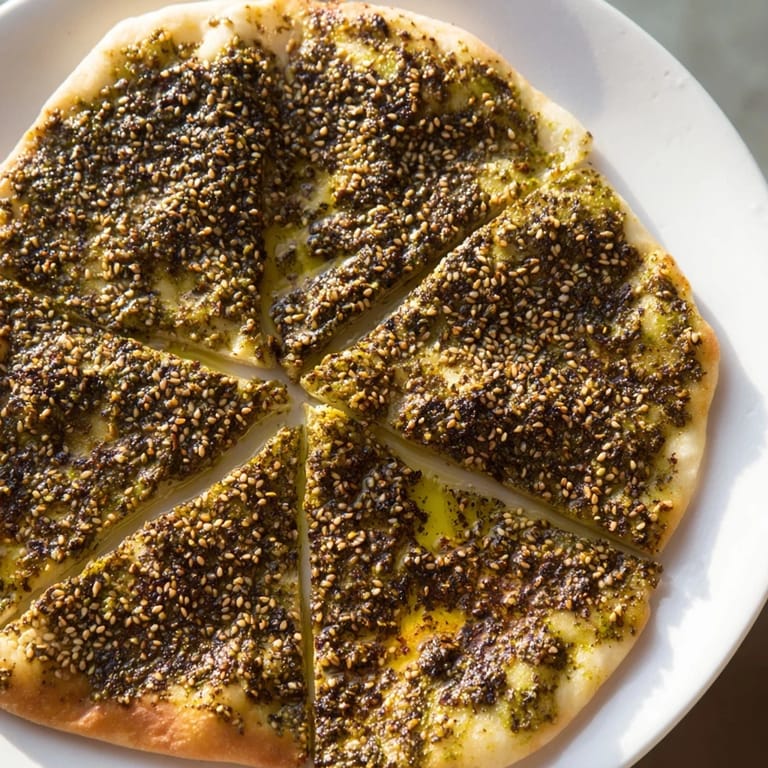
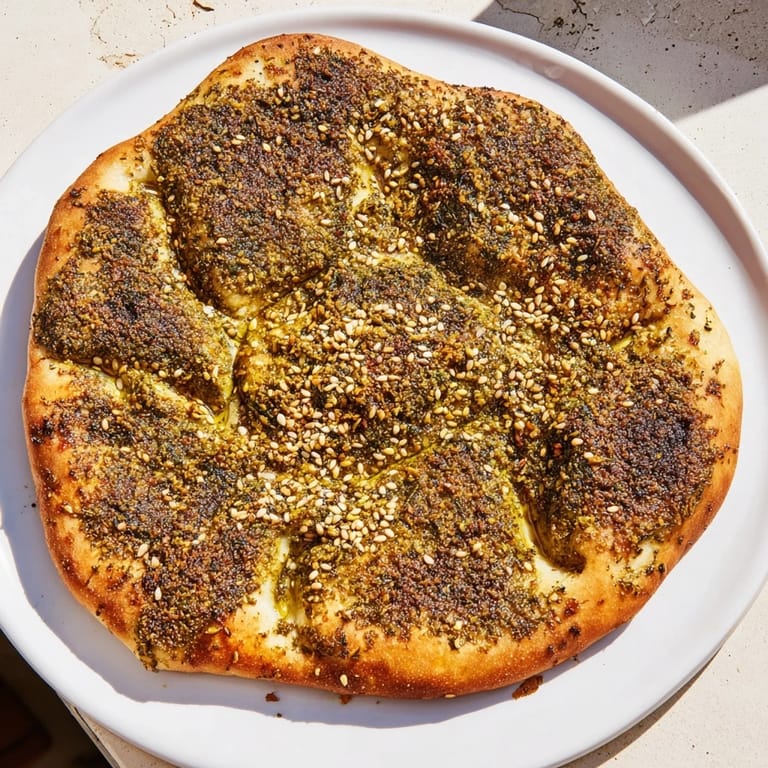
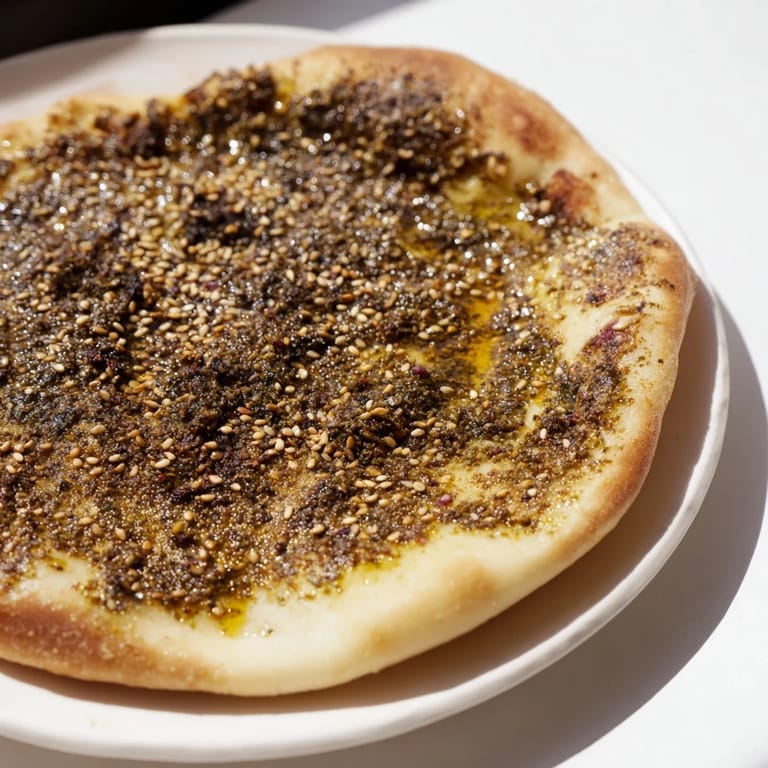
- In a small bowl, mix your zaatar, sesame seeds, and olive oil until it forms a fragrant paste. Spread this mixture evenly across each dough round, leaving a half-inch border so the edges can brown and crisp.
- Bake until golden:
- Slide everything into your hot oven and bake for twelve to fifteen minutes, until the edges are crispy and the whole kitchen smells like a Middle Eastern spice market. You'll know they're done when your stomach won't let you wait any longer.
 Save Pin
 I think what I love most about this bread is that it's unpretentious. It doesn't ask for much—just time, warmth, and a few good ingredients—but it gives back generously. It's the kind of thing that makes people gather around a table and actually talk to each other.
The Zaatar Magic
Zaatar isn't just a spice blend; it's a flavor philosophy. The thyme brings earthiness, the sumac adds brightness without any sourness, and the sesame ties everything together with a gentle nuttiness. If you can't find a good zaatar blend, you can make your own by mixing dried thyme, ground sumac, and sesame seeds, but the pre-made versions are worth seeking out. A visit to a Middle Eastern market or even a serious grocery store spice section will change your understanding of what bread can taste like.
Timing and Temperature
The total time is about an hour and twenty minutes because most of that is the dough rising on its own—the actual work you do with your hands is maybe fifteen minutes. If your kitchen is cold, the rise will take longer, and that's okay; just give it time. The oven temperature matters too: four hundred twenty-five degrees Fahrenheit is hot enough to get the bread crispy and the topping fragrant without burning anything. If you notice the edges browning too fast, you can tent the bread loosely with foil and keep baking.
Serving and Storage
These breads are best served warm, straight from the oven, torn apart into pieces so you can dip them into hummus or labneh or just eat them with good olives and fresh tomatoes. They're also wonderful at room temperature the next day, though they do get staler faster than you'd expect, so plan to eat them within a day or two. If you want to make them ahead, you can shape the dough, refrigerate it overnight, bring it back to room temperature, add the topping, and bake as usual—this actually deepens the flavor.
- Serve warm with labneh, hummus, or baba ganoush for a complete experience.
- Add a small pinch of chili flakes to the zaatar mixture if you like a gentle heat.
- Toast any leftover bread lightly in a dry pan to bring back its crispness.
 Save Pin
 Making this bread has become my quiet ritual, the kind of kitchen project that settles my mind and fills my home with something that matters. I hope it does the same for you.
Questions & Answers
- → What is zaatar?
Zaatar is a Middle Eastern spice blend typically made from thyme, sumac, sesame seeds, and other herbs, offering a fragrant, tangy flavor.
- → How do I get a crisp crust on the bread?
Baking at a high temperature (around 220°C/425°F) and ensuring the dough is rolled evenly helps achieve a crisp, golden crust.
- → Can this bread be made vegan?
Yes, this bread uses olive oil and no animal products, making it suitable for both vegan and vegetarian diets.
- → What are good accompaniments for this flatbread?
It pairs well with labneh, olives, fresh vegetables, hummus, or baba ganoush.
- → Can I add spices for extra flavor?
Yes, adding a pinch of chili flakes to the topping can provide a subtle spicy kick.
- → How long does the dough need to rise?
The dough should rise in a warm place for about one hour until it doubles in size, leading to a soft, airy texture.