 Save Pin
 There's something almost magical about assembling a bowl rather than plating a traditional meal. I discovered this when a friend mentioned she'd been eating the same Mediterranean chickpea situation for a week straight—not out of boredom, but because she genuinely looked forward to the ritual of it. The simplicity sounded boring until I made it myself and realized how the acid from the lemon, the briny snap of olives, and the creamy heft of chickpeas create this perfect balance without any cooking required.
I made this for my partner on a lazy Saturday afternoon when we couldn't decide between eating healthily and eating something actually delicious. He stood at the counter watching me toss things together and asked if I was making a salad, and I had to explain that no, this was somehow both more intentional and less fussy than that. By the time we sat down with our bowls, the dressing had already started transforming everything into something that tasted like a proper meal, not just an assemblage of raw vegetables.
Ingredients
- Chickpeas (one 400g can, drained and rinsed): These are your protein anchor and they're already cooked, so you're really just using them. Rinsing them matters because it removes the starchy liquid that would otherwise make everything gummy.
- Quinoa or brown rice (1 cup cooked, optional): Add this if you want the bowl to feel more substantial, though honestly the chickpeas do most of the heavy lifting.
- Cucumber (1 medium, diced): Cucumber brings coolness and crunch—don't peel it unless yours is particularly waxy because the skin holds everything together.
- Cherry tomatoes (1 cup, halved): These burst slightly once they're dressed and release their juice into everything else, which is exactly what you want.
- Red onion (1/4 small, thinly sliced): Red onion is sharp and alive in a way that regular onion isn't, and you want that brightness here.
- Red bell pepper (1/2, diced): This adds sweetness and color, and its texture stays firm even after sitting.
- Vegan feta (80 g, crumbled): This is the one ingredient that might feel fancy but genuinely changes the game—it adds a salty, tangy note that makes everything taste intentional.
- Kalamata olives (1/3 cup pitted, halved): Buy these already pitted if your hands are as lazy as mine, and halve them so their flavor distributes evenly.
- Fresh parsley (2 tbsp, chopped): This is green punctuation—it keeps the bowl from tasting heavy.
- Extra-virgin olive oil (2 tbsp): Use actual good olive oil here because it's one of four ingredients in the dressing and there's nowhere for bad oil to hide.
- Lemon juice (1 tbsp): Fresh lemon, not the bottled kind—it's the backbone of the whole thing.
- Dried oregano (1 tsp): Oregano and lemon are best friends, and they prove it here.
- Sea salt (1/2 tsp) and black pepper (1/4 tsp): Season as you taste, because every lemon is slightly different.
Tired of Takeout? 🥡
Get 10 meals you can make faster than delivery arrives. Seriously.
One email. No spam. Unsubscribe anytime.
Instructions
- Gather and prep your vegetables:
- Dice the cucumber, halve the tomatoes, slice the red onion thin enough that it doesn't feel aggressive, and chop the bell pepper. This takes maybe five minutes if you move with intention. Nothing needs to be perfect—roughly the same size is all you're after.
- Combine the base:
- Dump your drained chickpeas, cucumber, tomatoes, onion, and bell pepper into a large bowl. At this point it just looks like salad ingredients, but trust that it's becoming something.
- Make the dressing:
- In a small bowl, whisk together the olive oil, lemon juice, oregano, salt, and pepper. The dressing should taste bright and slightly aggressive—you want it to stand up to everything it's about to coat.
- Dress everything:
- Pour the dressing over the chickpea mixture and toss gently. This is when the magic starts because the acid begins softening the raw vegetables just slightly and the whole thing stops being a collection of parts.
- Build your bowls:
- If you're using quinoa or rice, divide it between two bowls first, then top with the dressed chickpea mixture. If not, just divide the mixture equally.
- Finish and serve:
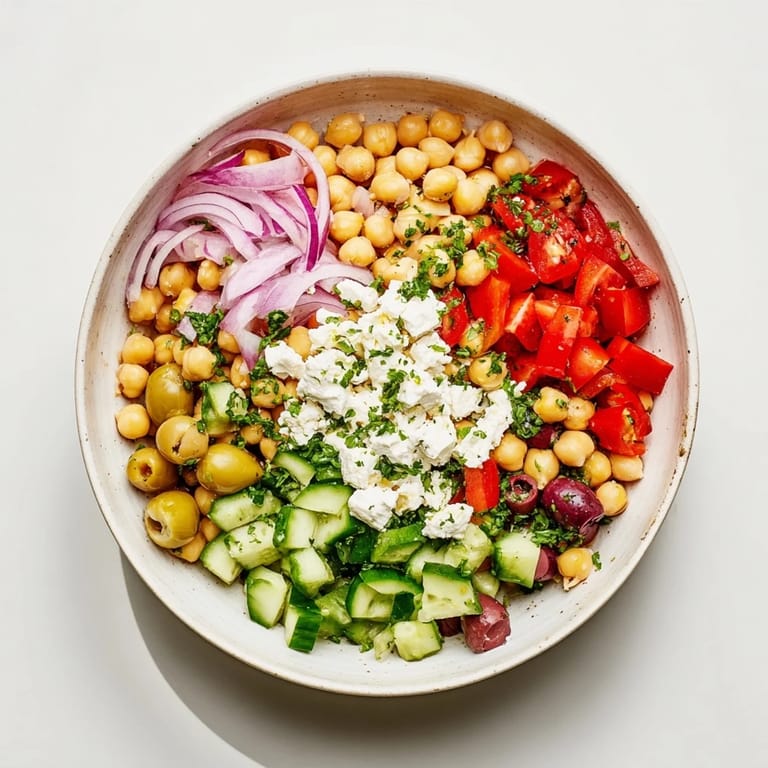
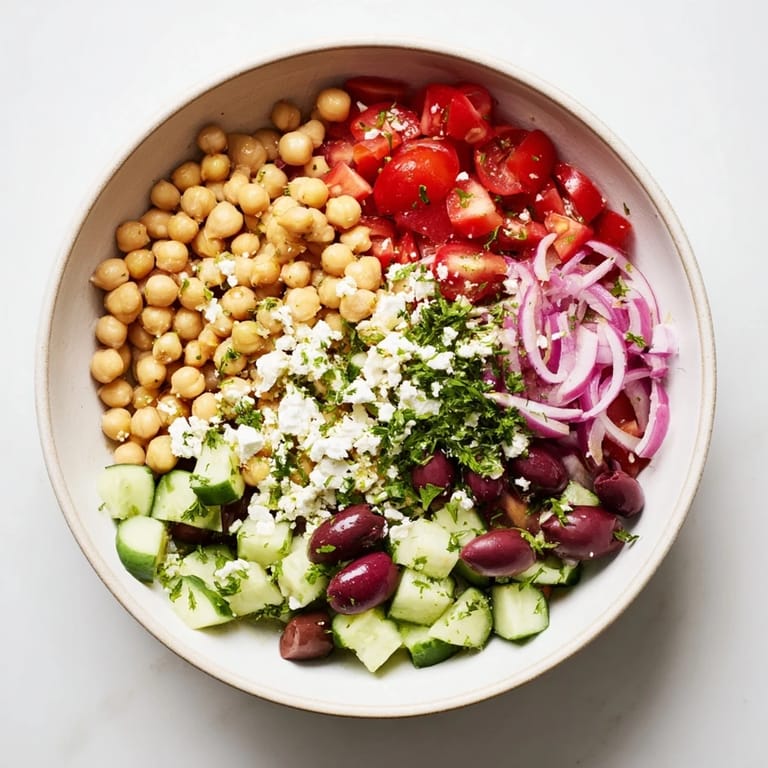
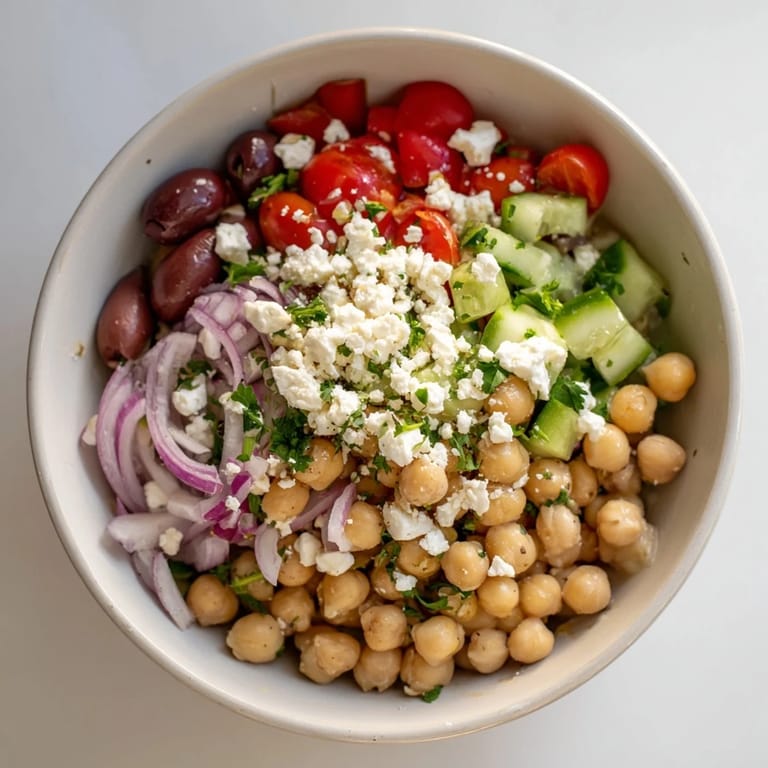
- Scatter vegan feta, halved olives, and chopped parsley over the top. Eat immediately for crispness, or cover and refrigerate for up to two days if you like the marinated version better.
 Save Pin
 The moment I understood this recipe's worth was when I brought it to work in a mason jar and two colleagues asked what I was eating because it looked intentional and delicious. We ended up having a whole conversation about how something so simple can feel special, and I realized it's because bowls like this respect both your time and your taste buds. There's no pretense here, just real ingredients doing exactly what they're supposed to do.
Why This Works Without Cooking
Not every meal needs heat to be satisfying. The chickpeas bring earthiness and protein, the raw vegetables provide texture that doesn't soften into submission, and the dressing—that three-ingredient dance of oil, lemon, and oregano—does all the heavy lifting that cooking usually handles. This bowl proves that technique isn't always about temperature, and some of the best meals happen when you stop overthinking and just let good ingredients speak.
The Case for Making It Ahead
If you have 15 minutes now but the next two days are chaos, make this anyway. The dressing softens the vegetables slightly and everything becomes more cohesive and flavorful, which means you're actually eating something better than if you'd rushed it together at noon. I've found that the olives taste less intensely salty after a night in the fridge because their brine distributes throughout the bowl, and the whole thing tastes less like separate components and more like something intentional.
Building Flavor Layers
The architecture of this bowl matters more than you'd think. The creamy chickpeas balance the sharp onion and salty feta, the cucumber and tomato provide freshness that prevents everything from feeling heavy, and the herbs tie it all together with a whisper rather than a shout. If you skip the parsley thinking it won't make a difference, you'll notice immediately—green herbs are the thing that makes a bowl feel alive rather than assembled.
- If your feta tastes aggressively salty, crumble it only right before eating so it doesn't distribute through the whole bowl.
- Toast some chickpeas separately with olive oil and oregano for 10 minutes at 400°F if you want extra crunch without derailing the fresh vibe.
- This bowl is flexible—add roasted red peppers instead of raw, or swap the chickpeas for white beans if that's what you have.
 Save Pin
 This bowl is the kind of recipe that doesn't ask you to do anything fancy but somehow delivers something that feels thoughtful. It's become the thing I make when I want to eat well without negotiating with myself about whether I have time or energy.
Questions & Answers
- → Can I use regular feta instead of vegan feta?
Yes, you can substitute vegan feta with traditional feta cheese if preferred, but note it will no longer be vegan.
- → Is it necessary to add quinoa or rice?
Quinoa or brown rice is optional and adds extra texture and substance, but the bowl is flavorful and filling without them.
- → How long can it be stored?
The bowl can be refrigerated for up to 2 days. The flavors deepen when chilled, creating a marinated effect.
- → What dressing ingredients enhance the flavors?
A simple dressing of extra-virgin olive oil, lemon juice, dried oregano, sea salt, and black pepper brings a bright, Mediterranean character.
- → Can I add nuts or seeds for crunch?
Yes, roasted chickpeas or toasted pine nuts can be added to increase crunch and texture.
- → Are Kalamata olives necessary?
Kalamata olives contribute a distinctive briny, fruity flavor, but other olive varieties may be used if needed.