 Save Pin
 Years ago, a friend brought a thermos of this stew to a winter picnic, and I still remember how the steam rose into the cold air, carrying this bright, almost tangy aroma that felt completely new to me. One spoonful and I understood why she'd insisted on making it despite the weather—the lentils had this tender earthiness, but it was the sumac that caught me off guard, giving everything this citrus-forward lift that made me keep coming back for more. I asked for the recipe that day, and it's become one of those dishes I make when I want something that feels both nourishing and a little bit special.
I made this for a small dinner during a particularly gray February, and one guest asked if I'd used wine because of the depth—when I said no, just good broth and time, she looked genuinely impressed. That moment stuck with me because it reminded me that simple doesn't mean basic, and that a handful of the right spices and good technique can rival anything fancier. Now whenever I cook this, I think about how much flavor lives in those individual aromatics layering together.
Ingredients
- Brown or green lentils, 1 cup: These hold their shape better than red lentils and give the stew structure and substance; rinse them first to remove dust.
- Canned chickpeas, 1 can (15 oz): Adds protein and a buttery texture that rounds out the earthiness of the lentils.
- Olive oil, 2 tablespoons: The foundation for building flavor—don't skip it or rush the sautéing.
- Yellow onion, 1 large: Chopped small and cooked until truly soft, it becomes the sweet base that everything else rests on.
- Garlic, 3 cloves: Minced fine so it distributes evenly and melds rather than leaving sharp pieces.
- Carrots and celery, 2 of each: The aromatic vegetables that give the broth its gentle sweetness and depth.
- Ground sumac, 1½ teaspoons: This is your secret weapon—bright, slightly tart, with a peppery finish that makes people ask what you did differently.
- Ground cumin, 1 teaspoon: Adds warmth and earthiness without overpowering.
- Ground coriander, ½ teaspoon: A subtle floral note that you won't identify by name but will taste the absence of if you skip it.
- Smoked paprika, ½ teaspoon: Brings a whisper of smokiness that makes the stew feel intentional.
- Salt and black pepper: Season to your taste at the end; every broth is different.
- Cayenne pepper, ¼ teaspoon (optional): Only add this if you want heat; it transforms the dish into something spicier.
- Vegetable broth and water, 4 cups and 1 cup: The liquid that carries all your flavors; use good broth if you can.
- Fresh lemon juice, about 3 tablespoons: Added at the end to brighten everything and wake up the sumac's tanginess.
- Fresh parsley, ½ cup: Chopped and stirred through, plus more for garnish—it's not just decoration, it's part of the flavor structure.
Tired of Takeout? 🥡
Get 10 meals you can make faster than delivery arrives. Seriously.
One email. No spam. Unsubscribe anytime.
Instructions
- Heat your pot and build the base:
- Warm the olive oil over medium heat and add your chopped onion. You want to give it a full 4 to 5 minutes, stirring occasionally, until it turns soft and translucent—this patience at the beginning is what makes the whole stew taste right.
- Add the supporting vegetables:
- Toss in the garlic, carrots, and celery, and let them soften together for 3 to 4 minutes. You'll notice the kitchen starting to smell alive—that's exactly what you want.
- Bloom your spices:
- Stir in the sumac, cumin, coriander, paprika, salt, pepper, and cayenne if you're using it. Cook this for just about 1 minute—long enough for the heat to release their essential oils, turning the oil golden and fragrant.
- Add the legumes and liquid:
- Pour in your lentils, chickpeas, broth, and water. Bring everything to a boil, then drop the heat down low and cover the pot. Let it simmer gently for 25 to 30 minutes until the lentils are tender but not falling apart—you're looking for them to have just a little bite left.
- Finish with brightness:
- Remove the lid, stir in the lemon juice and half of the fresh parsley, and let it cook uncovered for another 2 to 3 minutes. Taste as you go—you might want more salt, more lemon, or a pinch more cayenne.
- Serve with intention:
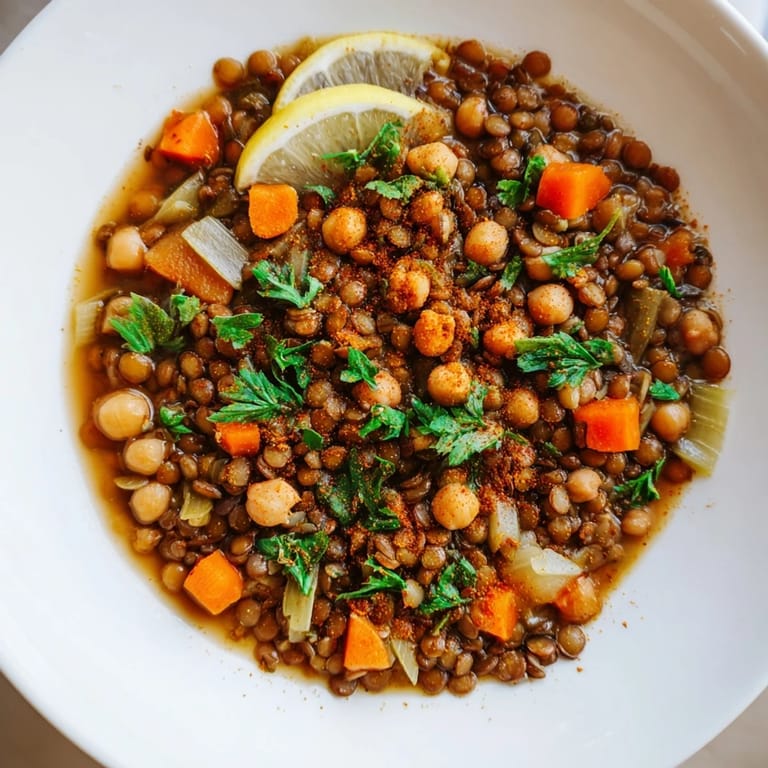
- Ladle into bowls, scatter the remaining parsley over the top, and tuck a lemon wedge beside each bowl for people to squeeze in as they eat.
 Save Pin
 My partner ate this three days in a row when I first made a big batch, which told me everything I needed to know about whether it was worth keeping around. What I love most is that it exists in this perfect middle ground—substantial enough to feel like dinner, but light enough that you can eat it without guilt and still sleep well.
Why This Stew Works
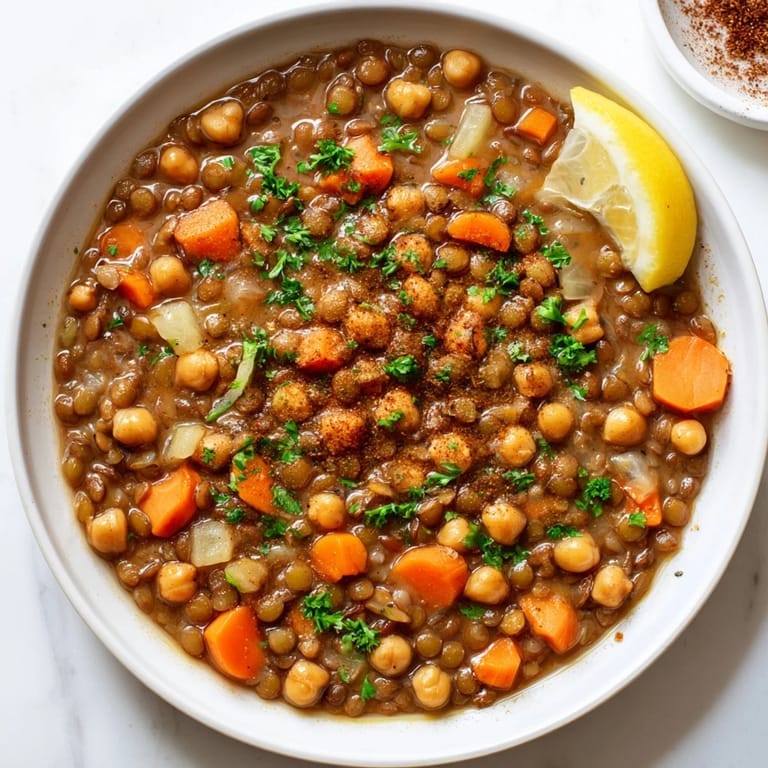
There's something almost magical about how lentils and chickpeas together create a texture that's both creamy and toothsome at the same time. The broth becomes this golden liquid that's absorbed all the spice warmth and vegetable sweetness, and then the lemon and parsley come in at the last second like a plot twist that makes you taste everything fresh again. It's the kind of dish that proves you don't need cream or butter to make food feel luxurious.
Customizing Your Bowl
One of the best things about this stew is how flexible it is once the base is done. I've added a handful of spinach in the last few minutes, stirred in some chopped tomatoes, served it over rice instead of on its own, and even spooned it into flatbread pockets. The spice foundation is strong enough to carry different additions without losing its identity, which means you can make it feel completely different depending on what you have and what you're craving.
Making It Your Own
The beauty of this recipe is that it's forgiving and personal—every cook brings their own hand to it. Some people add a pinch of cinnamon for warmth, others love a splash of pomegranate molasses if they have it, and I know someone who swears by adding a dried mint leaf while it simmers. Trust your instincts, taste as you go, and remember that seasoning at the end is always easier than trying to fix it midway through.
- Make it ahead: this actually tastes better the next day once all the flavors have had time to get to know each other.
- Double the recipe: it freezes beautifully in individual portions, perfect for those moments when cooking feels impossible.
- Serve it your way: flatbread, rice, couscous, or a bowl by itself—it's ready for whatever you want to do with it.
 Save Pin
 This stew has become my go-to when I want to feed people something that feels thoughtful but doesn't require hours of work. It's the kind of dish that says care without saying show-off, and that's exactly when food tastes best.
Questions & Answers
- → Can I use different types of lentils?
Brown or green lentils work best as they hold their shape well during simmering, providing a hearty texture.
- → How can I adjust the spice level?
Modify the cayenne pepper amount or omit it to control the heat according to your preference.
- → What can I use if sumac is unavailable?
Substitute sumac with extra lemon zest or a touch of vinegar to achieve a similar tangy note.
- → Is this dish suitable for gluten-free diets?
Yes, all ingredients are naturally gluten-free, but always check broth and canned chickpeas labels for hidden gluten.
- → Can I add greens to the stew?
Yes, stir in chopped spinach or kale during the last 5 minutes of cooking for added nutrition and color.