 Save Pin
 My first bowl of authentic New England clam chowder was served to me in a weathered seafood shack where the owner's grandmother had been making it for fifty years. The steam rose off the cream-colored soup in those blue-rimmed bowls, and one spoonful—that first taste of tender clams folded into silky broth—completely changed how I understood comfort food. I spent the next hour crumbling oyster crackers and asking her grandson questions until he finally walked me through the technique. Now when I make it, I'm transported right back to that moment, the clatter of the kitchen, the smell of bacon and thyme filling the small space.
I made this for a dinner party one winter evening when the kitchen was chaotic, and I remember being genuinely nervous about the timing. But something magical happened—as the potatoes softened and the cream swirled into that golden broth, the whole room went quiet. My friend Sarah took one spoonful and her eyes actually closed, and suddenly everyone was eating in that contented silence that only good food brings. That's when I realized this chowder does more than feed you; it creates a moment.
Ingredients
- Fresh littleneck clams (2 lbs): Buy them the day you cook if possible, and look for shells that close when tapped—that means they're alive and will give you the sweetest flavor.
- Clam juice (1 cup): This is insurance against under-seasoning, but if you steam your clams carefully, you'll have enough cooking liquid to skip the bottled version entirely.
- Russet potatoes (2 medium): The starch matters here—these break down slightly and thicken the broth naturally, creating that signature creamy texture.
- Yellow onion, celery, and carrot: This aromatic base is where the soul of the soup starts, so don't rush chopping these fine.
- Garlic (2 cloves): Minced small keeps it from overwhelming, but if you love garlic, add another clove without hesitation.
- Heavy cream and whole milk: The combination prevents the soup from breaking when it simmers; pure cream alone can sometimes split.
- Unsalted butter (2 tbsp): Use real butter—it's the fat that carries flavor and keeps everything luxurious.
- All-purpose flour: This creates a silky roux that thickens without lumps if you stir it enough.
- Bacon (2 slices): Don't skip this; the fat and smokiness are what make you wonder what you're tasting.
- Bay leaf and dried thyme: These herbs whisper in the background, adding depth that makes people ask what your secret ingredient is.
Tired of Takeout? 🥡
Get 10 meals you can make faster than delivery arrives. Seriously.
One email. No spam. Unsubscribe anytime.
Instructions
- Prepare the clams:
- Rinse each clam under cold running water and scrub the shells with a stiff brush to remove sand and grit. In a large pot, add the clams with 2 cups of water, bring to a rolling boil, cover, and steam for 5 to 7 minutes until they begin to open—watch for them to crack open, then listen for that satisfying pop as steam releases. Any clam that refuses to open should be discarded without guilt, as it was likely not alive to begin with.
- Extract the meat:
- Let the clams cool until you can handle them, then carefully remove each clam from its shell, reserving every drop of that precious cooking liquid by straining it through a fine sieve lined with cheesecloth or a clean kitchen towel. Chop the clam meat into bite-sized pieces, not too fine, so you get actual texture in each spoonful.
- Render the bacon:
- Dice the bacon into small pieces and lay them in a large Dutch oven or heavy-bottomed pot over medium heat, stirring occasionally until the edges crisp and darken—this takes about 5 minutes. The fat will render into the pot, creating the foundation for everything that comes next, so don't drain it away; instead, remove the bacon with a slotted spoon and set it aside on a paper towel.
- Build the base:
- Return the pot to medium heat and add the butter, letting it melt into the bacon fat, then add your finely chopped onion, celery, carrot, and garlic. Stir gently until the vegetables soften and become fragrant, which should take about 5 minutes—you're looking for the onion to turn translucent and the kitchen to smell like a coastal cooking lesson.
- Make the roux:
- Sprinkle the flour directly over the softened vegetables and stir constantly for exactly 1 minute, allowing the flour to cook slightly and eliminate any raw taste. This brief cooking time prevents lumps later when you add the liquid.
- Build the broth:
- Slowly pour in the reserved clam cooking liquid and bottled clam juice, stirring constantly to prevent lumps and making sure to scrape up any golden, caramelized bits stuck to the bottom of the pot—these are liquid gold for flavor. Add the diced potatoes, bay leaf, and dried thyme, then increase the heat until the mixture reaches a gentle simmer.
- Cook the potatoes:
- Maintain that simmer and cook uncovered for 10 to 12 minutes, stirring occasionally, until you can easily pierce a potato piece with a fork and it begins to break apart slightly. This is when the soup thickens naturally as the potatoes release their starch.
- Finish gently:
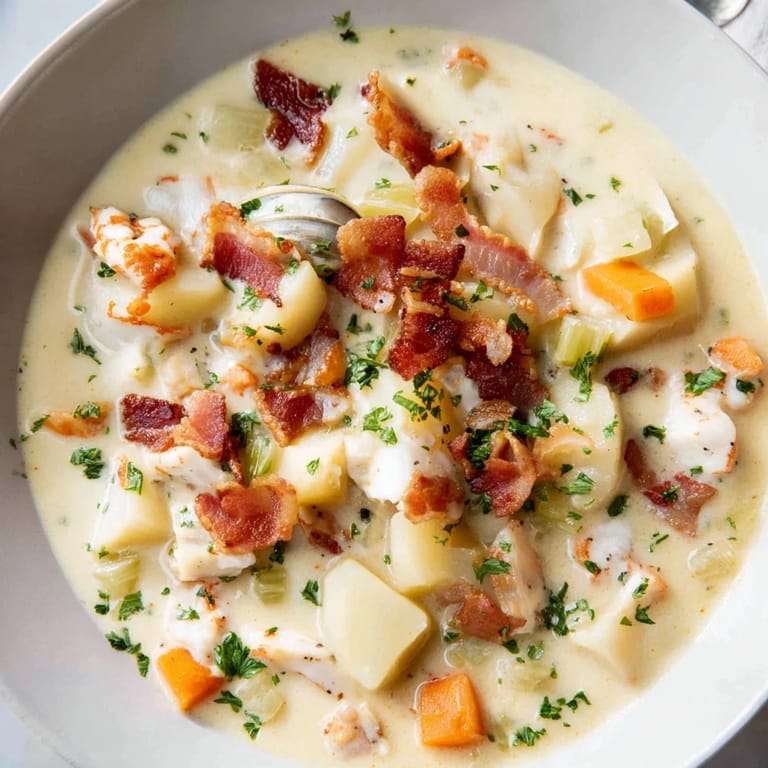
- Reduce the heat to low and stir in the chopped clams, crispy bacon pieces, heavy cream, and whole milk, stirring occasionally and absolutely refusing to let it boil—a boiling chowder will break and separate. Let this simmer gently for 5 to 10 minutes, just until everything melds together.
- Season and serve:
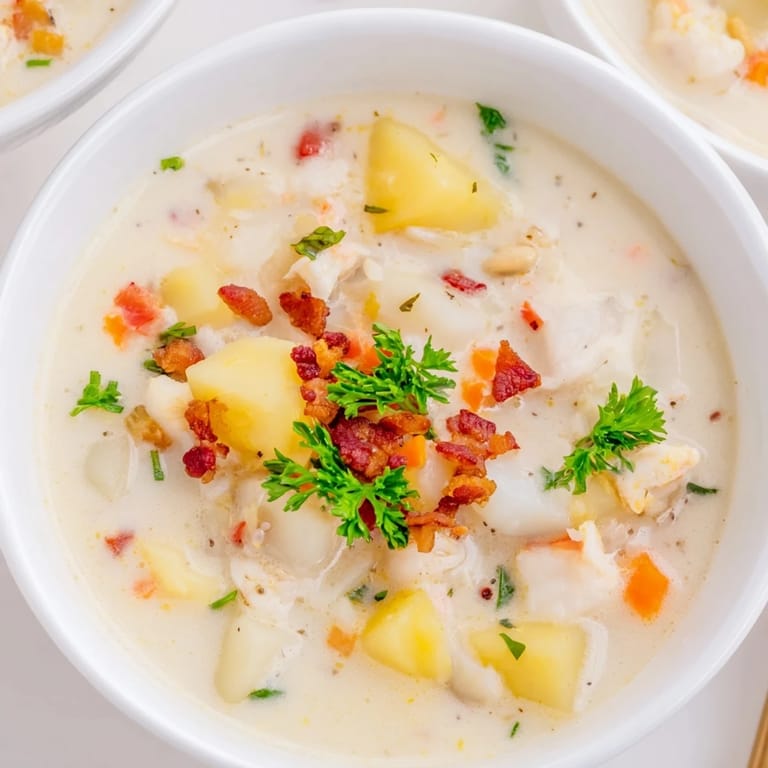
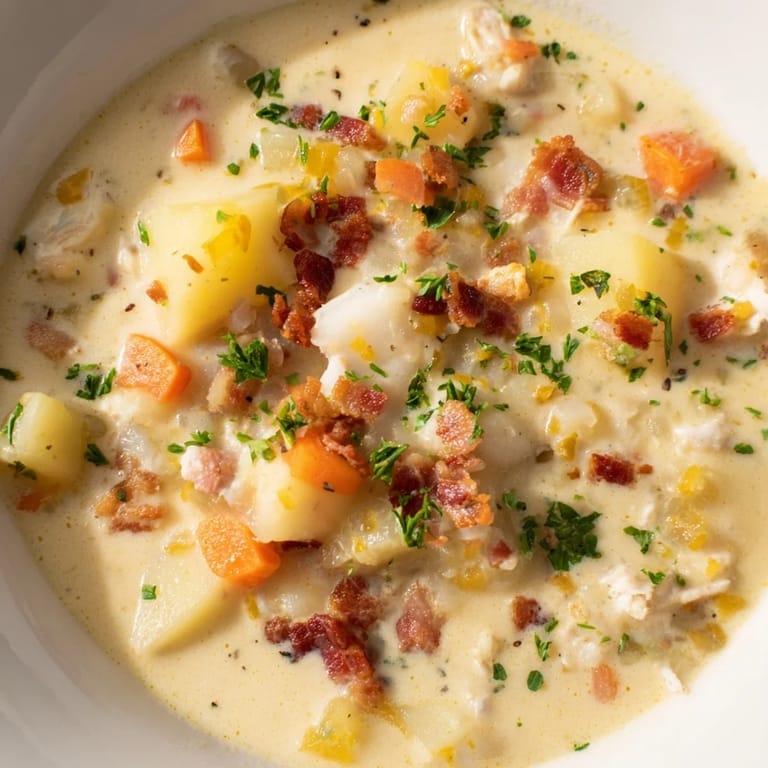
- Remove from heat, fish out the bay leaf with a spoon, then taste and add salt and freshly ground black pepper until the flavors bloom on your tongue. Ladle into bowls, scatter fresh chopped parsley over the top, and set out oyster crackers for dunking.
 Save Pin
 There's a particular magic in watching someone taste this soup for the first time—the surprise in their eyes when they realize how much clam flavor comes through, how each spoonful tastes like it came from a proper seafood kitchen. It's become the soup I make when someone needs comfort or when I want to feel proud of what I've created in my own kitchen.
The Secret to Tender Clams
The way you steam the clams matters more than you might think. If you listen carefully, you'll hear them open—a soft pop as steam forces the shell apart. The moment you hear that sound, the clam is done, and any longer will make it tough and rubbery. I learned this by overcooking my first batch and ending up with clams that felt like little rubber erasers, which taught me to check for doneness by sight rather than time. Now I watch the pot like a hawk for those first few to open, then give it another minute for the slower ones, but no more.
Variations and Lighter Versions
If you want to make this lighter, swap the heavy cream and whole milk for equal parts half-and-half or even milk and broth—you'll lose some richness, but you'll still have a deeply satisfying soup. Some people add a dash of hot sauce or smoked paprika for a hint of heat and depth, which I discovered one night when I was out of fresh thyme and needed to add something unexpected. A squeeze of fresh lemon juice at the end brightens everything up beautifully and cuts through the richness without making it taste acidic.
Pairing and Serving Suggestions
Serve this with a chilled glass of crisp white wine—a Sauvignon Blanc or Pinot Grigio—and watch how the wine's acidity balances the soup's richness. The oyster crackers are non-negotiable in my house; they soften into the broth and create little pockets of texture that make eating the soup feel like an event rather than just dinner. On cold evenings, I'll make a batch and serve it in oversized bowls with good bread alongside, and suddenly the whole house smells like a seaside restaurant.
- Toast your oyster crackers in a dry pan for a minute if you want them to stay crispy longer before softening.
- Serve the soup piping hot in warmed bowls to keep it at the perfect temperature from first spoonful to last.
- Make a double batch and freeze half—it reheats beautifully and tastes even better the next day as flavors meld together.
 Save Pin
 This chowder is the soup that taught me cooking isn't about following rules perfectly—it's about understanding why those rules exist and trusting your instincts when something feels right. Make it once, and you'll find yourself reaching for it again and again.
Questions & Answers
- → How do I properly clean the clams before cooking?
Rinse clams under cold water and scrub the shells thoroughly to remove sand and debris. Discard any clams that remain closed after soaking.
- → Can I use frozen clams instead of fresh littlenecks?
Frozen clams may work but fresh littlenecks provide better texture and flavor. Adjust cooking time to avoid overcooking frozen seafood.
- → What thickening method is used in this dish?
A light roux is made by cooking flour with sautéed vegetables and butter, which thickens the chowder gently as liquids are added.
- → How can I make the chowder richer or lighter?
For richness, use full cream and milk as stated. For a lighter option, substitute half-and-half or reduce the cream quantity.
- → What garnishes complement this chowder well?
Fresh chopped parsley adds brightness, and oyster crackers provide a pleasing crunch alongside the chowder.
- → Is it necessary to remove the bay leaf before serving?
Yes, the bay leaf adds aroma during cooking but should be removed before serving to avoid unpleasant texture.