 Save Pin
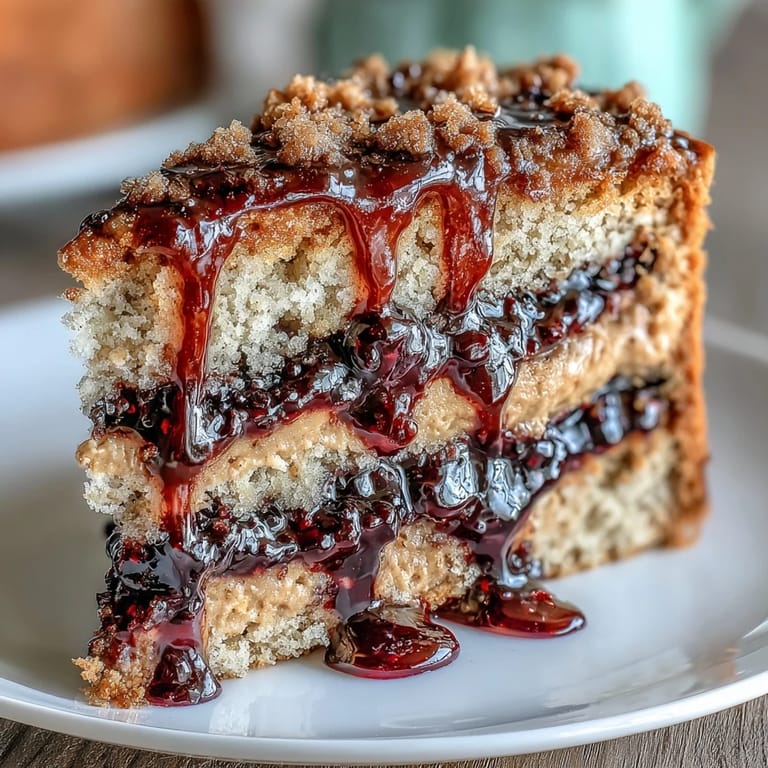
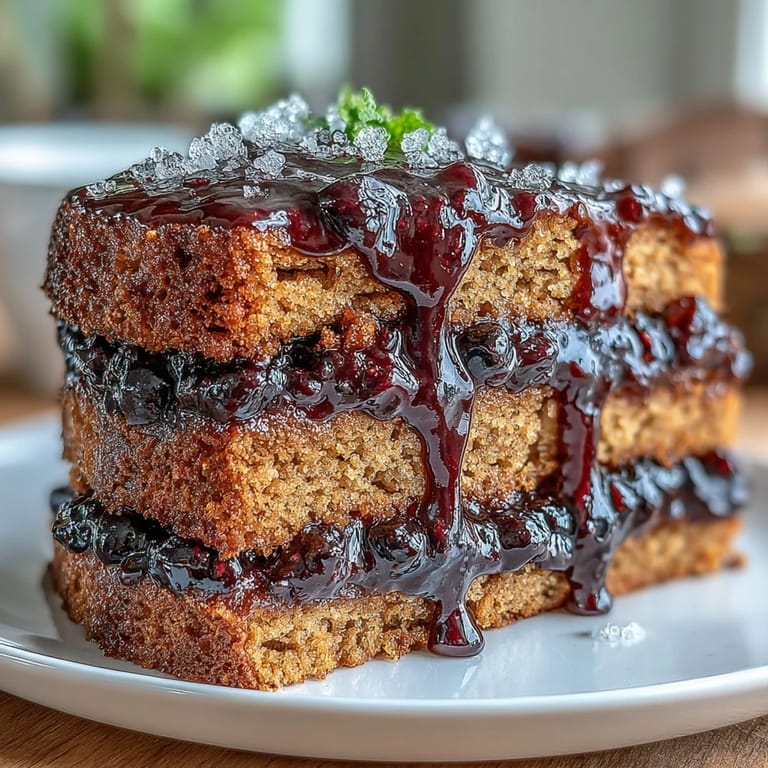
 My neighbor Sarah handed me a jar of homemade black currant jam one autumn afternoon, insisting I do something interesting with it. I'd been craving something that felt like childhood comfort but with a grown-up twist, and suddenly the idea struck: what if I took the nostalgic simplicity of a peanut butter and jelly sandwich and turned it into cake? The result was this surprisingly elegant dessert that tastes like a sophisticated memory, with a tender peanut butter crumb giving way to tart jam and a glossy dark sauce that catches the light just right.
I made this for my book club one winter evening, and watching everyone's faces when they took that first bite—when the fork cut through the jam layer and the sauce pooled around it—reminded me why I love cooking for people. Someone asked if it was from a fancy bakery, and I got to experience that small thrill of claiming something homemade as my own.
Ingredients
- All-purpose flour (1 1/2 cups): The foundation of a tender crumb; don't sift unless your flour is clumpy, as overmixing develops gluten and makes the cake tough.
- Baking powder and baking soda (1 tsp and 1/2 tsp): These work together to lift the cake gently, creating that moist, almost cloud-like texture that makes peanut butter cake so craveable.
- Salt (1/4 tsp): Just a whisper to balance the sweetness and make the peanut butter flavor sing without tasting salty.
- Unsalted butter and creamy peanut butter (1/2 cup and 3/4 cup): The dynamic duo that gives this cake its signature richness; use good quality peanut butter with minimal added oils for the best flavor.
- Granulated sugar (1 cup): Sweetens the batter while also helping create that tender crumb structure through its hygroscopic properties.
- Large eggs (2): These bind everything together and add moisture; bring them to room temperature so they incorporate smoothly and don't seize the batter.
- Vanilla extract (1 tsp): A subtle aromatic that deepens the peanut flavor rather than competing with it.
- Whole milk (1/2 cup): The liquid component that keeps the cake moist; the fat in whole milk is crucial for texture.
- Black currant jam (1/2 cup): The heart of this cake; choose a jam with visible seeds if you can for a more rustic, homemade feel.
- Fresh or frozen black currants (1 cup): For the sauce, these berries have an almost tart, sophisticated edge that cuts through the richness of the cake beautifully.
- Lemon juice (1 tsp): Brightens the sauce and prevents it from tasting cloying; resist the urge to skip it.
Tired of Takeout? 🥡
Get 10 meals you can make faster than delivery arrives. Seriously.
One email. No spam. Unsubscribe anytime.
Instructions
- Prepare your stage:
- Preheat your oven to 350°F and grease an 8-inch round pan with a little butter, then line the bottom with parchment paper; this prevents sticking and makes unmolding almost foolproof. Having everything ready means you can work with confidence once you start mixing.
- Combine your dry ingredients:
- In a medium bowl, whisk together the flour, baking powder, baking soda, and salt, breaking up any lumps you find. This distributes the leavening agents evenly so your cake rises uniformly.
- Cream the fats and sugar:
- Beat the softened butter and peanut butter together until smooth, then add the sugar and beat for about 2 minutes until the mixture is pale and fluffy. Listen for the mixer to sound lighter and airier; this incorporates tiny air bubbles that make the cake tender.
- Incorporate the eggs:
- Add eggs one at a time, beating well between each addition and scraping down the bowl so no streaks of yolk remain. This ensures even distribution and helps the batter emulsify properly.
- Alternate wet and dry components:
- Add the flour mixture and milk in three additions, beginning and ending with flour, beating just until combined after each addition. Overmixing at this stage develops gluten and toughens the cake, so resist the urge to keep stirring once everything is incorporated.
- Build your cake:
- Spread half the batter into your prepared pan in an even layer, then spoon the black currant jam over it leaving a 1/2-inch border so it doesn't touch the sides of the pan. Gently spread the remaining batter on top, using an offset spatula to carefully cover the jam without dragging it down into the bottom layer.
- Bake until golden:
- Bake for 30 to 35 minutes, testing with a toothpick inserted into the peanut butter cake portion (not through the jam) until it comes out with just a few moist crumbs. The cake should smell toasty and peanutty, and the top should be lightly golden.
- Cool with patience:
- Let the cake cool in the pan for 10 minutes (this sets the structure), then turn it out onto a wire rack to cool completely. Cooling on a rack prevents moisture from accumulating on the bottom and making it soggy.
- Make the black currant sauce:
- Combine black currants, sugar, and water in a small saucepan and bring to a boil, then reduce heat and simmer for 8 to 10 minutes, stirring occasionally, until the mixture thickens and turns glossy and syrupy. Stir in the lemon juice, let it cool to room temperature, and taste it; the flavors deepen as it cools.
 Save Pin
 There's something unexpectedly moving about serving a dessert that tastes like both comfort and celebration at once. This cake has become the thing I reach for when I want to feel like I've made someone's day a little brighter.
Choosing Your Black Currants
Fresh black currants have an almost peppery tartness that frozen ones sometimes lack, but frozen berries work beautifully for the sauce and often have a more concentrated flavor since they've been picked at peak ripeness. If you can't find black currants at all, raspberry or blackberry jam substitutes work in the cake layer, though you'll want to make the sauce with those fruits too for a cohesive flavor story. I've even used a combination of blackberries and a touch of pomegranate to great effect.
The Secret to Keeping It Moist
A baker friend once told me that peanut butter cakes stay moist longer than other cakes because the fat content in peanut butter slows staling. What I discovered is that the jam layer itself creates a moisture barrier, keeping the top layer tender even after a day or two of storage. Store this cake covered at room temperature and it stays soft for three days; refrigerate it if you live somewhere hot or humid.
Serving Suggestions and Variations
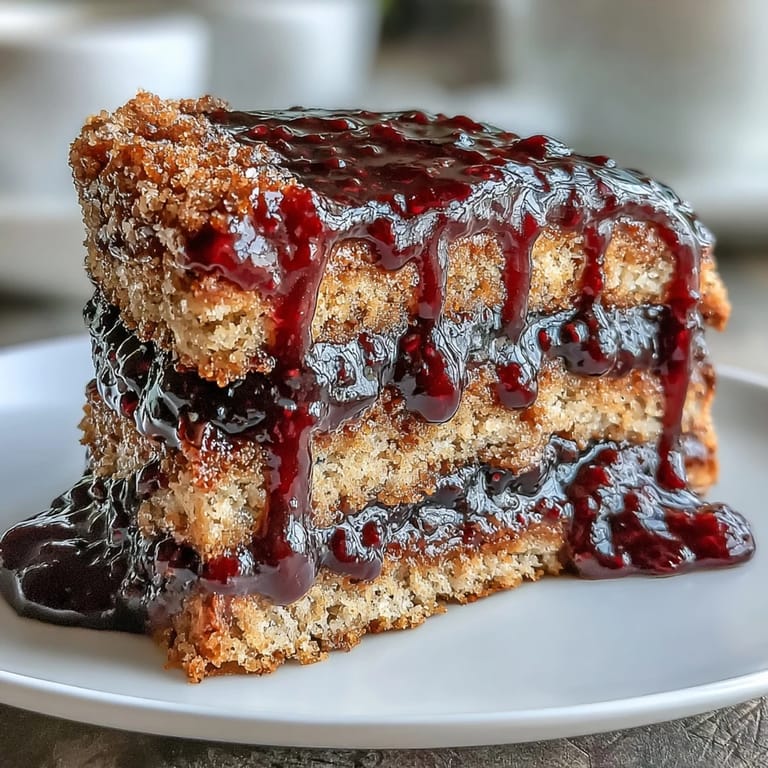
I've served this cake in so many different ways depending on the occasion and who's eating. With strong coffee it feels sophisticated, while with cold milk it becomes almost nostalgic. A dollop of lightly whipped cream or crème fraîche on the side softens the tartness of the sauce if you find it too bold.
- Brush each cake layer with a light simple syrup before assembling for an extra tender, almost genoise-like texture that stays moist for days.
- A scattering of crushed roasted peanuts on top adds textural interest and doubles down on the peanut flavor if you're serving peanut butter devotees.
- Serve this at room temperature rather than chilled; cold dulls the peanut flavor and makes the sauce taste less vibrant.
 Save Pin
 This cake taught me that the most memorable desserts are the ones that bring two seemingly simple things together in a new way. Serve it with genuine pleasure, and watch it disappear.
Questions & Answers
- → Can I use a different type of jam?
Yes, raspberry or blackberry jam work beautifully as alternatives to black currant. The tartness of these berries complements the rich peanut butter similarly.
- → How should I store this cake?
Store at room temperature for up to 2 days in an airtight container, or refrigerate for up to 5 days. Bring to room temperature before serving for best texture.
- → Can I make this cake gluten-free?
Substitute the all-purpose flour with a 1:1 gluten-free baking blend. Ensure other ingredients, particularly baking powder, are certified gluten-free.
- → Can I freeze the cake?
Yes, wrap cooled cake layers tightly in plastic and freeze for up to 3 months. Thaw overnight in the refrigerator and bring to room temperature before serving.
- → What pairs well with this dessert?
Cold milk creates a classic combination, while a fruity dessert wine like late-harvest Riesling or port elevates it for special occasions.
- → Can I use natural peanut butter?
Natural peanut butter can be used but may result in slightly denser texture. Creamy commercial peanut butter provides the best moisture and consistency.