 Save Pin
 The first time I made a proper Buddha bowl, I wasn't thinking about wellness or Instagram aesthetics—I was just tired of eating the same sad desk lunch every day. A friend mentioned she'd started roasting chickpeas instead of boiling them, and something about the way she described that crispy, spiced crunch made me curious. That afternoon, I scattered them on a baking sheet with paprika and cumin, and when they came out of the oven, the kitchen smelled like someone else's dinner party. I realized then that the magic wasn't in eating something virtuous—it was in taking thirty minutes to make something that actually tasted like I cared.
I brought this bowl to a potluck last spring, and someone asked if it was from a restaurant because they'd never seen homemade food look so intentional. That question stuck with me—not in a smug way, but as a reminder that sometimes the simplest act of arranging colors on a plate, of actually thinking about what you're eating, transforms the meal into something worth sharing. Now whenever I make it, I think about that moment, and I slow down a little.
Ingredients
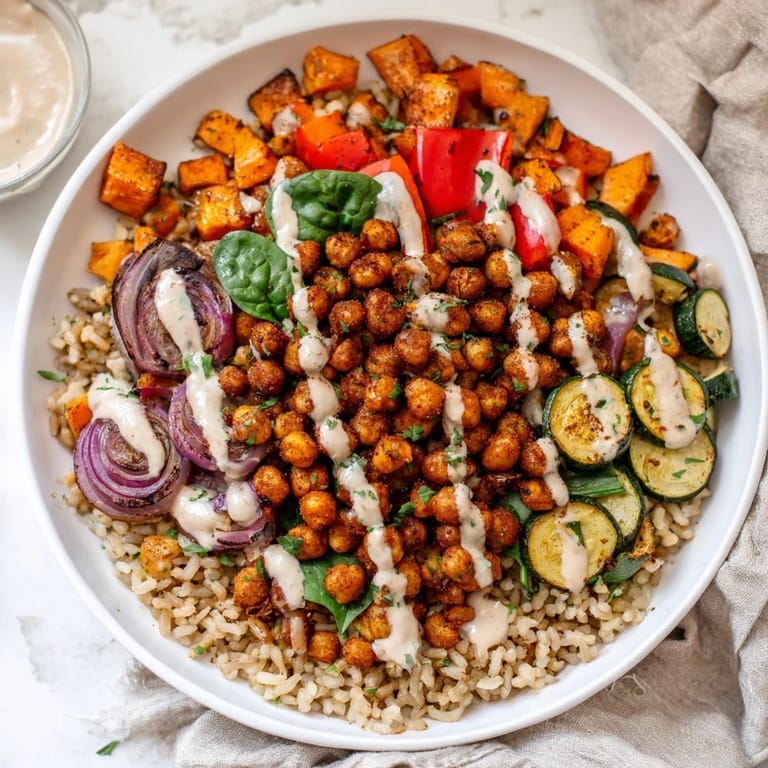
- Chickpeas (1 can, drained and rinsed): Pat them completely dry before tossing—this is the secret to actual crispiness, not just sad roasted beans.
- Smoked paprika, cumin, garlic powder: These three are the difference between a chickpea tasting like cardboard and tasting like you know what you're doing.
- Sweet potato, red bell pepper, red onion, zucchini: This mix gives you sweetness, crunch, and color all working together—don't skip the red onion, its sharpness balances everything.
- Brown rice: It holds up better than white rice and gives you something substantial to build around, though you can swap it for whatever grain you have.
- Tahini: Sesame paste that sounds fancy but is just ground sesame seeds—lemon juice and a tiny bit of maple syrup turn it into sauce magic.
- Fresh garlic, lemon, fresh herbs: These aren't optional flavor boosters; they're the difference between a bowl and an experience.
Tired of Takeout? 🥡
Get 10 meals you can make faster than delivery arrives. Seriously.
One email. No spam. Unsubscribe anytime.
Instructions
- Set your oven and prep your pans:
- Get the oven to 400°F and line two baking sheets with parchment paper so nothing sticks and cleanup doesn't ruin your evening.
- Dry and season the chickpeas:
- Pat the chickpeas with a paper towel until they're actually dry—any moisture is the enemy of crispiness. Toss them with olive oil and all the spices until they're coated like they just got dressed up.
- Prep and oil the vegetables:
- Cut everything into roughly the same size so it roasts evenly, then toss with oil and salt—you want them to taste caramelized, not steamed.
- Roast both trays together:
- Put them both in the oven and stir everything halfway through, about fifteen minutes in. You're looking for the chickpeas to sound crispy when you shake the pan and the vegetables to have brown edges.
- Cook the rice while things roast:
- Rinse it under cold water, then bring rice, water, and salt to a boil, cover it, turn the heat down to low, and let it sit undisturbed for thirty to thirty-five minutes until tender.
- Make the tahini sauce:
- Whisk tahini, lemon juice, a bit of water, minced garlic, and a touch of maple syrup until it's smooth and pourable—it should taste bright and nutty, not thick or bitter.
- Build your bowls:
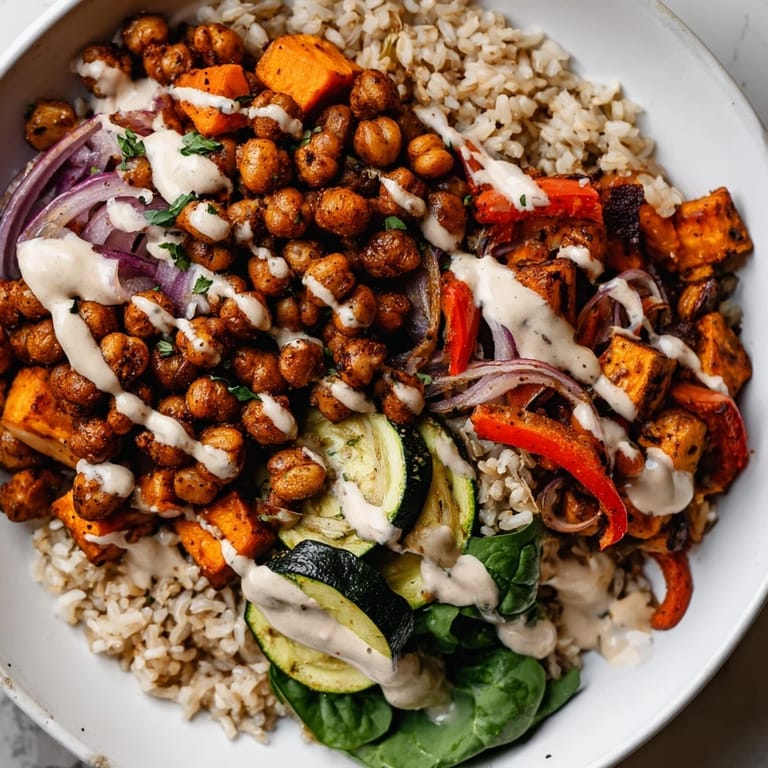
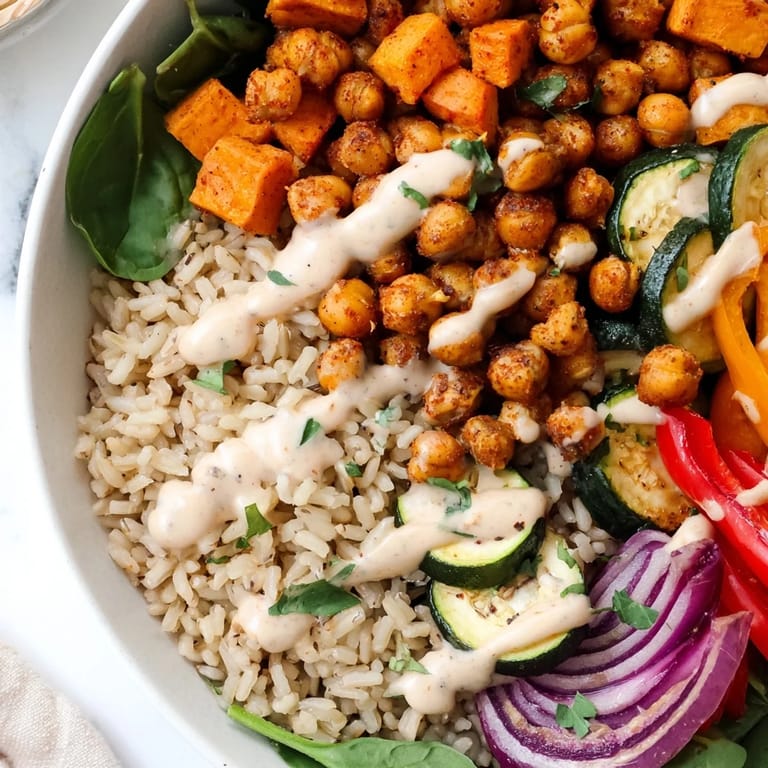
- Start with rice, add a handful of greens, then top with chickpeas and vegetables like you're arranging something you actually want to look at. Drizzle the sauce, scatter herbs, and squeeze lemon over everything.
 Save Pin
 Last winter, I made this for someone who was going through a hard time, and they told me later that it was the first meal in weeks that felt like someone had actually thought about them. That's when I understood that a Buddha bowl isn't really about being healthy or trendy—it's about showing up for yourself or someone else with color and care.
Why Roasting Changes Everything
There's something that happens in the oven that doesn't happen on the stovetop—heat caramelizes the sugars in the vegetables and the starches in the chickpeas, creating these little pockets of deep, complex flavor that boiling can never touch. The first time I roasted chickpeas instead of simmering them, I was shocked at how different they tasted, how they went from mushy to actually worth eating. Once you taste roasted chickpeas, you understand why this bowl works.
Building Bowls That Taste Like Intentionality
The order matters more than you'd think—rice first as your base, then the cooler greens so they don't wilt, then the warm chickpeas and vegetables on top so they stay crispy, then sauce and herbs last. I learned this by making the bowls wrong a dozen times, adding warm things first and watching the greens turn into something that looked defeated. Now I think of assembly like layering flavors and textures, not just dumping ingredients into a bowl.
Variations That Keep This From Getting Stale
Once you understand how this bowl works, you can swap almost anything—quinoa instead of rice if you want protein, avocado if you want richness, pickled onions if you want sharp and bright. I've made this bowl probably fifty times, and I've never made it the same way twice, which is exactly why I keep making it instead of getting bored. The structure stays, but the details bend to whatever your kitchen has or whatever you're craving.
- Add sliced avocado or a fried egg if you want something richer and more indulgent.
- Swap the tahini sauce for a ginger-lime dressing or a yogurt-based sauce if tahini isn't your thing.
- Roast extra chickpeas on the weekend and eat them as snacks—they last three days in an airtight container and taste like the best thing your kitchen ever made.
 Save Pin
 This bowl is proof that eating well doesn't have to be complicated or joyless—it just has to be intentional. Make it once and you'll understand why it keeps coming back to the table.