 Save Pin
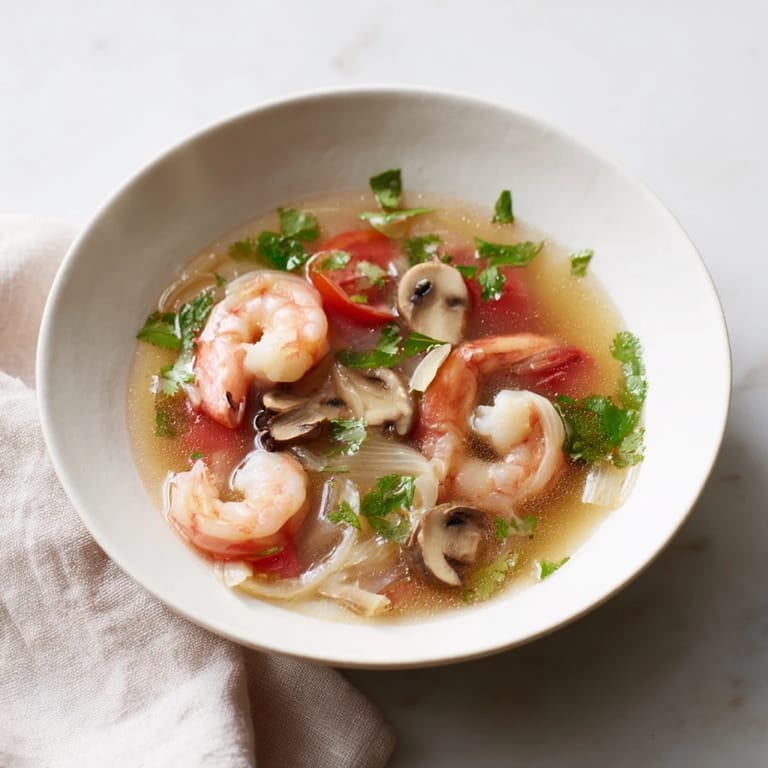
 The first time I tasted real tom yum soup was in a crowded Bangkok night market, steam rising from a vendor's massive pot while motorbikes whizzed past. I've been chasing that bright, thrilling heat and citrus punch ever since. Making it at home taught me that this soup isn't about complexity—it's about layering bold flavors so they hit all at once. Every bowl feels like a small escape, even when it's just my kitchen counter instead of Thailand.
I made this for my neighbor who kept mentioning she'd never had real Thai food, just the mild versions from delivery menus. She blew on the first spoonful like it was lava, then went back for more—the kind of reaction that makes you feel like you've done something right. She now texts me every few weeks asking if I'm making tom yum, which is maybe the highest compliment a home cook can get.
Ingredients
- Chicken or vegetable stock (4 cups): This is your foundation—use something with actual flavor, not the sad cardboard-tasting kind.
- Fresh lemongrass (2 stalks): Smash it hard before it goes in the pot so it releases that citrusy, almost perfume-like essence that makes tom yum unmistakable.
- Kaffir lime leaves (4): They look delicate but they pack serious brightness; tearing them helps them flavor the broth faster.
- Fresh galangal (3 slices): If you can't find it, ginger works, though galangal has a sharper, more peppery bite that's worth hunting for.
- Thai bird's eye chilies (2, sliced): These tiny guys mean business—start with one if you're nervous, you can always add more heat.
- Large shrimp (250 g): Quality matters here since they're not hidden under sauce; look for ones that smell like ocean, not ammonia.
- White mushrooms (150 g): Slice them thin so they absorb flavor and cook through in minutes.
- Tomatoes (2 medium): Wedges work better than chunks because they soften into the broth and add acidity.
- Small onion (1): Slice it thin so it becomes almost translucent and mingles with everything else.
- Fish sauce (2 tablespoons): I know it smells funky in the bottle, but it's the secret weapon that makes everything taste more like itself.
- Lime juice (1 tablespoon plus more): Fresh limes only—the bottled stuff won't give you that snap you're after.
- Sugar (1 teaspoon): Just a pinch to balance the heat and sourness; it's the unsung hero.
- Chili paste, nam prik pao (1 teaspoon, optional): If you want extra depth and smokiness, this adds it quietly.
Tired of Takeout? 🥡
Get 10 meals you can make faster than delivery arrives. Seriously.
One email. No spam. Unsubscribe anytime.
Instructions
- Build your aromatic base:
- Pour your stock into the pot and let it come to a gentle simmer—you want movement, not rolling boil. Pile in the lemongrass, kaffir leaves, galangal, and chilies, then step back and inhale. Let it infuse for 5 to 7 minutes; you'll see the broth shift from pale to golden as the flavors wake up.
- Add the vegetables:
- Drop in the mushrooms, tomatoes, and onion slices. They'll soften in about 3 to 4 minutes and start releasing their own flavors into the broth, turning it even richer.
- Cook the shrimp:
- Slide the shrimp in and watch closely—they'll turn pink and opaque in just 2 to 3 minutes, which is exactly when they're perfect. Overcooked shrimp gets rubbery, so don't wander away.
- Season to taste:
- Pour in the fish sauce, lime juice, sugar, and chili paste if you're using it. Stir it all together and taste—this is where you get to make it your own by adjusting heat, sourness, or saltiness.
- Finish and serve:
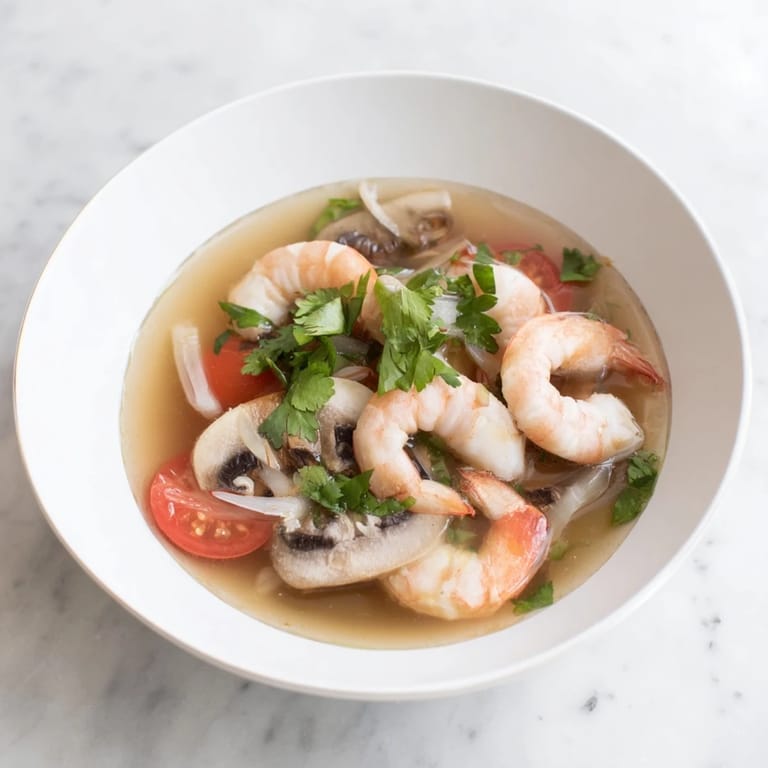
- You can fish out the lemongrass and galangal slices if you like things tidy, though some people leave them in for extra flavor. Ladle it into bowls and scatter cilantro, green onions, and lime wedges on top.
 Save Pin
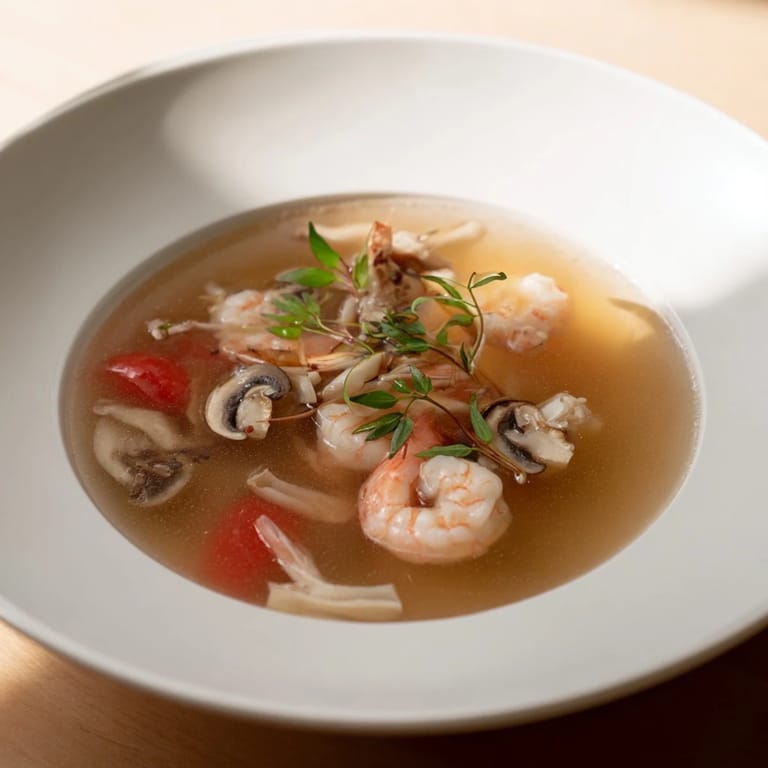
 There's a moment when everything comes together, usually around spoonful three, where the heat from the chilies, the brightness of the lime, the earthiness of the mushrooms, and the sweetness of the shrimp all converge. That's when you know you've got it right. That's also when people stop talking and just focus on eating.
The Heat Balance
Tom yum walks a tightrope between hot, sour, sweet, and savory, and finding your balance is part of the fun. Start conservative with the chilies and fish sauce, taste after each addition, and remember that lime juice can tone down heat while making it feel more vibrant. I've learned that heat preferences are personal—what makes one person light up makes another reach for the water pitcher, so let people adjust their own bowls at the end.
Timing and Texture
The magic is in not overcooking anything. The vegetables should still have a little resistance, the shrimp should still feel tender, and the broth should taste alive rather than tired. Everything happens quickly once you add the proteins, so have your fish sauce and lime juice measured and ready before you start cooking. This soup doesn't wait for anyone, which is part of what makes it so fun to make.
When You Have Leftovers
Tom yum keeps well for two or three days in the fridge, though the shrimp will get softer and the chili heat will mellow slightly. I actually like reheating it and adding fresh shrimp on top—you get the built-up flavor from the broth plus tender new pieces. If you're making it vegetarian with tofu, it's even better the next day because the tofu absorbs more flavor as it sits.
- Reheat gently and taste again before serving; you might need a squeeze of fresh lime.
- Add a splash of stock when reheating if it's gotten too thick or concentrated.
- Store the broth separately from fresh garnishes so everything stays fresh and bright.
 Save Pin
 This soup is one of those dishes that reminds you why cooking matters—it's fast, it's affordable, and it tastes like adventure. Make it often enough and it becomes the kind of meal you turn to when you want to feel something good.
Questions & Answers
- → What can I substitute for shrimp in this dish?
To make it vegetarian, replace shrimp with firm tofu and use soy sauce instead of fish sauce for a similar umami flavor.
- → How can I adjust the spiciness level?
Modify the number of Thai bird's eye chilies, reducing them for milder heat or adding more for extra spice according to taste.
- → Can I make this soup gluten-free?
Yes, use gluten-free stock and ensure any chili paste or sauces do not contain gluten to keep the soup safe for gluten-sensitive diets.
- → What is the role of lemongrass and kaffir lime leaves?
These aromatics infuse the broth with distinct citrus and herbal notes, essential for the authentic fresh flavor of the soup.
- → How long should I simmer the herbs before adding other ingredients?
Simmer lemongrass, kaffir lime leaves, galangal, and chilies for 5–7 minutes to fully release their flavors into the broth.