 Save Pin
 My kitchen counter was dusted with flour like fresh snow when I realized I'd been kneading pasta dough for nearly fifteen minutes, completely lost in the rhythm. Making ravioli by hand sounds intimidating, but once you get the feel of it, there's something almost meditative about folding those little pockets of filling. The first batch I ever made was lumpy and uneven, but they tasted like pure comfort. Now, every time I roll out that dough, I remember how something so simple can become something you're genuinely proud to serve.
I made these for my sister's birthday dinner last spring, and she still talks about it. We sat at the table long after we'd finished eating, just talking and laughing, with a little pile of basil leaves still on the serving plate. Food like this has a way of stretching time, making ordinary evenings feel special. It wasn't fancy or complicated, just honest and warm.
Ingredients
- All purpose flour: The foundation of your dough, and using the right amount makes all the difference between silky pasta and something tough.
- Eggs: They give the dough structure and that beautiful golden color, plus they help bind everything together.
- Ricotta cheese: Choose whole milk ricotta if you can, it's creamier and holds up better in the filling without getting watery.
- Fresh spinach: Wilts down to almost nothing, so don't be shy with the volume, and make sure you squeeze out every drop of moisture or your filling will be soggy.
- Parmesan cheese: Adds a sharp, salty punch that balances the mild ricotta beautifully.
- Nutmeg: Just a whisper of it brings warmth and depth without announcing itself.
- Marinara sauce: Whether you make it from scratch or grab a jar, a good marinara is your best friend here.
- Garlic: Sautéed just until fragrant, it wakes up the sauce without overpowering the delicate ravioli.
- Fresh basil: Torn at the last second, it adds a bright herbal note that ties everything together.
Tired of Takeout? 🥡
Get 10 meals you can make faster than delivery arrives. Seriously.
One email. No spam. Unsubscribe anytime.
Instructions
- Make the Pasta Dough:
- Mound your flour on a clean counter and create a well in the center like a little volcano. Crack the eggs into the well, add the salt, and use a fork to gently whisk them, slowly pulling in flour from the edges until a shaggy dough forms. Knead it for 8 to 10 minutes until it's smooth and springs back when you poke it, then wrap it tightly in plastic and let it rest for 30 minutes.
- Prepare the Filling:
- Steam or sauté the spinach until it wilts, then let it cool before squeezing out every bit of moisture you can, this step is crucial. Mix the spinach with ricotta, Parmesan, egg yolk, nutmeg, salt, and pepper until everything is evenly combined and creamy.
- Roll the Pasta:
- Cut your rested dough in half and work with one piece at a time, keeping the other covered. Roll it out as thin as you can, about 1/16 inch, using a pasta machine or a good rolling pin and a little patience.
- Shape the Ravioli:
- Lay one sheet of pasta flat and place small spoonfuls of filling about 2 inches apart. Brush the edges and spaces between the mounds with water, drape the second sheet over the top, and press gently around each mound to seal, making sure there are no air pockets. Cut into squares with a knife or ravioli cutter and crimp the edges with a fork.
- Cook the Ravioli:
- Bring a large pot of salted water to a gentle boil and slip the ravioli in carefully, working in batches so they don't stick together. They'll float to the top in 3 to 4 minutes, and that's when you know they're ready.
- Make the Marinara Sauce:
- Heat olive oil in a saucepan over medium heat and add the minced garlic, stirring until it smells amazing but not browned. Pour in the marinara, season with salt and pepper, and let it simmer gently for about 5 minutes.
- Serve:
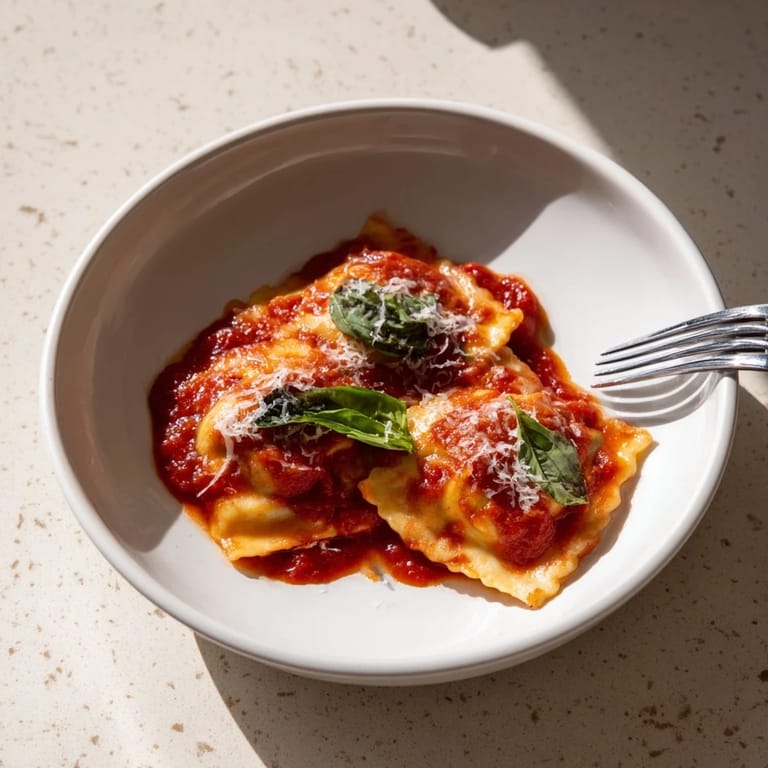
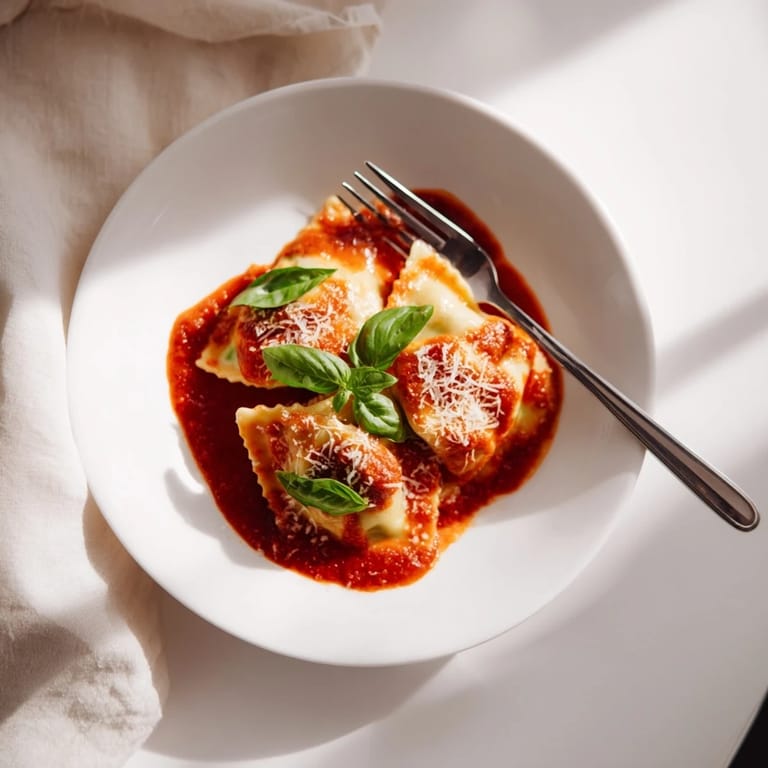
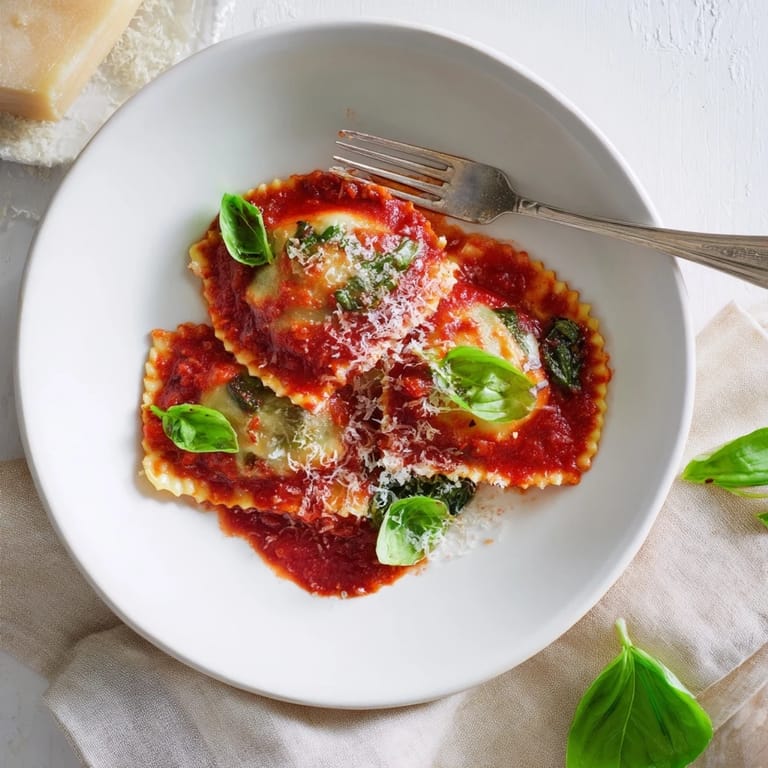
- Spoon a little sauce onto each plate, arrange the hot ravioli on top, and finish with more sauce, fresh basil, and a generous sprinkle of Parmesan. Serve immediately while everything is warm and fragrant.
 Save Pin
 There's a moment when you lift that first ravioli out of the water with a slotted spoon and it's plump and perfect, and you realize you actually made pasta from scratch. It's the kind of small victory that makes you want to call someone and tell them about it. This dish has a way of turning a regular weeknight into something you remember.
How to Store and Reheat
Cooked ravioli keeps well in the fridge for up to three days in an airtight container, layered with a bit of sauce to keep them from drying out. To reheat, I like to warm them gently in a skillet with a splash of water or extra sauce over low heat, covered, until they're heated through. You can also freeze uncooked ravioli on a baking sheet until solid, then transfer them to a freezer bag for up to two months. Cook them straight from frozen, adding an extra minute or two to the boiling time.
Ingredient Swaps and Variations
If you don't have fresh spinach, frozen works just as well, just thaw it completely and squeeze out all the liquid. I've also swapped in kale or Swiss chard when that's what I had on hand, and it was delicious. For a richer filling, try adding a few tablespoons of mascarpone or cream cheese. You can also play with the sauce, a simple brown butter and sage situation is incredible if you want something lighter than marinara.
Serving Suggestions
These ravioli shine on their own, but a crisp green salad with lemon vinaigrette and some crusty bread make it a full meal. A glass of chilled Pinot Grigio or Sauvignon Blanc is the perfect match, cutting through the richness of the cheese. If you're feeding a crowd, double the batch and set up a little assembly line, it goes faster than you'd think.
- Top with toasted pine nuts for a little crunch and extra richness.
- Drizzle with good quality olive oil just before serving for a silky finish.
- Pair with roasted vegetables like zucchini or cherry tomatoes for added color and flavor.
 Save Pin
 Homemade ravioli might take a little time, but it's the kind of cooking that feels like an accomplishment, not a chore. You'll want to make these again, I promise.
Questions & Answers
- → Can I prepare the ravioli ahead of time?
Yes, uncooked ravioli can be frozen for up to 3 months on a parchment-lined tray before transferring to an airtight container. Cook directly from frozen, adding 1-2 minutes to the cooking time.
- → How do I know when ravioli are done cooking?
Ravioli are ready when they float to the surface and cook for an additional 1-2 minutes. They should be tender but still have slight resistance when bitten.
- → What's the best way to prevent the filling from leaking out?
Ensure edges are thoroughly sealed by pressing firmly with a fork or your fingers after placing the top pasta sheet. Keep filling amounts modest (about one teaspoon) and brush edges with water before sealing.
- → Can I use frozen spinach instead of fresh?
Absolutely. Use thawed frozen spinach and squeeze out all excess moisture with a clean kitchen towel before chopping and mixing with the ricotta filling.
- → What wine pairs well with this dish?
A crisp white wine like Pinot Grigio or Vermentino complements the creamy filling and tomato sauce beautifully, cutting through the richness with its acidity.
- → Can I make this dairy-free?
Yes, substitute dairy ricotta and Parmesan with plant-based alternatives. Use aquafaba or flax egg as a binder in the filling. The texture will differ slightly but remain delicious.