 Save Pin
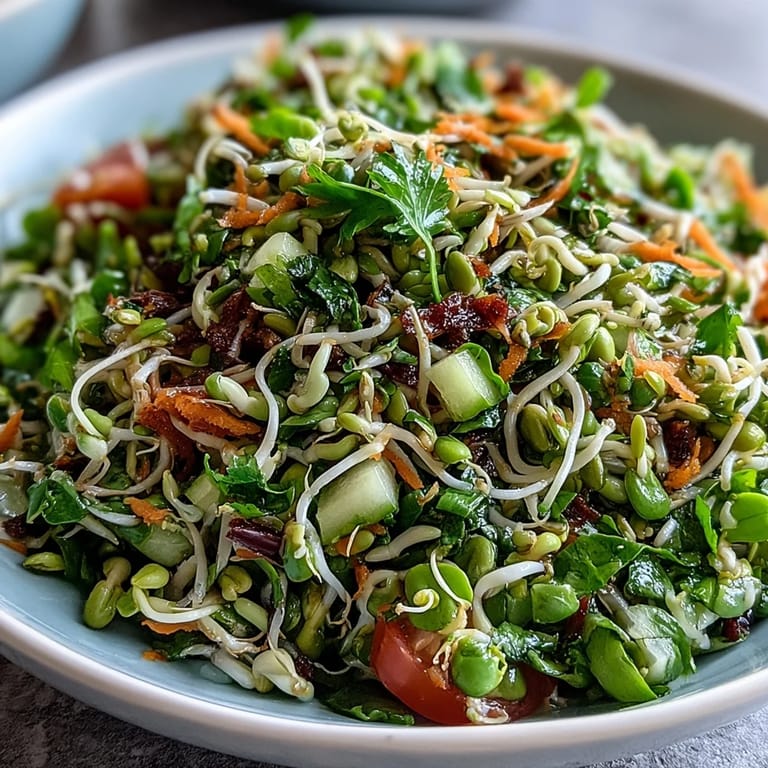
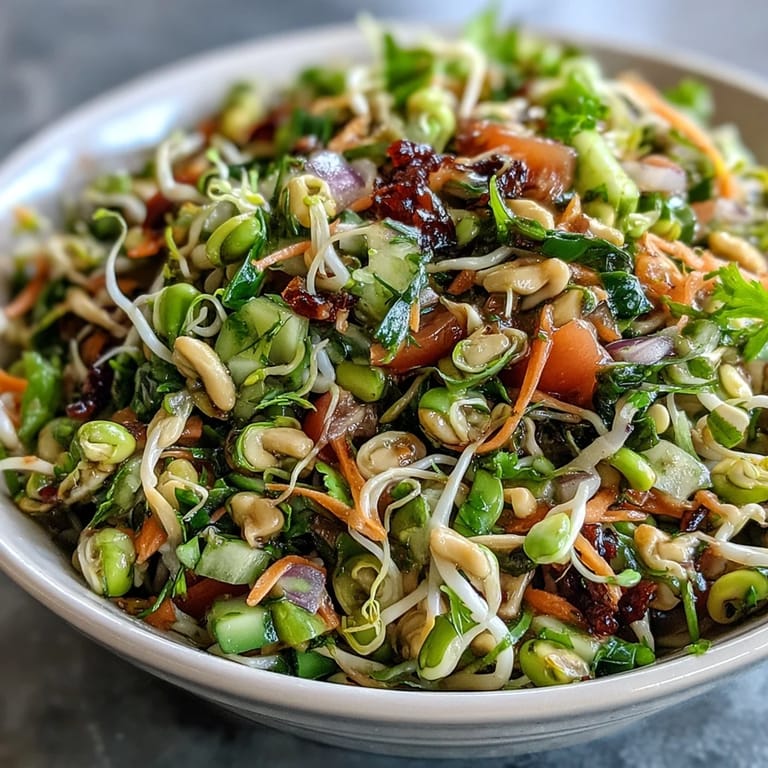
 There's something almost magical about watching sprouts transform from tiny seeds into vibrant, living vegetables right on your kitchen counter. One afternoon, I was arranging a handful of mung bean sprouts in a bowl when my roommate wandered in asking what I was doing with what looked like miniature vines. By the time I'd tossed together this salad with the cucumber and tomato, they were asking for the recipe. That's when I realized this wasn't just lunch—it was a conversation starter about real food.
I made this for a potluck once where everyone brought heavy casseroles and creamy salads. My sprouted seed salad sat there looking almost humble next to all those rich dishes, but it was the first thing that disappeared. Someone actually asked if I'd made it in a restaurant kitchen—turns out freshness and vibrant color speak louder than effort.
Ingredients
- Mung bean sprouts: These are the tender, mild ones that form the base—rinse them thoroughly or they'll harbor any grit hiding between the shoots.
- Alfalfa sprouts: Slightly more delicate than mung, they add a subtle peppery note that builds on the overall flavor.
- Radish sprouts: Don't be shy with these; they bring a sharp, almost mustard-like kick that transforms the whole salad.
- Cucumber, tomato, and bell pepper: Keep them in different sizes—some dice, some slightly larger—so you get varied texture with each bite.
- Carrot and red onion: The carrot adds sweetness while the raw red onion cuts through with sharpness, keeping everything balanced.
- Fresh cilantro: Adds a brightness that olive oil and lemon alone can't quite capture.
- Extra-virgin olive oil: Use one you actually enjoy tasting, because it's the backbone of your dressing and will shine through.
- Lemon juice: Always freshly squeezed—bottled just tastes like regret in comparison.
- Honey or maple syrup: Just a touch to round out the acid and add subtle sweetness without heaviness.
- Sea salt and black pepper: Don't skimp on the pepper; freshly ground makes an actual difference here.
Tired of Takeout? 🥡
Get 10 meals you can make faster than delivery arrives. Seriously.
One email. No spam. Unsubscribe anytime.
Instructions
- Rinse your sprouts like you mean it:
- Run them under cold water and gently separate them with your fingers to make sure every tiny sprout gets clean. I learned the hard way that neglecting this step means gritty salad.
- Build your base:
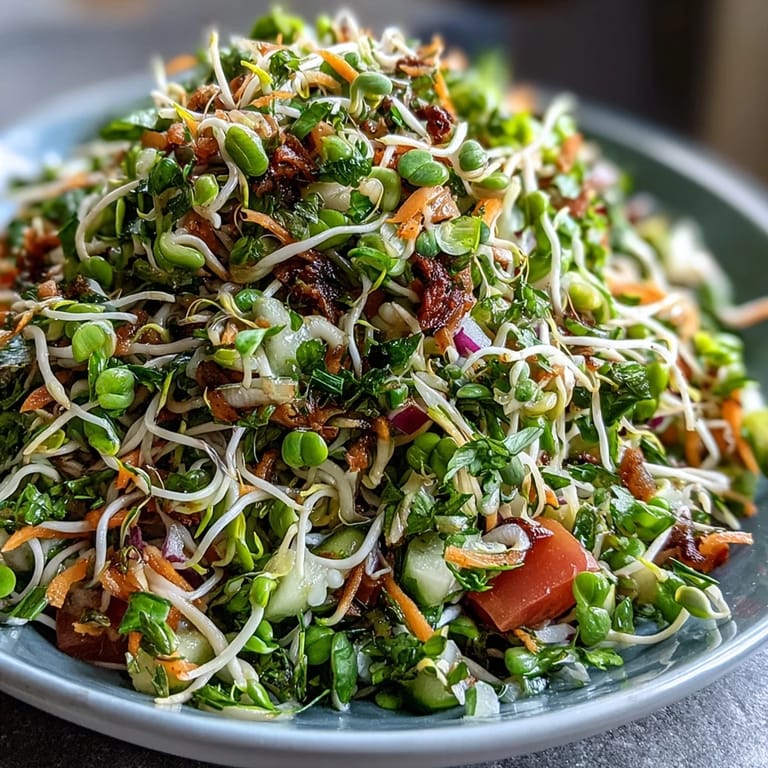
- Combine all three sprouts in your large bowl—they should fill about a third of it before you add anything else. This creates a fresh, springy foundation.
- Layer in your vegetables:
- Add the cucumber, tomato, bell pepper, carrot, and red onion in that order. The weight of the vegetables naturally distributes them as you toss.
- Make your dressing with intention:
- Whisk the olive oil with lemon juice first, then add honey and seasonings—this order helps everything emulsify properly. Taste it straight from the whisk before committing it to the salad.
- Toss gently like you're handling something precious:
- Use your hands or two spoons to coat everything evenly, being careful not to bruise the delicate sprouts. You want the dressing distributed, not the vegetables beaten down.
- Eat it right away:
- Sprouts release water as they sit, so serve this immediately while everything is still crisp and the flavors are singing.
 Save Pin
 There was a moment during a quiet Sunday lunch when I realized I was genuinely excited to eat a salad. No guilt, no obligation, just the simple pleasure of something fresh and alive on my plate. That's when a recipe stops being instructions and becomes part of your kitchen routine.
The Truth About Sprouts
Sprouts are basically vegetables at their most vital—packed with enzymes and nutrients that haven't been diluted yet by storage and time. They're also slightly temperamental, which is part of their charm if you're willing to respect their nature. Rinse them right before using, keep them cool, and they'll repay your attention with flavor and texture that regular vegetables can't match.
Dressing Ratios That Actually Work
There's a magical proportion to vinaigrettes that once you understand it, opens up entire worlds of salad making. For this one, I use roughly three parts oil to one part acid, with the sweetness and salt adjusting everything else into harmony. The honey isn't there to make it taste like dessert—it's there to soften the brightness of the lemon and make the dressing feel complete rather than sharp.
Making This Salad Your Own
This recipe is honestly a framework, and it welcomes improvisation better than most dishes. Swap in whatever vegetables are looking good at the market, use lime instead of lemon if that's what you have, or add avocado if you want something creamier. The sprouts are the constant that ties everything together, but around them you're free to build what sounds good on any given day.
- Sliced avocado adds richness without making the salad feel heavy or wrong.
- Roasted sunflower or pumpkin seeds bring crunch that plays beautifully against the delicate sprouts.
- A touch of sesame oil mixed into your dressing deepens everything in the most unexpected way.
 Save Pin
 This salad has become my go-to proof that healthy eating doesn't require sacrifice or creativity gymnastics. Eat it and feel genuinely nourished, not virtuous.
Questions & Answers
- → How long does sprouted seed salad stay fresh?
For optimal freshness and texture, serve the salad immediately after tossing with dressing. The dressed salad keeps for 1-2 hours refrigerated. To prepare ahead, store chopped vegetables and rinsed sprouts separately, then combine with fresh dressing just before serving to maintain crisp textures.
- → Can I use different sprout varieties?
Absolutely. Broccoli sprouts, clover sprouts, sunflower sprouts, or pea shoots work beautifully in this mix. Choose firm, fresh sprouts with no signs of wilting or sliminess. Rinse all sprouts thoroughly before combining to remove any hulls or debris.
- → What can I substitute for honey to keep it vegan?
Pure maple syrup, agave nectar, or date syrup all work as natural liquid sweeteners in the dressing. Start with 1 teaspoon and adjust to taste. For a completely unsweetened version, simply omit the sweetener—the lemon and olive oil create plenty of flavor on their own.
- → How do I properly clean and prepare sprouts?
Rinse all sprouts thoroughly under cold running water for at least 30 seconds, gently separating the strands to remove any seed hulls or debris. Drain well in a colander or pat dry with clean towels. Examine sprouts for freshness—they should smell mild and look crisp with no yellowing or sliminess.
- → What proteins pair well with this sprouted salad?
Grilled chicken, baked tofu, chickpeas, or quinoa make excellent protein additions. Sliced avocado adds creaminess and healthy fats. For a complete meal, top with roasted nuts or seeds like pumpkin, sunflower, or sliced almonds—just be mindful of any nut allergies when serving.