 Save Pin
 There's a Thai restaurant near my apartment that makes this soup so good I'd find excuses to walk past it just to catch the aroma through the door. One rainy Wednesday, I finally admitted I couldn't afford to keep ordering it, so I decided to make it at home. The first time I cracked open a can of coconut milk and smelled that creamy richness mixing with green curry paste, I realized the restaurant's secret wasn't locked away—it was sitting right there on grocery store shelves, waiting for me to learn.
I made this for my roommate after she had the kind of day where everything went wrong, and watching her face change after the first spoonful reminded me that food doesn't need to be complicated to feel like medicine. She asked for the recipe before she'd finished her bowl, and that's when I knew I'd nailed something.
Ingredients
- Firm tofu or chicken breast: The protein foundation that soaks up all that coconut-curry goodness—I learned to cube the tofu before cooking so it gets tiny, crispy edges that catch the sauce.
- Green curry paste: This is your flavor anchor, so don't be timid with it; those two tablespoons do all the heavy lifting.
- Coconut milk: The creamy soul of the soup—full-fat makes it luxurious, but light coconut milk works if you're cutting calories.
- Vegetable or chicken broth: Use good broth if you have it; it makes a noticeable difference in depth.
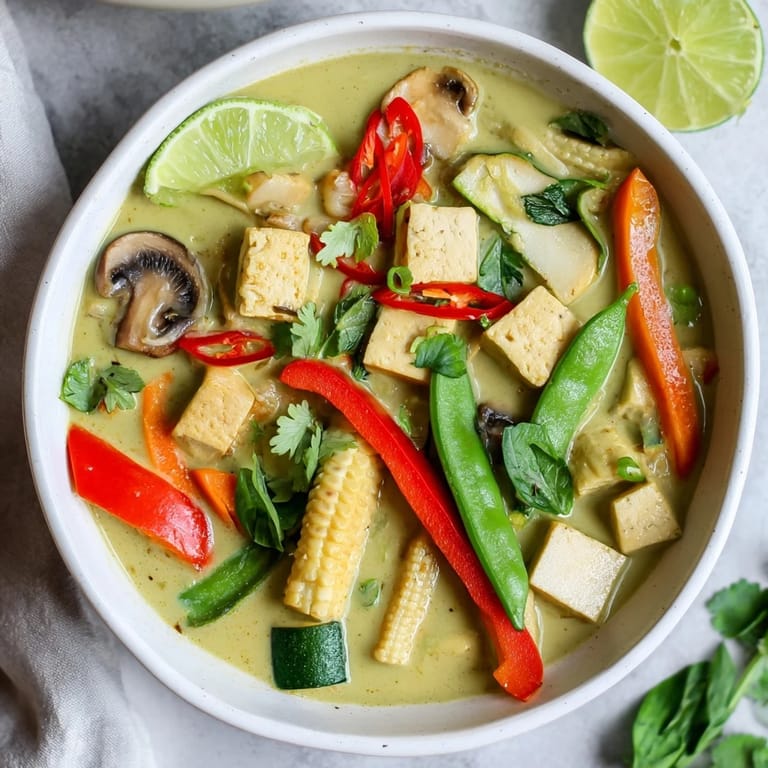
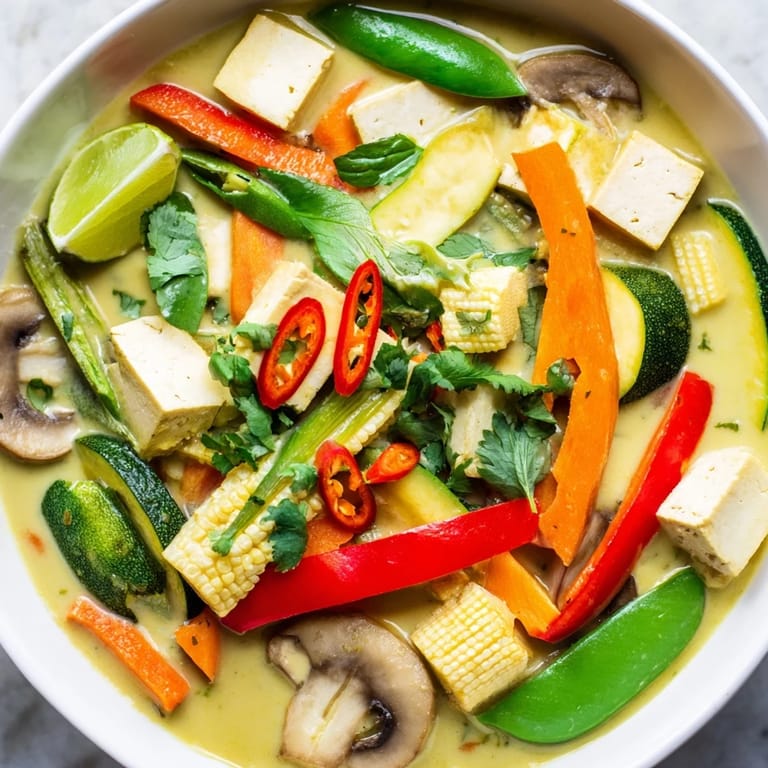
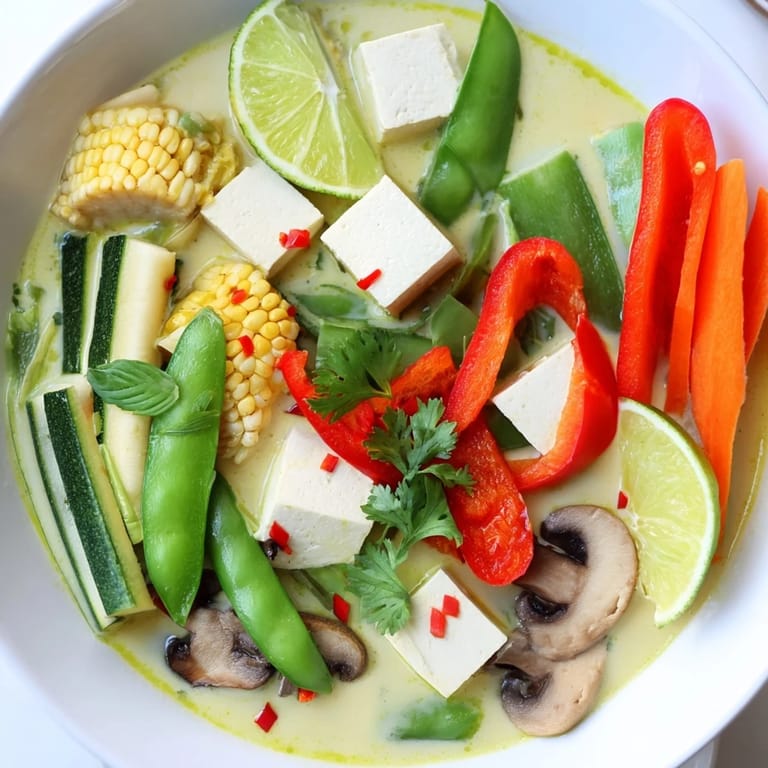
- Fresh vegetables: Red bell pepper, zucchini, baby corn, snap peas, mushrooms, carrot, and onion create a vegetable garden in a bowl—choose whatever looks fresh at your market.
- Fish sauce: A secret ingredient that tastes funky on its own but rounds out the whole soup; soy sauce works for vegetarian versions.
- Fresh cilantro and Thai basil: These aren't optional garnishes—they transform the soup from good to memorable with their bright, herbaceous snap.
Tired of Takeout? 🥡
Get 10 meals you can make faster than delivery arrives. Seriously.
One email. No spam. Unsubscribe anytime.
Instructions
- Wake up the curry paste:
- Heat oil in your pot and add the green curry paste, letting it toast for a minute or two until your kitchen smells like a Bangkok street market. This step matters more than you'd think—it blooms the flavors so they're ready to mingle with everything else.
- Build your base:
- Throw in the sliced onion and let it soften, then add your protein and cook just until it starts changing color. You're not cooking it through yet; that happens later in the coconut milk.
- Create the soup:
- Pour in the coconut milk and broth together, stirring gently to break up the curry paste so it distributes evenly. Bring it to a gentle simmer—never a rolling boil, which can split the coconut milk and make your soup look separated.
- Add vegetables by texture:
- Add everything at once and let it simmer for eight to ten minutes until the vegetables are just tender but still have some bite. This is where you need to pay attention; overcooked vegetables turn mushy and lose their personality.
- Season and finish:
- Stir in the fish sauce and sugar, taste it, and adjust—this is your moment to make it exactly how you like it. Some days I want more lime brightness, other days I want deeper spice.
 Save Pin
 I've learned that this soup is one of those dishes that brings people together without trying; there's something about a warm bowl of coconut-curry broth that makes everyone at the table feel like they're on the same team. My mom, who usually cooks the same five dishes, asked me to make this for her book club, and I took that as the highest compliment she could give.
Choosing Your Protein
The choice between tofu and chicken changes the personality of the soup but not its soul. Tofu gives you a lighter, almost delicate version that feels more vegetable-forward, while chicken brings a subtle richness and makes the soup feel more substantial. I rotate between them depending on the season and my mood—chicken in winter when I want something hearty, tofu in summer when I'm craving something that feels clean and bright.
Vegetable Flexibility
This soup is forgiving about vegetables in a way that's actually liberating. Baby corn, snap peas, and mushrooms are the skeleton, but everything else is a suggestion, not a rule. I've made versions with broccoli when that's what was in my crisper drawer, added spinach at the end for extra green, even thrown in some green beans when I was feeling inventive. The soup absorbs whatever you give it and asks for seconds.
Serving and Pairing
This soup becomes a complete meal when you serve it with jasmine rice or rice noodles on the side, letting everyone build their own ratio of soup to starch. I've also served it in small bowls as a first course before something lighter, and it works beautifully that way too. The lime wedges and fresh herbs at the end aren't garnish—they're flavor adjustments that each person can control, which somehow makes the whole experience feel more generous.
- Squeeze lime juice directly into your bowl just before eating for brightness that cuts through the richness.
- Tear Thai basil leaves with your fingers instead of chopping to release more of their anise-like perfume.
- Have extra sliced chili on the table so people can adjust heat level without you cooking two different pots.
 Save Pin
 This is the kind of recipe that tastes like you spent all afternoon cooking but took barely any time at all, which means you can feed people on a weeknight and still feel like you pulled off something special. Once you make it once, you'll find yourself craving it again and again.
Questions & Answers
- → What proteins work best in this dish?
Firm tofu or boneless, skinless chicken breast suit this curry well, each absorbing flavors while providing texture.
- → How can I adjust the spice level?
Increase green curry paste or add fresh sliced chili to boost heat, or reduce paste for milder taste.
- → Can I substitute coconut milk?
Light coconut milk can be used for a lower-fat option, but full-fat coconut milk delivers richer creaminess.
- → What vegetables are ideal for this curry?
Bell peppers, zucchini, baby corn, snap peas, mushrooms, carrots, and onions provide vibrant color and texture.
- → Is this dish gluten-free?
Yes, if gluten-free soy sauce is used instead of regular soy sauce, it fits gluten-free diets.
- → Best accompaniments for serving?
Steamed jasmine rice or rice noodles complement the flavors and soak up the aromatic broth.