 Save Pin
 My neighbor dropped by one rainy afternoon with a jar of homemade ginger paste and asked if I knew what to do with it. I didn't want to admit I'd been intimidating myself with Asian cooking, so I grabbed what I had in the kitchen and made this soup on the spot. She took one spoonful and closed her eyes—that's when I realized this wasn't just about following a recipe, it was about trusting the ingredients to speak for themselves.
I made this for my sister during her first week of a new job when she was too tired to think about cooking. She sat at my kitchen counter, and as she sipped the soup, her shoulders actually dropped. She said it tasted like someone was taking care of her, and honestly, that's exactly what I was doing.
Ingredients
- Low-sodium vegetable broth (1.5 liters): This is your foundation, so choose one you'd actually drink straight—it makes all the difference when nothing else is competing for attention.
- Soy sauce (2 tablespoons): Use tamari if you need gluten-free, and taste as you go because brands vary wildly in saltiness.
- Fresh ginger (1 tablespoon, thinly sliced): Slicing instead of mincing keeps it intact so you can fish out the pieces if you like, and it releases oils more gently into the broth.
- Garlic (2 cloves, minced): Mince it small so it disappears into warmth rather than announcing itself.
- Sesame oil (1 teaspoon): A little goes so far here—this is the secret to why it tastes restaurant-quality without fussing.
- Carrot (1 medium, julienned): Julienne means thin matchsticks, and they cook quickly while staying slightly crisp, which keeps the soup from feeling mushy.
- Shiitake mushrooms (100 g, sliced): Their earthy flavor becomes almost meaty in the broth, so don't skip them thinking they're optional.
- Baby bok choy (100 g, chopped): It softens quickly without falling apart, staying tender but not sad.
- Red bell pepper (1 small, thinly sliced): The color matters as much as the sweetness—it makes the bowl look intentional.
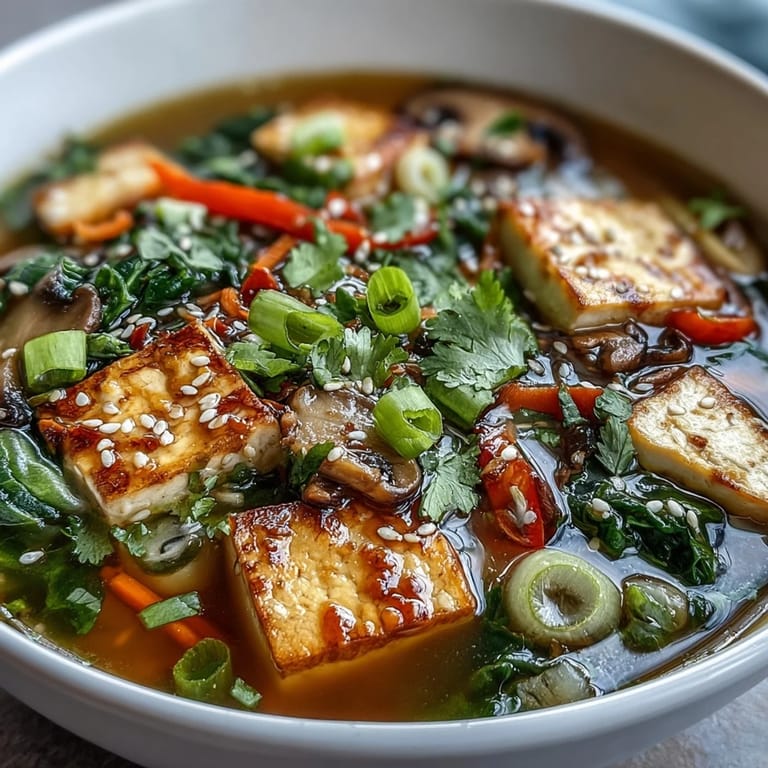
- Spring onions (2, sliced): Save these for the end so they stay bright and a little bit crisp, adding texture to every spoonful.
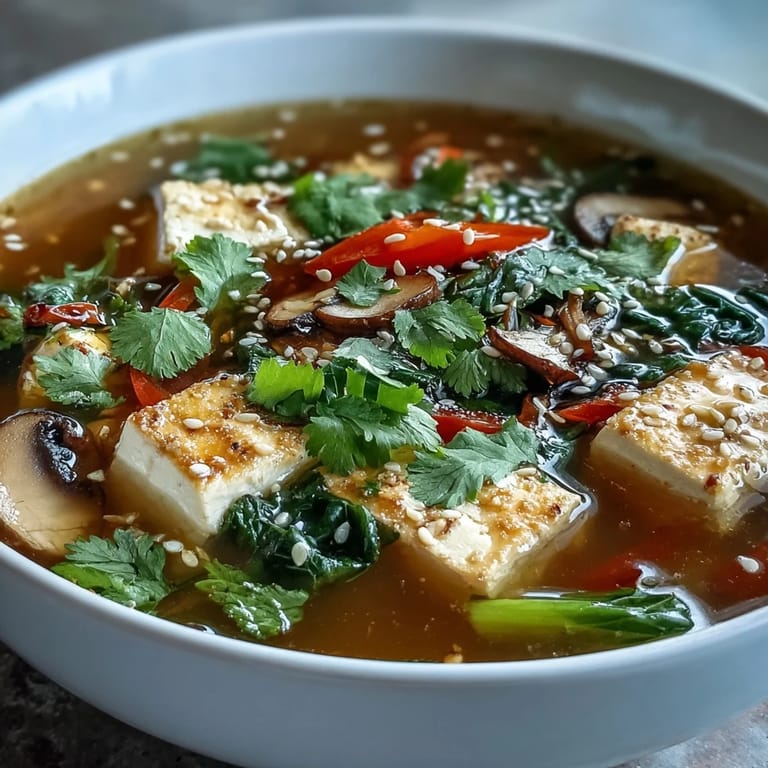
- Silken tofu (300 g, cubed): Silken, not firm—it's almost custard-like and becomes part of the broth rather than fighting it.
- Fresh cilantro, toasted sesame seeds, and lime wedges (optional garnishes): These turn a simple bowl into something you'll actually want to photograph.
Tired of Takeout? 🥡
Get 10 meals you can make faster than delivery arrives. Seriously.
One email. No spam. Unsubscribe anytime.
Instructions
- Wake up the aromatics:
- Heat that sesame oil over medium heat and listen for the first whisper of sizzle. Add garlic and ginger, then lean in close—when it smells like you're standing in an Asian market, you're there.
- Build your base:
- Pour the broth and soy sauce into the pot and let it come to a gentle simmer, not a rolling boil. You want it to steam and murmur, not shout.
- Add the patient vegetables:
- Toss in carrots, mushrooms, and bell pepper. They need five minutes to begin softening but still hold their shape when you taste them.
- Finish with the quick-cooking greens:
- Bok choy and spring onions join the party for just two to three minutes, wilting slightly but keeping their personality.
- Introduce the tofu gently:
- This is where patience matters most. Drop the tofu cubes in slowly and let them warm for two minutes without stirring aggressively, or they'll crumble into clouds. You want them to stay whole and silky.
- Taste and adjust:
- Salt builds quietly in soup, so a careful taste tells you if you need more soy sauce. Trust what your mouth says.
- Serve with intention:
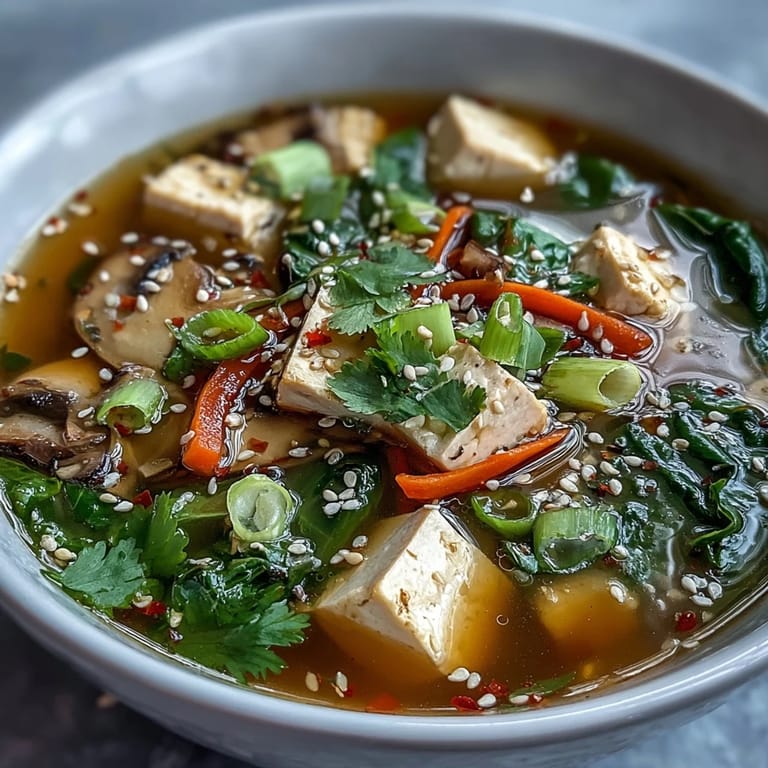
- Ladle into bowls and add cilantro, sesame seeds, and a lime squeeze if you have them. The lime especially makes everything brighter.
 Save Pin
 My eight-year-old nephew refused to eat tofu until he had this soup, and watching him discover it wasn't scary or weird changed how I think about introducing people to new foods. He asked for seconds and wanted to know if we could make it again next week.
The Magic of Silken Tofu
Silken tofu is so different from what most people think tofu is that it almost deserves its own name. It's custardy, it's mild, and in warm broth it becomes something that feels more like eating clouds than eating protein. The first time you bite into it in soup, you understand why people keep it around at all.
Making It Your Own
This recipe is almost a template, honestly. I've added enoki mushrooms when I had them, swapped in napa cabbage for bok choy, thrown in snow peas, and even stirred in chili oil when I wanted it to wake me up. The structure stays the same but the details are yours to play with, which makes it feel less like following orders and more like cooking.
Shortcuts and Honest Moments
Some nights I use store-bought ginger paste instead of fresh, and nobody notices because the sesame oil and soy sauce do most of the talking anyway. I've also made this in a rush by chopping everything into slightly thicker pieces and shortening the cooking time, and it's still tasted genuinely good. Cooking doesn't always have to be precious to be worthwhile.
- Prep all your vegetables before you turn on the heat so you're not scrambling while the broth simmers.
- If silken tofu intimidates you, start by just dropping cubes in gently and looking the other way until it's done cooking.
- Taste the broth before adding tofu so you know exactly how salty you want the final bowl to be.
 Save Pin
 This soup has become my go-to when I want to feed someone without overthinking it, or when I need to remind myself that simple cooking is often the most satisfying kind. Make it once and it'll probably become yours too.
Questions & Answers
- → Can I use firm tofu instead of silken tofu?
Yes, firm tofu works well and provides more texture. Cubes hold their shape better during simmering, while silken tofu absorbs more broth flavor and has a delicate, creamy consistency.
- → What vegetables can I substitute?
Snow peas, napa cabbage, enoki mushrooms, spinach, or snap peas make excellent additions. The recipe adapts easily to whatever fresh vegetables you have on hand.
- → How can I make this soup spicy?
Add a dash of chili oil, sliced fresh chili peppers, or sriracha during the final minutes of cooking. Adjust the heat level to your preference.
- → Is this soup freezer-friendly?
The broth freezes well for up to 3 months. For best results, freeze the soup without tofu and add fresh silken tofu when reheating, as frozen tofu can become grainy.
- → Can I make this gluten-free?
Simply replace regular soy sauce with tamari. Ensure all other ingredients, particularly the vegetable broth, are certified gluten-free.
- → How long does this soup keep in the refrigerator?
Store in an airtight container for up to 3 days. Reheat gently over medium-low heat, taking care not to break up the tofu cubes.