 Save Pin
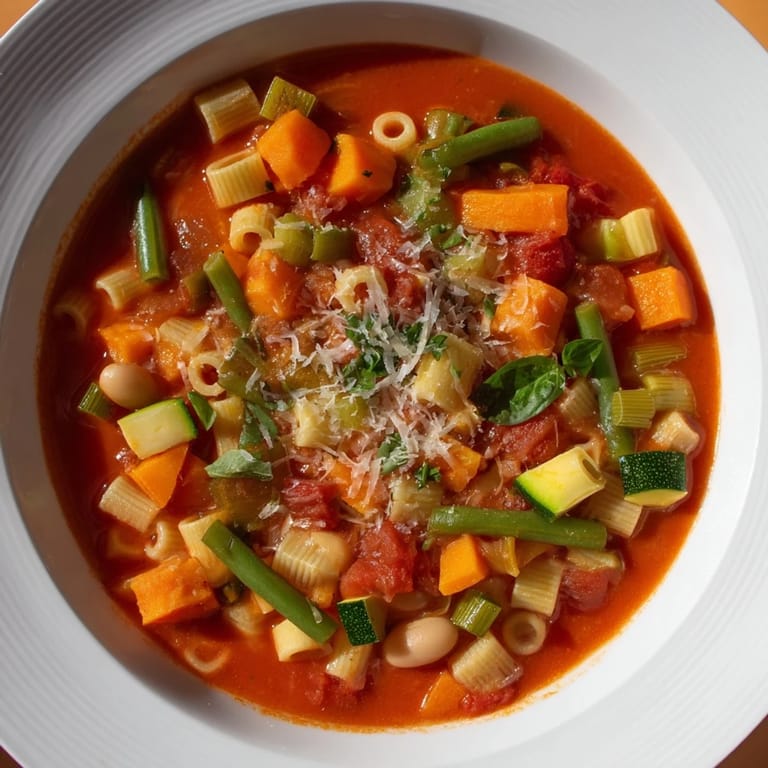
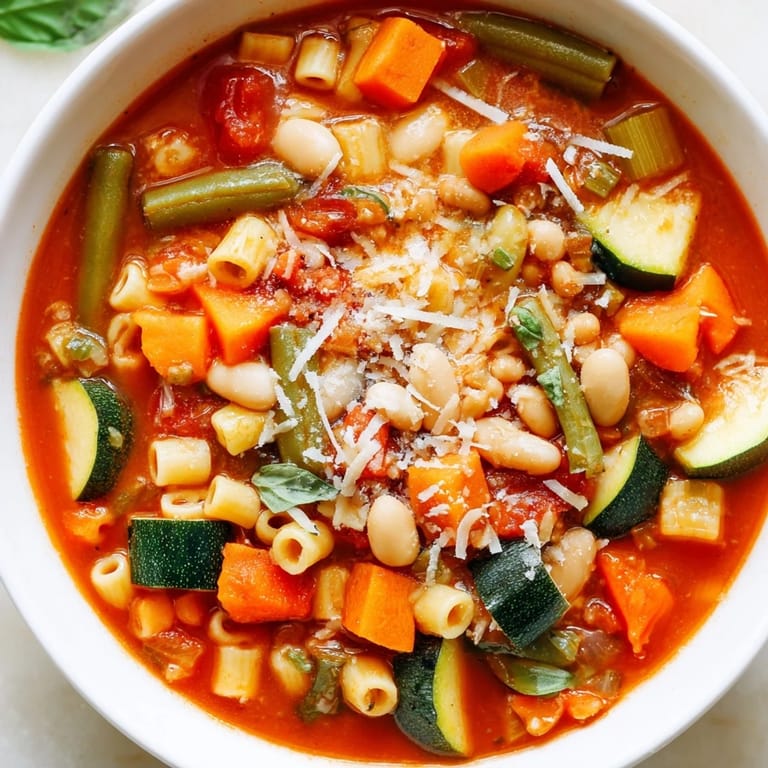
 There's something magical about a pot of minestrone simmering on the stove, filling the kitchen with that unmistakable blend of tomato, basil, and garlic. I discovered this particular version on a chilly autumn afternoon when I was trying to stretch a handful of vegetables into something substantial, and it became one of those soups that somehow tastes better the next day. The beauty of it is how forgiving it is—you can swap vegetables based on what's in your crisper, and it never fails to comfort. My family has claimed it as their cold-weather staple, and honestly, I've stopped counting how many times I've made it since.
I'll never forget serving this to my friend Marcus on a rainy Tuesday when he'd had a rough week at work. He came over expecting something simple, and when he had his first bowl, he actually paused and said, 'This is what I needed.' That's when I realized minestrone is more than just soup—it's the kind of dish that says, 'I'm taking care of you.' Now whenever someone needs comfort food, this is what I make.
Ingredients
- Olive oil: Start with good quality if you can, as it adds a subtle fruity note that elevates the whole pot.
- Onion, carrots, and celery: This holy trinity is the foundation of every great soup—don't skip the sautéing step because it builds the flavor base everything else rests on.
- Garlic: Mince it fresh and add it after the softer vegetables so it doesn't burn and turn bitter.
- Zucchini and green beans: These add freshness and texture; they should still have a slight bite when the soup is done.
- Diced and crushed tomatoes: The combination of both gives you depth—the diced ones offer little pockets of texture while the crushed ones create that rich base.
- Vegetable broth: This is your canvas, so use something you'd actually want to drink on its own.
- Oregano, thyme, salt, and pepper: Keep these measured out before you start because once things are cooking, it moves fast.
- Tomato paste: This concentrated stuff is a flavor multiplier—stir it in with the broth so it dissolves evenly.
- Small pasta: Ditalini works beautifully because it's small enough to tuck into each spoonful without dominating the bowl.
- Cannellini beans: Rinse them well to avoid that starchy liquid that can cloud your broth.
- Fresh basil and parsley: Add these at the very end so their brightness doesn't get cooked away.
- Parmesan cheese: Optional, but a generous handful stirred in just before serving makes it feel special.
Tired of Takeout? 🥡
Get 10 meals you can make faster than delivery arrives. Seriously.
One email. No spam. Unsubscribe anytime.
Instructions
- Start with the aromatics:
- Heat your olive oil over medium heat and add the diced onion, carrots, and celery. You're looking for them to soften and become a bit translucent, about 5 minutes—this is where the foundation of flavor happens. Listen for that gentle sizzle, and don't walk away; you want to catch them just before they start to color.
- Build the flavor:
- Stir in the minced garlic along with the zucchini and green beans, and let them cook for just 3 minutes. The garlic will become fragrant, and the fresh vegetables will start to release their moisture.
- Create the broth:
- Pour in both the diced and crushed tomatoes, add your vegetable broth, and stir in the oregano, thyme, salt, pepper, and tomato paste. The mixture might look a bit thick at first, but as it heats, everything will meld together beautifully and come to a boil.
- Let it simmer:
- Once it's boiling, turn the heat down and let it simmer uncovered for 15 minutes. This allows the flavors to deepen and concentrate—you'll notice the color becoming richer and the aroma more complex.
- Finish with pasta and beans:
- Add the pasta and the drained cannellini beans, and simmer for another 10 to 12 minutes until the pasta is tender but not mushy. The soup will thicken slightly as the pasta releases its starch, which is exactly what you want.
- Brighten it up:
- Stir in the fresh basil and parsley right at the end, then taste and adjust your seasoning. Sometimes a pinch more salt or a crack of black pepper is all it needs to feel perfect.
 Save Pin
 One winter, I made this soup for a potluck at my neighbor's, and it ended up being the dish that ran empty while everything else sat half-full. People asked for the recipe, came back for seconds, and honestly, it felt like the biggest compliment. That's when I realized a good minestrone isn't just food—it's the kind of thing that brings people together without any fuss.
Variations Worth Trying
The skeleton of this recipe is flexible enough to bend with what you have on hand. I've made it with kale instead of spinach, added roasted red peppers for sweetness, and once threw in a handful of white beans because that's what I had in the pantry. The key is keeping your tomato base and herbs intact—everything else is negotiable. Some folks add a rind of Parmesan to simmer with the broth for extra umami, and I've seen people stir in a splash of red wine for a little depth.
Storage and Reheating
Minestrone is genuinely one of those dishes that improves after sitting in the refrigerator for a day or two as the flavors continue to mingle. Store it in an airtight container for up to 5 days, and if you want to freeze it, keep the pasta separate because it'll absorb too much liquid during thawing. When you reheat, do it gently over medium heat with a splash of water or broth if it's thickened too much.
How to Make It Feel Special
The secret to turning this into something that feels fancier than it is lies in the finishing touches and the care you put into preparation. Take a moment to chop your vegetables by hand instead of using a food processor—there's something about the uniform, intentional dice that makes a difference in both texture and appearance. Taste it several times as it cooks, and don't rush the simmer time because that's when the magic happens.
- Finish each bowl with a small drizzle of really good olive oil, a crack of fresh black pepper, and a handful of grated Parmesan if you eat cheese.
- Serve it with thick slices of crusty bread that you've rubbed with garlic and toasted—it becomes a reason to slow down and actually enjoy the meal.
- A simple green salad alongside it rounds everything out and adds a fresh note that cuts through the richness of the soup.
 Save Pin
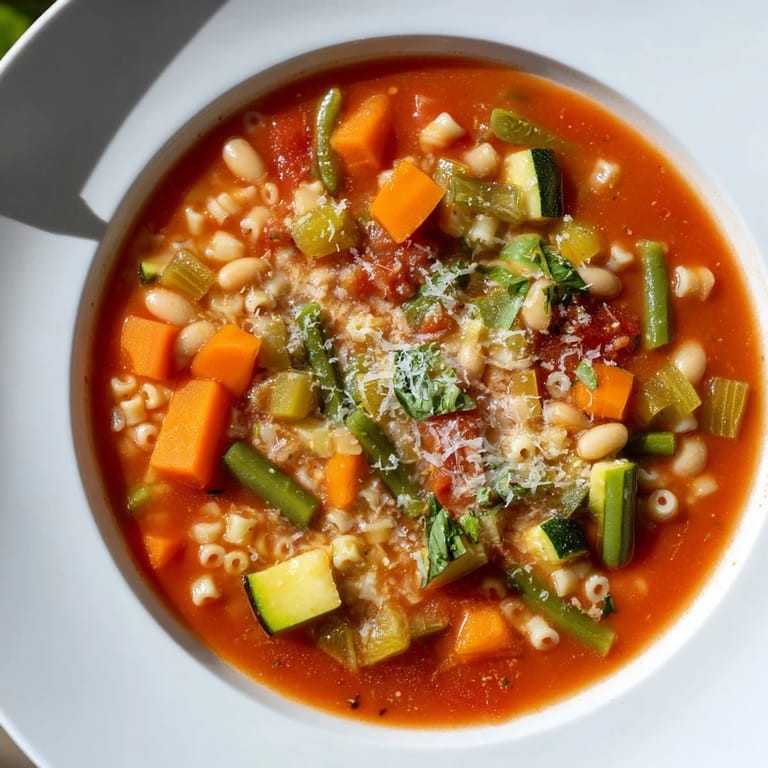
 There's comfort in simplicity, and minestrone is the embodiment of that. It's the soup that asks nothing of you but asks so little that you wonder why you don't make it more often.
Questions & Answers
- → What pasta works best for this soup?
Small shapes like ditalini or elbow macaroni are ideal as they cook evenly and complement the texture of vegetables and beans.
- → Can I make this dish gluten-free?
Yes, simply substitute regular pasta with gluten-free pasta varieties to suit dietary needs.
- → How can I add more greens to the soup?
Adding spinach or kale near the end of cooking boosts nutritional value and brightens the flavor without altering cooking time significantly.
- → Is Parmesan cheese necessary for serving?
Parmesan adds a savory depth but can be omitted for vegan diets or dairy intolerance without impacting the core flavors.
- → How long does it take to prepare this dish?
The total time is around 55 minutes, including 20 minutes for preparation and 35 minutes of cooking for optimal flavor development.