 Save Pin
 There's something almost meditative about watching spinach wilt in a hot pan, the way those leafy bundles transform from rigid and bright to silky and dark in just a few minutes. I discovered this soup on a Tuesday when my farmer's market haul threatened to overflow, and I needed something that would use up that beautiful bunch of fresh spinach before it turned. What started as a practical solution became something I now make whenever I want comfort in a bowl without the heaviness.
I made this for my neighbor who'd just gotten home from the hospital, and watching her face soften at that first spoonful reminded me why simple food done well matters so much. She asked for the recipe, and when I told her it was mostly just spinach, potato, and cream, she laughed because she'd expected something more complicated. That's the real magic of this soup—it feels fancier than it actually is.
Ingredients
- Unsalted butter (2 tablespoons): This is your flavor foundation, and unsalted lets you control the seasoning from start to finish—salted butter can sneak up on you.
- Medium onion (1, finely chopped): The sweetness that builds as it softens anchors the entire soup and mellows any sharp edges from the greens.
- Garlic (2 cloves, minced): Don't skip the minute of cooking after adding it; that's when garlic stops being raw and becomes aromatic and welcoming.
- Medium potato (1, peeled and diced): This creates body and creaminess without needing more cream, and it thickens the soup naturally as it breaks down.
- Fresh spinach (300 g / 10 oz, washed and roughly chopped): Fresh spinach is brighter than frozen, though frozen works in a pinch if you thaw and squeeze out excess moisture first.
- Vegetable stock (750 ml / 3 cups): Use a good quality stock you'd actually taste on its own; it's the backbone of everything else.
- Heavy cream (120 ml / ½ cup): This arrives at the very end and transforms the soup from nice to luxurious with just a few swirls.
- Salt (½ teaspoon) and black pepper (¼ teaspoon, freshly ground): Always grind your pepper fresh right before serving—pre-ground loses its brightness.
- Ground nutmeg (pinch, optional): It's optional but worth trying; just a whisper adds a warmth that makes people ask what's in there.
Tired of Takeout? 🥡
Get 10 meals you can make faster than delivery arrives. Seriously.
One email. No spam. Unsubscribe anytime.
Instructions
- Soften the onion base:
- Melt butter over medium heat and add your chopped onion, listening for that gentle sizzle. You're looking for about 3 to 4 minutes until the onion turns translucent and smells almost sweet.
- Build the aromatics:
- Add minced garlic and stir constantly for one full minute—this brief cooking time wakes up the flavor without letting it burn or taste harsh. You'll smell the shift as it happens.
- Introduce the potato:
- Stir in the diced potato and cook for 2 minutes, just enough to coat it and begin softening the edges slightly.
- Wilt the greens:
- Add all that spinach at once; it'll look like an avalanche of leaves, but keep stirring for 2 to 3 minutes and it collapses into something manageable. The pan will smell intensely green and alive.
- Simmer everything together:
- Pour in the stock, bring it to a boil over medium-high heat, then lower the temperature and let it bubble gently for 10 to 12 minutes. The potato should be fork-tender and the flavors will have had time to know each other.
- Purée to silky smoothness:
- If using an immersion blender, lower it into the hot soup and move it around until everything turns into a pale, creamy green consistency. If using a countertop blender, work in batches and never fill it more than halfway.
- Finish with creaminess:
- Return the soup to the pot if needed, then stir in the cream, salt, pepper, and nutmeg if you're using it. Heat gently for 2 to 3 minutes, just until it steams, never letting it boil hard or the cream can break.
- Taste and adjust:
- This is your moment to make it yours—more salt, more pepper, a squeeze of lemon if you want brightness, or another whisper of nutmeg if you're feeling fancy.
- Serve with intention:
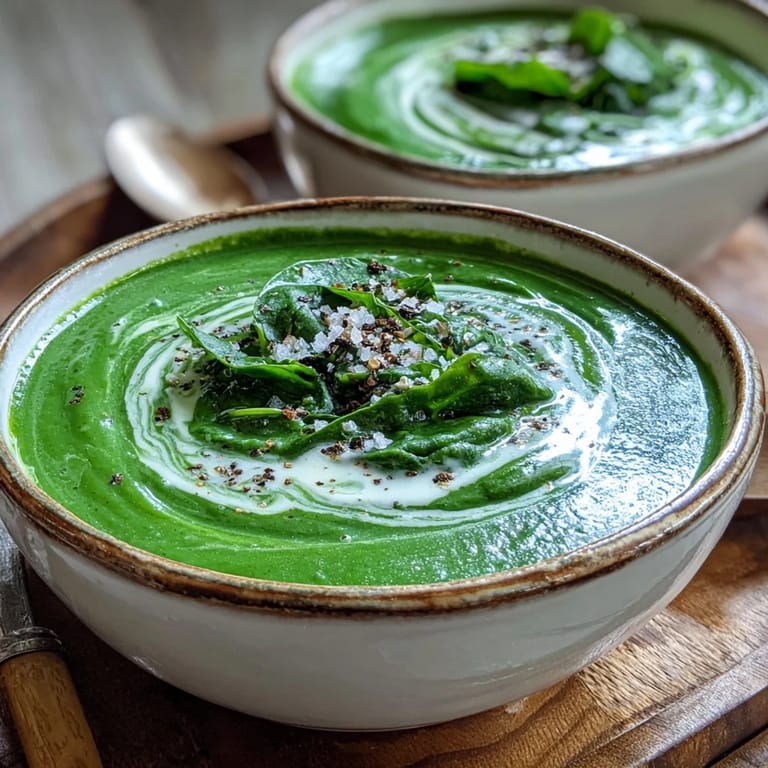
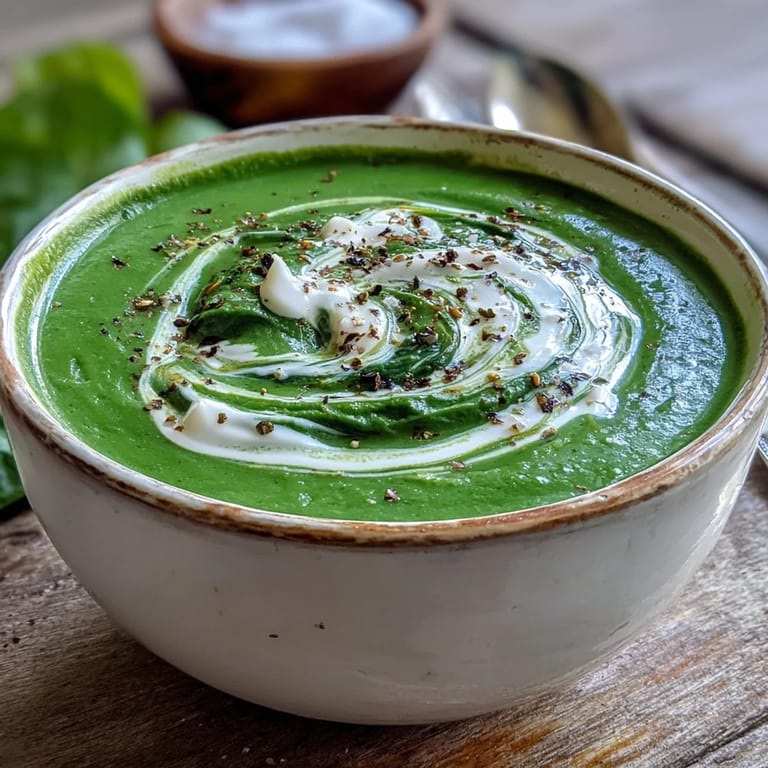
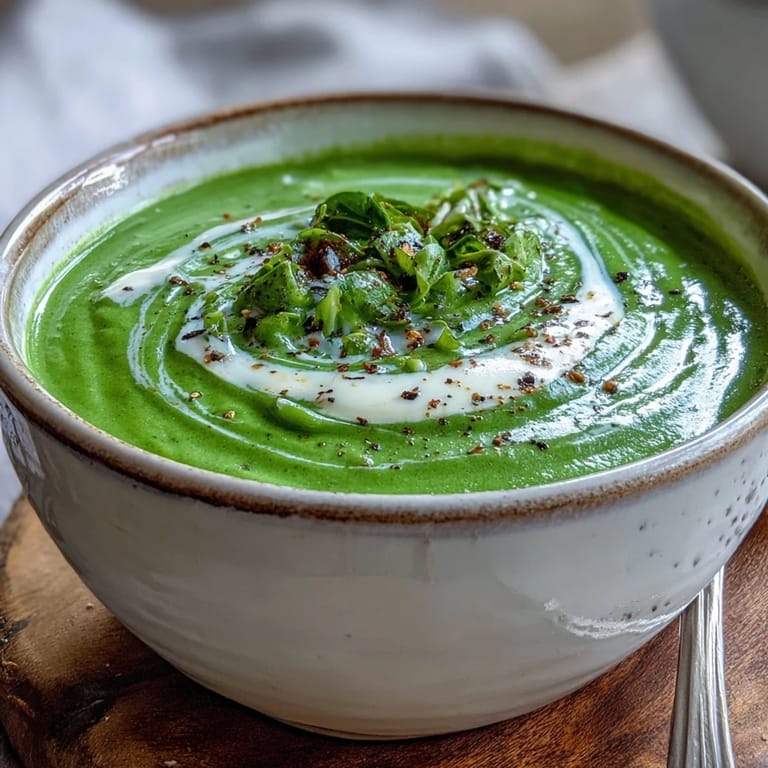
- Ladle into warmed bowls and add a small drizzle of cream or a dollop of yogurt on top, finishing with a few cracks of fresh pepper.
 Save Pin
 There was an afternoon when I made this soup for myself after a long day, and I sat by the window with a steaming bowl, watching the light change while I ate slowly. That's when I understood it wasn't just a recipe—it was a moment of care I was giving myself, a small ritual that felt nourishing in ways that had nothing to do with calories.
The Art of Gentle Heat
One of the biggest lessons this soup teaches is patience with temperature. Your instinct might be to crank the heat and get things done faster, but spinach soup actually gets better when you respect the simmer rather than the boil. That gentle, bubbling patience is what keeps the spinach's bright color and delicate flavor from turning dark and dull, and it's what allows the cream to stay silky instead of separating into greasy puddles.
Variations That Still Feel True
I've made versions of this soup through different seasons and circumstances, and each one has taught me something. Adding a handful of fresh herbs like dill or parsley at the very end brings a bright note that wakes up winter-tired palates, while a touch of lemon juice before serving adds complexity without making it taste lemony. The beauty of this recipe is that it's a canvas—you can add roasted garlic for deeper sweetness, a splash of white wine for sophistication, or even a pinch of cayenne if you want a whisper of heat.
Serving and Pairing Ideas
This soup sits happily in the middle ground between starter and main course, depending on what you serve alongside it. A thick slice of crusty bread with good butter transforms it into a complete lunch, while a smaller portion makes an elegant first course before something heartier. I've discovered that serving it in bowls that have been warmed in the oven keeps it hot longer and somehow makes it taste even better.
- Toast seeds like pumpkin or sunflower until they're golden and scatter them across the soup for crunch and nutty depth.
- A swirl of good olive oil can replace or complement the cream if you want to shift it toward a lighter version.
- A perfectly poached or soft-boiled egg stirred into each bowl turns this into something that could stand as a light dinner on its own.
 Save Pin
 This soup has become one of those recipes I return to again and again, in part because it's simple, but mostly because it never fails to feel like care in a bowl. Make it for someone you love, or make it for yourself on a day when you need a little gentleness.
Questions & Answers
- → Can I make this spinach soup ahead of time?
Yes, prepare up to 2 days in advance and store refrigerated. Reheat gently over low heat, stirring occasionally—avoid boiling to prevent cream separation. The flavors often deepen overnight for even better taste.
- → How do I get the smoothest texture?
Use an immersion blender directly in the pot for convenience, or purée in batches using a countertop blender. For ultra-smooth results, pass through a fine-mesh sieve after blending. The potato helps create natural creaminess without requiring additional thickeners.
- → What can I use instead of cream?
Coconut cream adds rich texture with subtle sweetness, while cashew cream provides neutral flavor. For a lighter version, substitute with Greek yogurt stirred in after removing from heat, or simply omit cream and increase potato for natural thickness.
- → Can I use frozen spinach instead of fresh?
Frozen spinach works perfectly—thaw completely and squeeze out excess liquid before adding. Use about 250 g frozen to equal 300 g fresh. Note that frozen may yield slightly darker color but maintains excellent flavor and nutrition.
- → How long will leftovers keep?
Store cooled soup in an airtight container for up to 3 days in the refrigerator. Freeze for up to 3 months—thaw overnight in the refrigerator before reheating. Add a splash of stock or cream when reheating if consistency seems too thick.
- → What garnishes work well with spinach soup?
A swirl of cream or yogurt adds elegance. Try toasted pumpkin seeds, croutons, or fried shallots for crunch. Fresh herbs like parsley, chives, or dill bring brightness. A drizzle of olive oil or grated Parmesan elevates the presentation beautifully.