 Save Pin
 One Tuesday evening, I was standing at the fishmonger's counter when the vendor mentioned how quickly salmon cooks if you glaze it properly, and something about that offhand comment stuck with me. That night, I threw together what I had—soy sauce, honey, fresh ginger—and discovered that sweet-savory combination transforms a simple fillet into something that tastes like you've been cooking for hours. Now this bowl is my go-to when I want something that feels both indulgent and actually good for me, ready in about forty minutes flat.
I made this for my sister when she was going through a phase of trying to eat healthier, and watching her face light up when she realized something this colorful and vibrant could actually be simple to make felt genuinely rewarding. She started requesting it whenever I visited, and now it's become our thing—she'll text me photos of her own variations, proving that the best recipes are the ones people feel brave enough to make their own.
Ingredients
- Salmon fillets (4, about 150g each): Look for fillets with a bright orange color and firm texture; they should feel slightly springy when you press them gently, which tells you they're fresh and will cook evenly.
- Soy sauce (3 tbsp): This is your umami backbone, so don't skip it or downgrade to the super thin versions; full-bodied soy sauce carries the glaze.
- Honey (2 tbsp): It balances the saltiness and creates that glossy, caramelized finish on the salmon as it bakes.
- Fresh ginger, grated (1 tbsp): The freshness matters here—pre-ground ginger tastes dusty in comparison, so grab a piece from the produce section and microplane it yourself.
- Garlic, minced (2 cloves): This adds a subtle bite that prevents the glaze from becoming one-note sweet.
- Rice vinegar (1 tbsp): A touch of acid brightens everything and keeps the glaze from feeling heavy.
- Sesame oil (1 tbsp): Use the toasted variety for maximum flavor; a little goes a long way, so resist the urge to add more.
- Cornstarch (1 tsp, optional): If you want a glaze that clings to the salmon instead of sliding off, this is your secret ingredient.
- Jasmine or sushi rice (2 cups uncooked): Jasmine rice is slightly perfumed and tender, making it the ideal base for this bowl.
- Water for rice (2½ cups): The exact ratio matters; too much and you'll have mushy rice, too little and it'll be crunchy.
- Julienned vegetables (carrots, cucumber, bell pepper, 1 cup each): The julienne cut isn't just for show—it creates thin strands that soften slightly from the heat of the warm rice and salmon without losing their snap.
- Edamame, shelled and cooked (1 cup): These add protein and a pop of color; if you can't find them pre-shelled, frozen edamame in the pod work beautifully too.
- Toasted sesame seeds (2 tbsp): Toast them yourself in a dry pan if you have time, just a minute or two until fragrant—the difference is noticeable.
- Scallions, thinly sliced (2): They add a whisper of onion flavor and a bit of textural contrast at the end.
- Lime wedges: Squeeze these over the bowl just before eating for brightness that ties everything together.
Tired of Takeout? 🥡
Get 10 meals you can make faster than delivery arrives. Seriously.
One email. No spam. Unsubscribe anytime.
Instructions
- Rinse and cook the rice:
- Rinse the rice under cold running water, stirring gently with your fingers, until the water runs clear—this removes the starch so each grain stays separate and fluffy. Combine with the water in a saucepan, bring to a boil, then drop the heat to low, cover it, and let it steam quietly for 15 minutes before removing from heat and letting it rest covered for another 10 minutes.
- Build the glaze:
- Whisk together the soy sauce, honey, grated ginger, minced garlic, rice vinegar, and sesame oil in a small bowl until the honey dissolves completely. If you want a thicker, more clingy glaze, mix the cornstarch with 1 tablespoon of water until smooth, then stir it into the mixture.
- Prepare the salmon for baking:
- Preheat your oven to 200°C (400°F) and line a baking sheet with parchment paper so the salmon won't stick. Pat the salmon fillets dry with a paper towel—this helps them brown better—then arrange them skin-side down on the sheet and brush each one generously with the soy-ginger glaze, reserving the extra for drizzling later.
- Bake the salmon:
- Slide the sheet into the oven and bake for 12 to 14 minutes, watching for the flesh to turn opaque and flake easily when you press it gently with a fork. You're looking for that moment when it's cooked through but still moist inside, not dry.
- Reduce the remaining glaze:
- While the salmon cooks, pour the reserved glaze into a small saucepan and bring it to a gentle simmer over medium heat, stirring occasionally, for about 1 to 2 minutes—if you used cornstarch, you'll see it thicken noticeably. Remove from heat and set aside.
- Prepare the vegetables:
- Julienne your carrots, cucumber, and red bell pepper into thin, even strands using a sharp knife or a julienne peeler. The uniformity isn't about perfection; it's about ensuring they cook evenly if they touch the warm rice.
- Assemble the bowls:
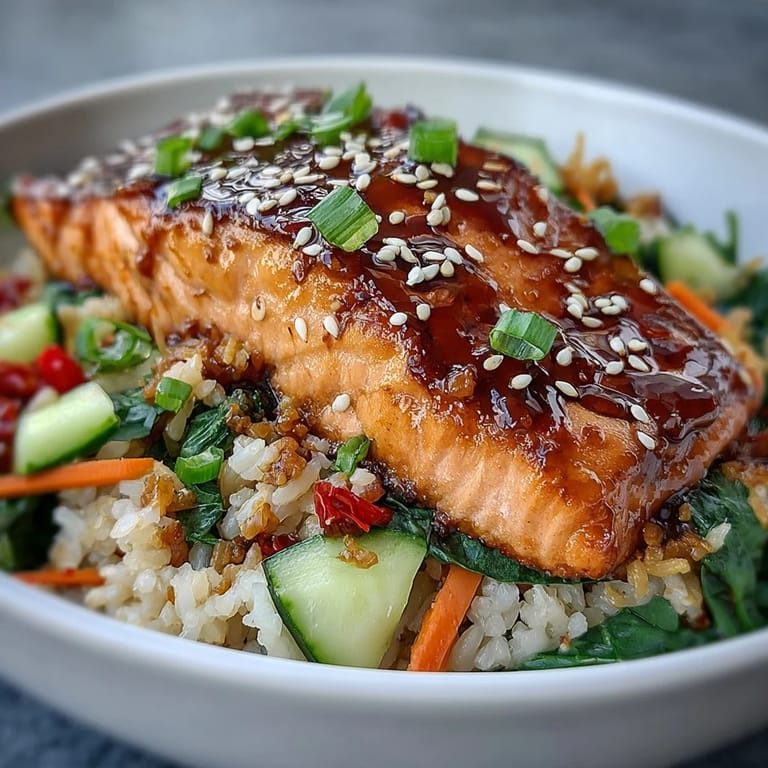
- Divide the fluffy rice among four bowls, creating a nest in the center of each one. Top each nest with a salmon fillet, then arrange the julienned vegetables and edamame artfully around the salmon—think of it as a still life where everything has a place.
- Finish and serve:
- Drizzle the reduced glaze over each bowl, allowing it to pool slightly around the salmon and vegetables. Scatter the toasted sesame seeds and sliced scallions across the top, squeeze a lime wedge over everything if you're using them, and serve immediately.
 Save Pin
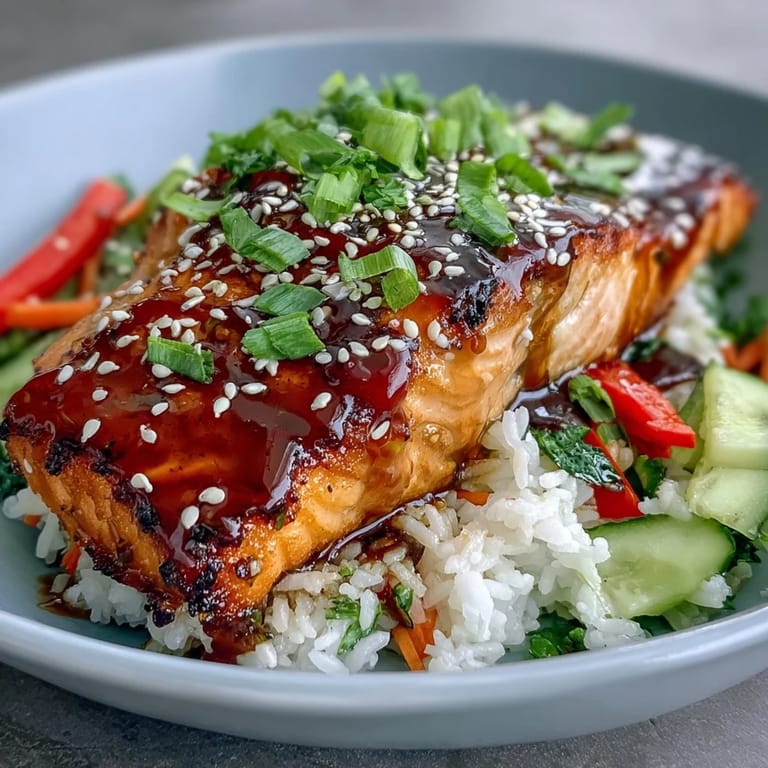
 There's something almost meditative about arranging all those colors in a bowl—the orange of the carrots, the green of the edamame, the pink of the salmon—and knowing that what you're creating is as nourishing as it is beautiful. That's when this bowl stopped being just dinner and became something I looked forward to making, a small act of care I could offer myself on ordinary nights.
Making the Glaze Your Secret Weapon
I used to think glazes were finicky and demanding, but this one taught me differently—it's forgiving, actually, because the soy and honey balance each other so naturally. The key is tasting as you go; if it seems too salty, add a touch more honey, and if it's too sweet, a squeeze of lime juice corrects it immediately. Once you understand how this particular glaze works, you'll find yourself making it for roasted chicken, glazed vegetables, or even spooning it over ice cream, which sounds odd until you try it.
Why Fresh Ginger Changes Everything
The first time I made this with pre-ground ginger, I was confused—something felt flat and dusty, almost medicinal instead of bright. Switching to fresh ginger was a revelation; it adds this sharp, almost peppery note that transforms the glaze from pleasant to memorable. You can find ginger root in any grocery store produce section, and a small piece lasts weeks in the refrigerator wrapped in a paper towel.
Customizing Your Bowl
The beauty of this bowl is that it's more framework than rigid recipe, so adapt it to what you have and what you love. Swap the jasmine rice for brown rice or quinoa if you want something earthier, add sliced avocado or pickled ginger if you're feeling adventurous, or use tamari instead of soy sauce if you need it gluten-free. The salmon and glaze are the heart of it—everything else is fair game.
- Frozen edamame work just as well as fresh if you thaw them first and pat them dry.
- Prep your vegetables the morning of and store them in the refrigerator so assembly is genuinely quick when hunger strikes.
- Leftovers actually improve as the flavors settle together, making this an excellent meal-prep candidate for the week ahead.
 Save Pin
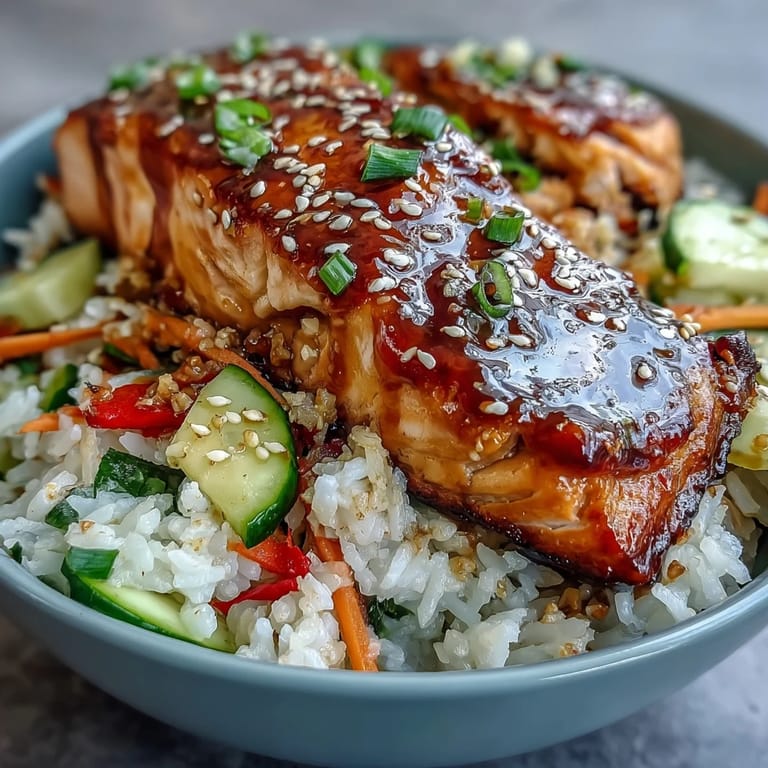
 This bowl has become the recipe I reach for when I want to feel like I'm taking care of myself without the effort feeling like a chore. Every time I make it, I'm reminded that simplicity and nourishment aren't contradictory—they're actually best friends.
Questions & Answers
- → Can I use other types of fish?
Yes, you can substitute the salmon with other fatty fish like tuna steaks, mahi-mahi, or cod. Adjust cooking time slightly based on thickness of fillets.
- → How do I julienne vegetables properly?
Cut vegetables into long, thin matchsticks about 2-3 inches long and 1/8 inch thick. A sharp knife or mandoline slicer works best for consistent results.
- → Can I make this gluten-free?
Simply replace regular soy sauce with tamari or coconut aminos. All other ingredients are naturally gluten-free.
- → How long does the glaze last?
The prepared glaze can be stored in an airtight container in the refrigerator for up to 1 week. Whisk well before using if separation occurs.
- → Can I use brown rice instead?
Absolutely. Brown rice adds nutty flavor and extra fiber. Increase cooking time to about 45 minutes and adjust water ratio to 2:1.
- → What other vegetables work well?
Shredded cabbage, snap peas, radishes, or roasted sweet potatoes make excellent additions. Choose vegetables that maintain crunch when raw or lightly cooked.