 Save Pin
 There's something about assembling a bowl that feels less like cooking and more like creating. I stumbled onto this salmon avocado combination on a Tuesday afternoon when my fridge was practically bare—just a fillet I'd forgotten about, half an avocado going soft, and some leftover sushi rice. Twenty minutes later, I was sitting with something so bright and balanced that I couldn't stop eating it. Now it's become my go-to when I want something that tastes impressive but doesn't demand hours in the kitchen.
I made this for a friend who'd been eating the same sad desk lunches for weeks, and watching her face light up when she took the first bite reminded me why I actually enjoy cooking. She kept asking what was in it, which gave me an excuse to explain how the chili oil and wasabi play against the creamy avocado and buttery salmon. By the end of the meal, she was already asking if I could teach her how to make it.
Ingredients
- Fresh salmon fillet, 250g, skinless and cubed: Look for wild-caught when you can—it holds together better when marinated and tastes noticeably richer than farmed.
- Tamari sauce, 2 tbsp: The gluten-free soy sauce option, but honestly it just tastes cleaner and less harsh than regular soy, and that matters when it's one of only a few flavors in the bowl.
- Toasted sesame oil, 1 tsp: This is non-negotiable—the toasted version has depth that regular sesame oil simply doesn't have, and a little goes a long way.
- Rice vinegar, 1 tsp plus 1 tbsp: Use the gentle kind, not the aggressive cleaning supply stuff, and you'll notice the difference immediately.
- Honey or agave syrup, 1 tsp: A tiny bit of sweetness balances the umami and cuts through the richness without making anything taste dessert-like.
- Cooked sushi rice, 200g: Short-grain rice matters here—it's stickier and holds the bowl together better than long-grain rice would.
- Sugar and salt for rice seasoning: These seem minor but they're what separate properly seasoned rice from just rice that happens to be in a bowl.
- Ripe avocado, 1 large: The avocado should yield slightly to pressure but not be mushy—eat this the same day you buy it or it won't cooperate.
- Roasted peanuts, 2 tbsp, roughly chopped: The roasted ones have texture that raw peanuts can't deliver, and that crunch is essential to why this bowl feels complete.
- Chili oil, 1 tbsp: Start with less than you think you need—you can always drizzle more, but you can't un-spicy a bowl.
- Wasabi paste, 1 tsp: Fresh wasabi is lovely if you have it, but the tube version is honest and consistent and gets the job done.
- Nori sheets, 1, cut into strips: Optional but worth including—it adds a briny minerality that makes everything taste more intentional.
- Cucumber, 1 small, thinly sliced: The cool crispness is your textural counterpoint to everything soft in the bowl.
- Spring onions, 2, sliced: They bring a sharp brightness that keeps the whole thing from feeling heavy.
- Toasted sesame seeds, 1 tbsp: Toast them yourself if you have five minutes—they'll smell incredible and taste better than pre-toasted.
- Fresh cilantro or microgreens, optional: If you use them, they should feel like a choice, not an obligation.
- Lime wedges for serving: The acid is your finishing move—a squeeze transforms everything that came before it.
Tired of Takeout? 🥡
Get 10 meals you can make faster than delivery arrives. Seriously.
One email. No spam. Unsubscribe anytime.
Instructions
- Build your marinade:
- Whisk together tamari, sesame oil, rice vinegar, and honey in a medium bowl until the honey dissolves completely. The mixture should smell deeply savory and smell rich.
- Marinate the salmon:
- Toss your salmon cubes into the marinade and stir gently so each piece gets coated. Cover and refrigerate for 10 to 15 minutes—this time matters because it lets the flavors actually penetrate the fish.
- Season your rice:
- In a separate bowl, fold the rice vinegar, sugar, and salt into your warm sushi rice using gentle motions so you don't mash the grains. The rice should taste slightly tangy and just sweet enough to balance what's coming.
- Prep all your components:
- This is the moment where having everything ready actually changes your life. Slice the avocado, chop the peanuts, cut the nori, slice the cucumber and spring onions and arrange them so you're not scrambling when you're ready to assemble.
- Build the first bowl:
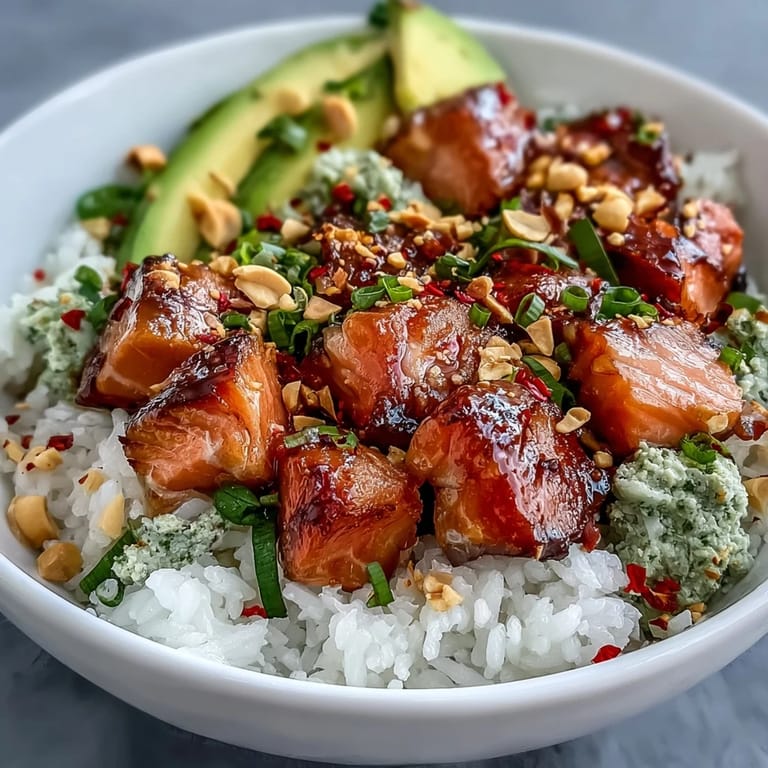
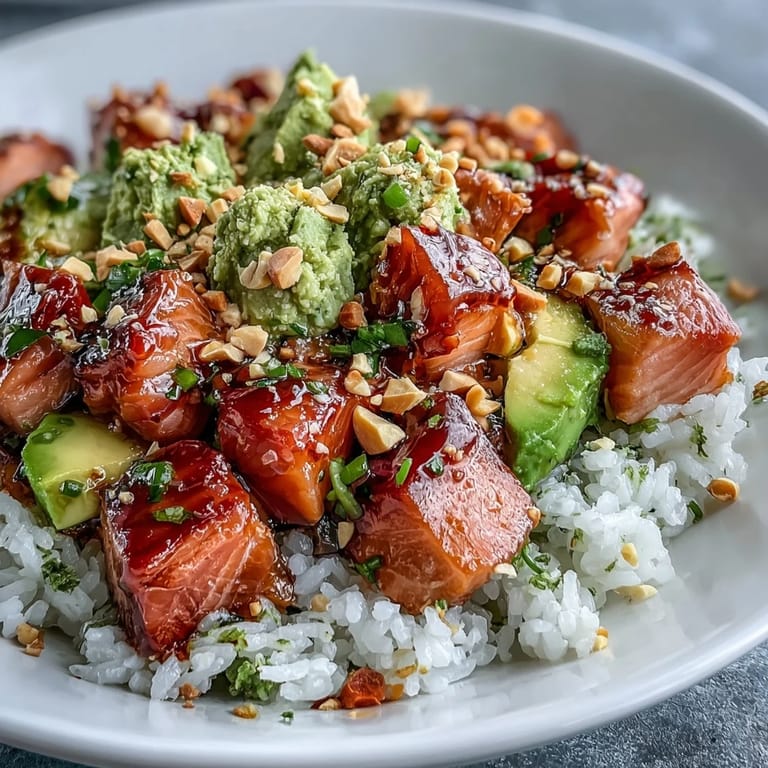
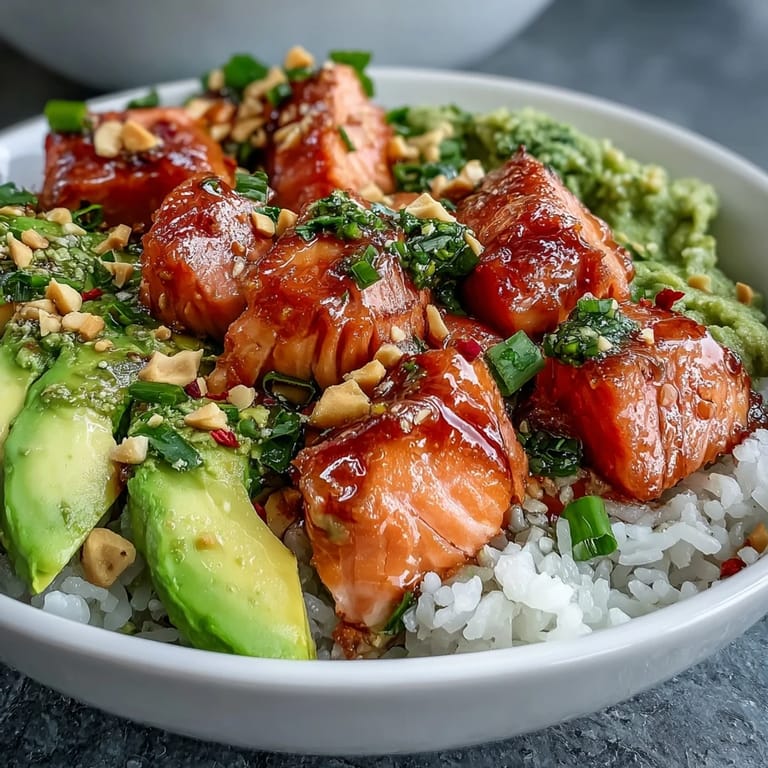
- Divide the seasoned rice between two bowls, then arrange the marinated salmon and avocado slices over the rice like you're making something you'd want to photograph. Layer the cucumber and spring onions around them.
- Add the heat and umami:
- Drizzle chili oil over the bowl in a deliberate pattern, then dot wasabi paste in a few strategic spots—you want people to find little pockets of intensity rather than it being uniformly spicy.
- Finish with texture and brightness:
- Sprinkle roasted peanuts, sesame seeds, and nori strips across the top, then add cilantro or microgreens if you're using them. Serve with lime wedges and let people adjust the citrus to taste.
 Save Pin
 My favorite version of this happened on a Sunday morning when I woke up early enough to actually shop for ingredients intentionally instead of just grabbing what was on sale. The salmon was so fresh it practically glistened, the avocado was at that perfect moment before overripeness, and somehow everything tasted like I'd put in three times the effort when really I'd just cared about the quality of what I was starting with. That's when I realized this bowl isn't complicated because the recipe is simple—it's powerful because each ingredient actually tastes like itself.
Why This Bowl Works So Well
This is a dish built on contrast and balance, which is probably why it never feels boring even when you make it multiple times a week. You've got creamy playing against crispy, hot against cool, umami richness against sharp brightness. Nothing overpowers anything else because everything was chosen to complete something else. It's the kind of meal that teaches you how flavor actually works if you're paying attention.
Making It Your Own
The beauty of a bowl is that it's a framework, not a prescription. I've made vegetarian versions with marinated tofu that were honestly just as satisfying as the fish version, just different. I've swapped the peanuts for cashews when I was out, added pickled ginger when I wanted more acid, put in edamame for extra protein one day just because it was there. The core structure stays the same but your preferences and what's in your fridge get to have real say in what ends up on your plate.
The Spice Factor
The wasabi and chili oil can be genuinely intimidating if you're not used to them, but they're only intimidating in the moment—they're not aggressive or sustained, they're just bright points that make you pay attention. I learned this the hard way by using way too much of both on my first attempt and spending the next ten minutes wondering what I'd done to myself. Now I treat them like seasoning salt: a little adds complexity, a lot adds drama, and you can always add more but you can't take it out.
- Start with half the wasabi and chili oil the recipe calls for, then adjust upward once you taste it.
- If you're cooking for someone heat-sensitive, put the wasabi and chili oil on the side so they can control the intensity.
- Lime juice actually mellows heat slightly by adding acid and brightness, so that finishing squeeze matters more than you'd think.
 Save Pin
 This bowl has become my answer to the question of what to make when I want something that feels special but doesn't require special skills. It's taught me that impressive food doesn't have to be complicated—it just has to be intentional.
Questions & Answers
- → Can I use frozen salmon?
Yes, thaw frozen salmon completely before cubing and marinating. Pat dry with paper towels to ensure the marinade absorbs properly.
- → How do I store leftovers?
Keep rice and salmon separate in airtight containers. Rice stays fresh 3-4 days refrigerated. Consume marinated salmon within 2 days for best quality.
- → Is this bowl spicy?
The heat level depends on your chili oil and wasabi amounts. Start with less, then add more to taste. The base flavors remain mild and savory.
- → Can I make it ahead?
Prepare rice and toppings in advance. Marinate salmon just before cooking or serving for the best texture. Assemble bowls right before eating.
- → What rice works best?
Sushi rice is traditional for its sticky texture. Short-grain white rice or jasmine rice are good alternatives. Brown rice adds nuttiness but changes consistency.
- → How do I make it vegetarian?
Replace salmon with firm tofu or tempeh cubes. Marinate the same way and pan-fry until golden for extra texture and protein.