 Save Pin
 I discovered black currant reduction quite by accident one autumn evening when a friend arrived with a bundle of dark berries from their garden, and I realized I had a bottle of red wine open on the counter. What started as improvisation became something I now make deliberately whenever I want to transform a simple roasted duck breast into something restaurant-worthy. The sauce is deceptively simple—just fruit, wine, and patience—but the result tastes like you've been reducing it in a French kitchen for hours.
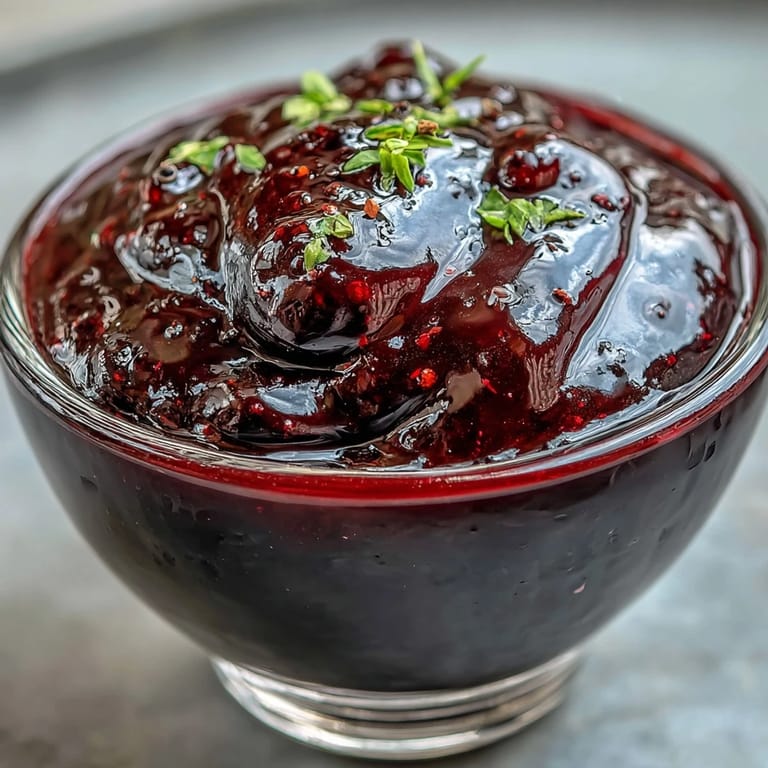
Last spring, I made this reduction for a dinner party where I'd slightly overcooked the duck—my one moment of panic that night. But when I poured this glossy, jewel-toned sauce around each plate, it didn't matter anymore; the bright acidity and deep fruit flavor made everything taste intentional and luxurious. That's when I understood the real power of a good sauce: it's not just decoration, it's redemption.
Ingredients
- Black currants (1 cup fresh or frozen): These small, tart berries are the soul of this sauce; frozen ones work just as well as fresh, which means you can make this year-round without hunting farmers markets.
- Dry red wine (1 cup): Choose something you'd actually drink—a decent Burgundy or Côtes du Rhône works beautifully, and the quality genuinely matters here since wine is a main ingredient, not just a supporting player.
- Chicken or vegetable stock (1/2 cup): Stock adds body and prevents the sauce from becoming one-note; it's the quiet ingredient that makes everything taste rounder and more complex.
- Balsamic vinegar (2 tbsp): This adds a subtle sweetness and depth that plain wine vinegar can't quite achieve, though you can swap it if you prefer sharper acidity.
- Shallot (1 small, finely chopped): Shallots are gentler than onions and melt into the sauce almost invisibly, adding whisper-soft allium sweetness that grounds the fruit.
- Fresh thyme sprig and bay leaf: These aromatics anchor the dish in something herbaceous and French; don't skip them, as they're what make this taste intentional rather than accidental.
- Granulated sugar (2 tbsp): A small amount of sugar smooths out the tannins in the wine and currants without making the sauce taste sweet—it's about balance.
- Sea salt, black pepper: Fine sea salt dissolves cleanly, and freshly ground pepper tastes noticeably better than pre-ground here where it actually shows up on the palate.
- Cold unsalted butter (2 tbsp, cut into cubes): This is the final flourish that turns the sauce glossy and silky; the butter must be cold and added at the end so it emulsifies properly.
Tired of Takeout? 🥡
Get 10 meals you can make faster than delivery arrives. Seriously.
One email. No spam. Unsubscribe anytime.
Instructions
- Start with aromatics:
- Melt a tablespoon of butter in a medium saucepan over medium heat, then add your finely chopped shallot. Let it sizzle for two to three minutes—you want it soft and turning translucent, which signals that it's releasing its natural sweetness.
- Build the sauce base:
- Add the black currants, red wine, stock, balsamic vinegar, thyme, bay leaf, sugar, salt, and pepper all at once. Stir gently to combine, making sure nothing sticks to the bottom of the pan.
- Reduce and concentrate:
- Bring everything to a gentle boil, then immediately lower the heat and let it simmer uncovered for fifteen to twenty minutes. You're looking for the liquid to reduce by about half and take on a slightly syrupy consistency; it should coat the back of a spoon when you drag your finger across it.
- Strain out the solids:
- Remove the thyme sprig and bay leaf first, then pour the sauce through a fine mesh strainer into a clean saucepan, using the back of a spoon to press the currants and extract every drop of flavor. Discard what's left behind—it's had its moment.
- Mount with butter:
- Return the strained sauce to low heat and whisk in the remaining cold butter one cube at a time, letting each piece melt and emulsify before adding the next. You'll see the sauce transform from looking thin and winey to glossy and luxurious.
- Taste and adjust:
- Give it a taste and trust your palate—if it needs more acidity, add a splash of vinegar; if it's too tart, a tiny pinch more sugar balances it out. Serve it warm drizzled around or over roasted duck, pork, venison, or even charcuterie.
 Save Pin
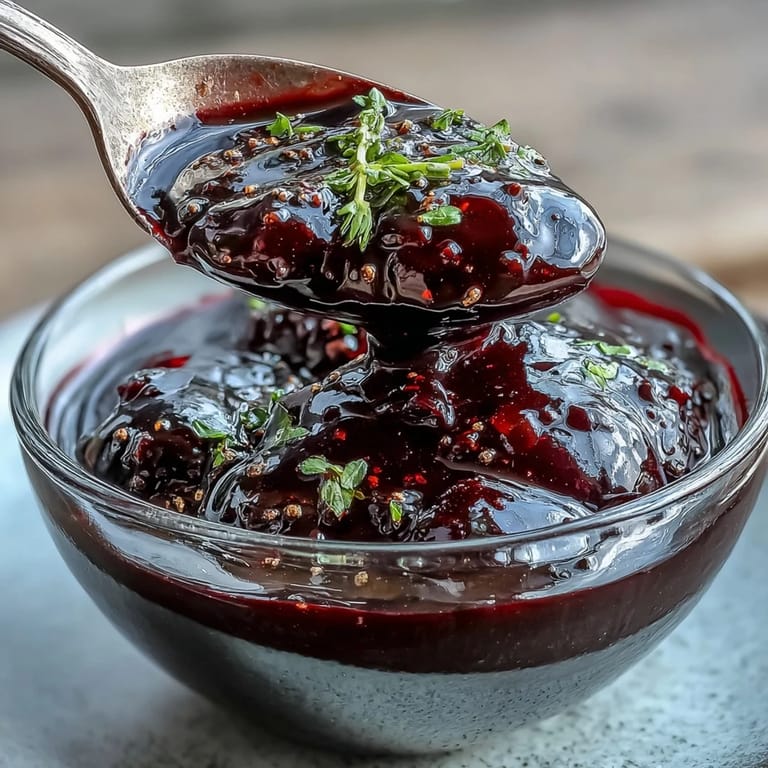
 There's a moment when you're whisking that cold butter into the warm sauce and you see the color deepen from murky wine-dark to something almost jewel-like, glossy under the kitchen light—that's when you know you've nailed it. It's a small thing, but it's the moment this stops being a cooking task and becomes something you made with intention.
When to Serve This Sauce
This sauce is designed for rich, fatty meats that benefit from acidity and elegance—roasted duck breast, seared venison, grilled lamb chops, or even a crown roast of pork all come alive under its glossy drape. I've also discovered it works beautifully alongside charcuterie at the end of a meal, offering a sophisticated counterpoint to cured meats and good cheese. It's equally at home on a weeknight when you want to feel fancy and at a formal dinner party where you need something that looks intentional.
Flavor Variations and Substitutions
If you want to deepen the flavor, a splash of crème de cassis (black currant liqueur) in place of a quarter cup of the red wine adds almost-silky complexity that feels special and slightly unexpected. Some cooks swear by adding a small splash of port wine instead of all red wine, which pushes the sauce toward something richer and darker. You can also experiment with different red wines—a Pinot Noir gives you more brightness, while a Grenache leans more savory and peppery, so choose based on what you're serving the sauce alongside.
Kitchen Wisdom and Final Thoughts
A good reduction sauce is really just concentration and technique—you're not inventing anything, just coaxing flavors to shine and building richness through patient simmering. The secret isn't in exotic ingredients but in understanding why each step matters: the shallot builds flavor, the reduction concentrates it, the straining refines it, and the butter finishes it with luxury. This sauce proves that restaurant-quality food isn't about complexity; it's about respecting each ingredient and the process.
- Make this sauce when you want to feel confident in the kitchen without spending hours cooking.
- Taste as you go—your palate knows better than any recipe what needs adjustment in the final moments.
- Keep cold butter in the fridge always; it's the fastest way to elevate almost any savory sauce from good to memorable.
 Save Pin
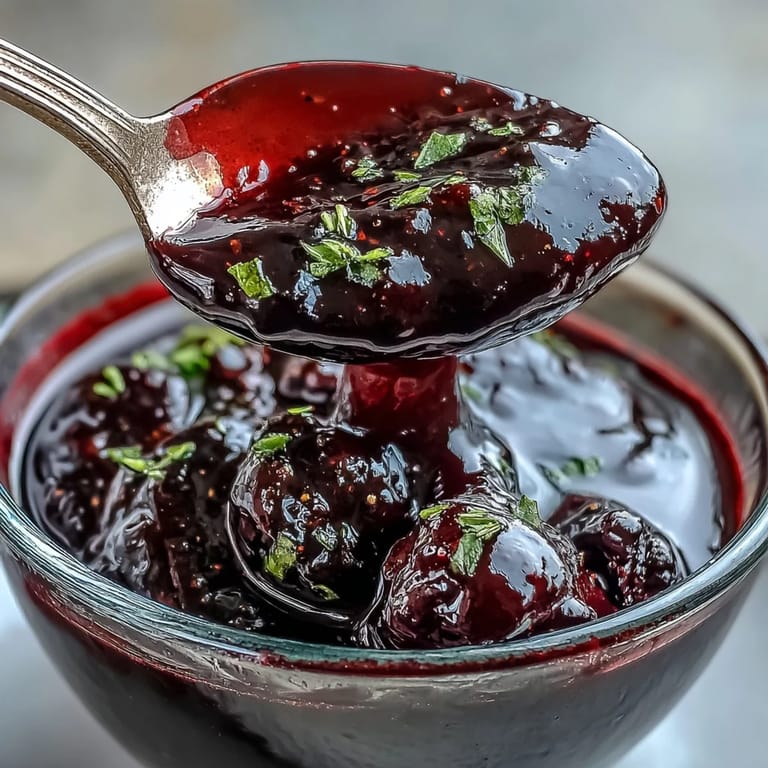
 There's something deeply satisfying about pouring a glossy, jewel-toned sauce around a plate and knowing that you made it from fruit, wine, and patience. This one never fails to elevate whatever it touches.
Questions & Answers
- → What meats pair best with this sauce?
Duck, pork, venison, and lamb work exceptionally well. The tangy-sweet profile cuts through rich meats while enhancing their natural flavors. It's also excellent alongside charcuterie or pâtés.
- → Can I use frozen black currants?
Absolutely. Frozen currants work just as well as fresh. Thaw them briefly before adding to the pan, and adjust the simmering time by a few minutes if needed to reach the proper consistency.
- → How long will the sauce keep?
Store in an airtight container in the refrigerator for up to 5 days. Gently reheat over low heat, whisking to recombine. For longer storage, freeze for up to 3 months.
- → What if I can't find black currants?
Blackberries or dark cherries make good substitutes, though the flavor profile will shift slightly. Blueberries work but will result in a milder, sweeter finish.
- → Why strain the sauce?
Straining removes skins, seeds, and cooked aromatics, creating a smooth, refined texture. Press firmly on the solids to extract all the flavorful liquid before discarding them.
- → Can I make this alcohol-free?
Replace the wine with additional stock or grape juice mixed with a splash of vinegar for acidity. The flavor won't be quite as complex, but it will still be delicious.