 Save Pin
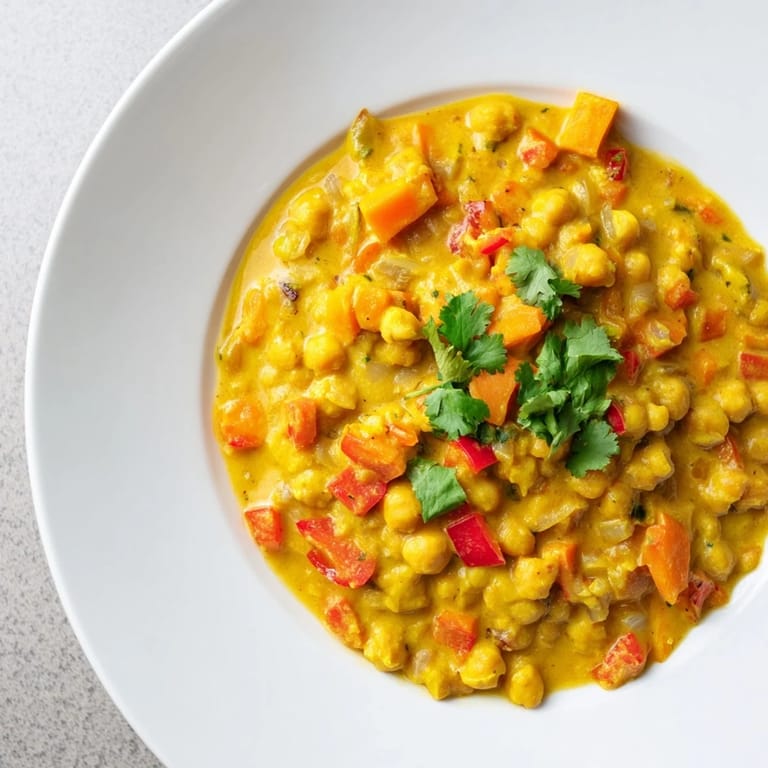
 I discovered this curry on a Tuesday evening when I had nothing but pantry staples and twenty minutes before friends arrived. The kitchen filled with the smell of toasting spices—cumin, turmeric, curry powder—and something shifted. What started as improvisation became the dish everyone asked me to make again and again. Now whenever I open a can of coconut milk, I'm right back there, stirring a pot that somehow turned humble ingredients into something that tasted like care.
My neighbor brought over three kids one rainy Saturday and asked if I could feed them something kind. This curry was bubbling on the stove, and I watched their faces light up as they tasted it—not because it was fancy, but because it was warm and real. That's when I stopped thinking of it as just another weeknight dinner and started seeing it as something that could bring people together.
Ingredients
- Yellow onion: Diced onions are your foundation—they'll soften into sweetness and carry the spices throughout the pot.
- Garlic and fresh ginger: These two create an aromatic backbone; don't skip the ginger, it's where the warmth comes from.
- Red bell pepper: It adds a gentle sweetness and keeps the curry from feeling too heavy or spice-forward.
- Baby spinach or kale: Added at the end, it wilts into the sauce and turns a good curry into a nourishing one.
- Carrot: Optional but recommended—it softens into the broth and adds a subtle earthiness.
- Chickpeas: Drain and rinse them well; they're the heartbeat of this dish.
- Coconut milk: Full-fat gives richness, but light works if that's what you have—the curry will taste good either way.
- Vegetable broth: Don't use too much salt in the broth or you'll oversalt the whole pot.
- Diced tomatoes: Canned is fine and honestly better for consistency than fresh.
- Curry powder, cumin, turmeric, smoked paprika: These are the soul of the dish—toast them for a full minute so they bloom and release their flavor.
- Chili flakes: Optional, but they're your way of adding heat without overpowering the other spices.
- Coconut oil or olive oil: Either works; coconut oil gives a subtle sweetness, olive oil keeps it simple.
Tired of Takeout? 🥡
Get 10 meals you can make faster than delivery arrives. Seriously.
One email. No spam. Unsubscribe anytime.
Instructions
- Heat your oil and soften the onion:
- Medium heat in a large pot—you're not rushing this. Let the onion turn translucent and lose its sharp edge, about 3 to 4 minutes. You'll know it's ready when it's soft enough to break apart with a wooden spoon.
- Wake up the spices:
- Add garlic, ginger, and red pepper, cook for 2 minutes until the kitchen smells incredible. Then scatter in your spice blend—curry powder, cumin, turmeric, paprika, chili flakes—and stir constantly for a full minute. This toasting is what transforms powders into flavor.
- Build the sauce:
- Pour in tomatoes, coconut milk, broth, and chickpeas. Stir until everything is submerged and the color deepens. If using carrot, add it now.
- Let it simmer:
- Bring to a gentle bubble, cover, and lower the heat to low. Fifteen minutes is all it needs while you sit down for a moment. The curry will deepen in color and the chickpeas will soften further.
- Finish with greens:
- Stir in your spinach or kale—it'll look like too much but watch it wilt into the pot within 2 to 3 minutes. The curry will thicken as the greens release their water and then reabsorb it.
- Taste and adjust:
- Always taste before serving. Salt can be added bit by bit, but once it's in, it's in. Lime juice (squeezed fresh from those wedges) brightens everything at the end.
 Save Pin
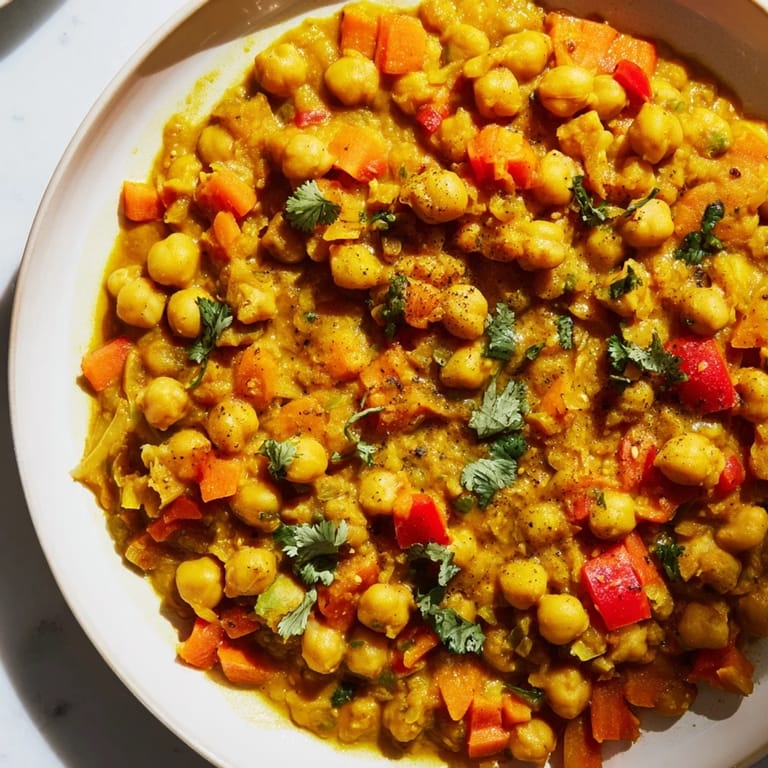
 I made this curry for myself on a day when I needed comfort without performance, and something clicked. It reminded me that nourishing food doesn't require a special occasion or a long list of things you don't have. Sometimes the best meals are the ones you make for no reason at all, just because your body and soul asked for warmth.
Flexibility Is Built In
This curry doesn't demand obedience. If you have kale instead of spinach, use it. If you forgot the carrot, it still works. If chili flakes aren't your thing, leave them out and the curry will be mild and kind. I've made it with leftover roasted vegetables, with extra tomato paste for depth, and once with a splash of coconut cream at the very end just to feel fancy. The base is strong enough to handle improvisation.
What to Serve It With
The curry is thick and flavorful on its own, but it wants something to rest on or soak into. Rice is traditional—jasmine or basmati—and it disappears into the sauce like it was meant to be there. Naan is wonderful if you have it, or flatbread, or even crusty bread for soaking up the last spoonful. Some people add a squeeze of lime juice at the table, some add more cilantro, some just eat it straight from the pot because they're hungry and it's good.
Making It Your Own
The beauty of curry is that it's a framework, not a rule book. You can add cubed tofu or tempeh for extra protein, or leave it as is and let the chickpeas be enough. You can make it spicier or gentler, thicker or soupier, depending on how much you reduce it at the end. Some days I add a spoonful of coconut cream at the very end for richness; other days I keep it simple and let the spices speak.
- Frozen spinach works just as well as fresh—thaw it and squeeze out the water before stirring it in.
- Make a double batch and freeze the extra; it reheats beautifully and tastes even better the next day.
- Add a splash of lime juice right before serving to brighten all the warm spices.
 Save Pin
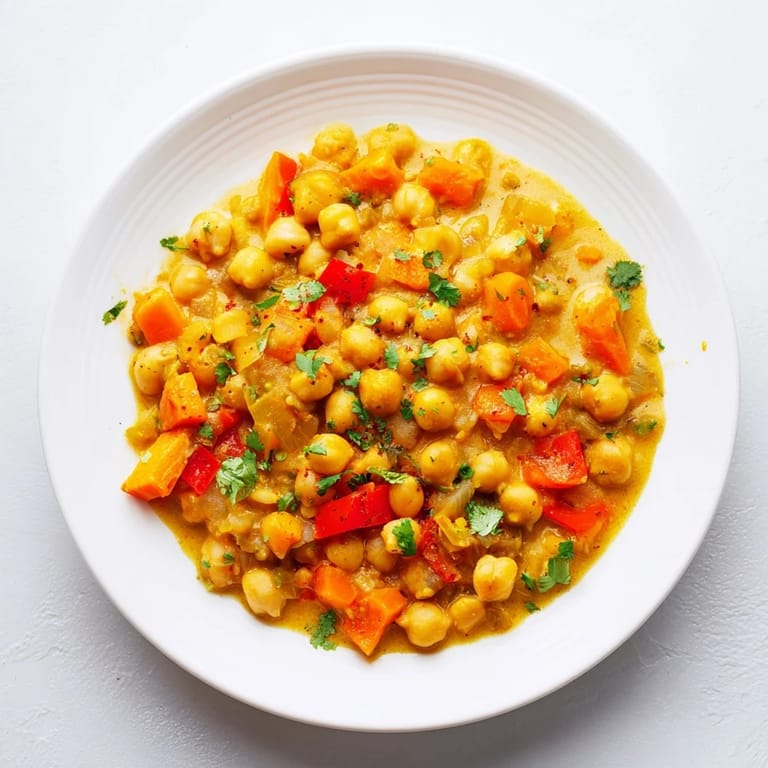
 This curry exists in the space between simple and satisfying, between weeknight and special. Make it often, adjust it always, and let it be whatever your table needs on any given evening.
Questions & Answers
- → Can I substitute kale for spinach in this dish?
Yes, kale or Swiss chard can be used instead of spinach for a slightly firmer texture and similar nutritional benefits.
- → How can I adjust the spice level?
Modify the heat by adding or omitting chili flakes according to your preference.
- → What protein alternatives work well here?
Adding cubed tofu or tempeh enhances protein content while complementing the flavors.
- → Is this dish suitable for gluten-free diets?
Yes, the ingredients are naturally gluten-free, but ensure broth and packaged items are certified gluten-free.
- → What grains pair best with this curry?
Jasmine or basmati rice are excellent accompaniments that soak up the flavorful sauce nicely.