 Save Pin
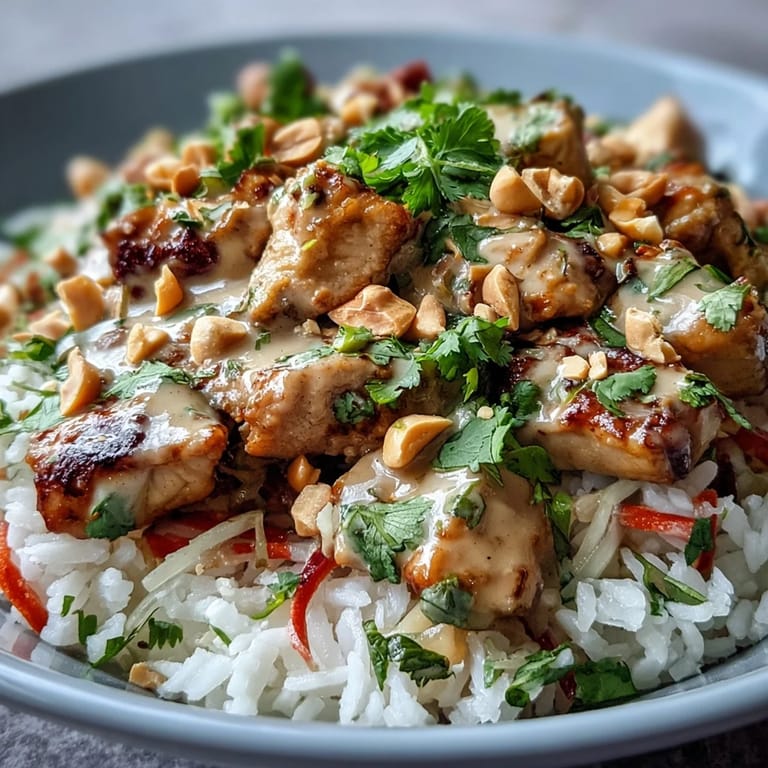
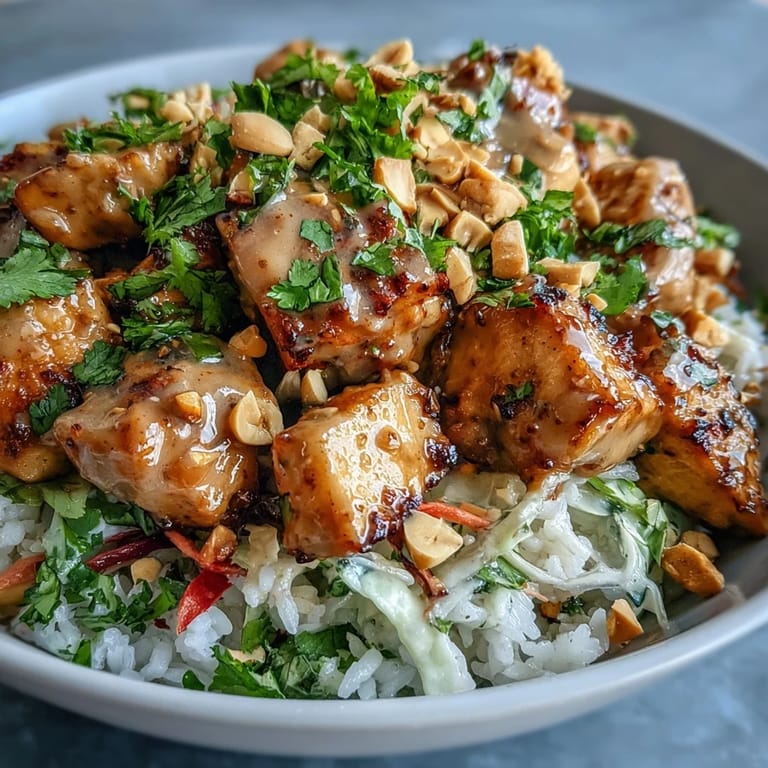
 There's something about the smell of coconut rice hitting the air that makes me pause whatever I'm doing. One Tuesday afternoon, I was testing this bowl for a friend who'd mentioned wanting something that felt both comforting and energizing, and the moment that fragrant steam rose from the pot, I knew I'd found it. The combination of creamy coconut rice, perfectly seared chicken, and that silky peanut sauce came together almost by accident, but it's become my go-to when I need lunch to feel like an occasion.
I made this for my sister after she mentioned being stuck in a lunch rut, and watching her take that first bite with the peanut sauce dripping everywhere reminded me why cooking for someone matters. She's been making it twice a week since, and honestly, that's become my favorite part of this recipe.
Ingredients
- Jasmine rice: The fragrance matters here—it's what makes the bowl feel special rather than just practical.
- Canned coconut milk (unsweetened): Shake it well or you'll end up with a thick layer of coconut cream on top, which I learned the awkward way.
- Boneless, skinless chicken breast: Dice it into roughly uniform pieces so it cooks evenly and picks up those garlic and soy flavors throughout.
- Creamy peanut butter: The good stuff without the added oils makes all the difference in the sauce—it coats your mouth in a way that feels luxurious.
- Soy sauce: Use tamari if you're avoiding gluten; it's the backbone of both the chicken and the sauce.
- Honey or maple syrup: This balances the saltiness and adds a subtle warmth that keeps the sauce from tasting one-dimensional.
- Rice vinegar: It brightens everything up and prevents the sauce from sitting too heavy on your tongue.
- Lime juice: Fresh is non-negotiable—bottled lime juice will leave you wondering why it tastes slightly off.
- Sesame oil: A little goes a long way; this is what makes people ask what makes the sauce taste so good.
- Red cabbage: Keeps its crunch even when tossed with warm rice, and the color makes the bowl feel alive.
- Carrots: Julienned thin enough to stay tender but substantial enough to feel like real food.
- Fresh cilantro: If you're one of those people who thinks it tastes like soap, just leave it out—this is your bowl.
Tired of Takeout? 🥡
Get 10 meals you can make faster than delivery arrives. Seriously.
One email. No spam. Unsubscribe anytime.
Instructions
- Rinse and start the rice:
- Cold water over the jasmine rice until it runs clear—this gets rid of excess starch so the grains stay separate and fluffy. The coconut milk and water go in together, and you want it at a rolling boil before you stir once and cover it down.
- Let it steam quietly:
- Fifteen minutes on low heat, then ten minutes off the heat with the lid still on. This is when the rice absorbs all that coconut flavor and becomes something more than just a side.
- Sear the chicken properly:
- Get your skillet hot enough that the oil shimmers, then add the chicken in a single layer if you can manage it. The soy sauce and garlic go in right away, and you're looking for golden edges—that's where the flavor lives.
- Whisk the peanut sauce smooth:
- Start with the dry ingredients, then add your wet ones, whisking constantly to keep lumps from forming. Add the warm water slowly; you're aiming for something that coats a spoon but still drizzles.
- Build your bowl with intention:
- Rice as your base, then chicken arranged on top so it stays visible. The raw vegetables go around the edges so they stay crisp, and the cilantro is your finishing touch.
 Save Pin
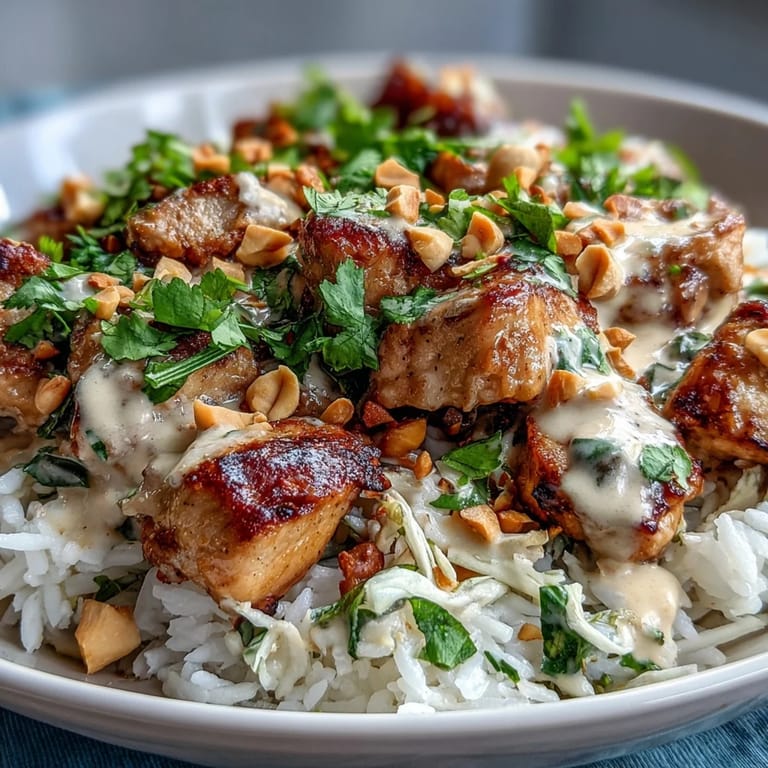
 There's a moment when you drizzle the peanut sauce over a warm bowl and watch it settle into the rice, creating these little pools of flavor—that's when you know you've made something worth making again. It stopped being just lunch and became something I crave.
Making It Work for Your Life
The beauty of this bowl is that it flexes with your week. I've made the rice on a Sunday and assembled different bowls throughout the week depending on what vegetables were hanging around in my fridge. The sauce stays good for five days, so you can actually prep it ahead and just cook fresh chicken when you need it.
Variations That Actually Work
Tofu or tempeh swap in seamlessly for the chicken if you're going vegetarian—just cube it, press it, and sauté it the same way. I've also added sliced cucumber on hot days, edamame for extra protein, and thin bell pepper strips when I want more crunch. The core of this bowl is strong enough to handle whatever you want to throw at it.
Small Details That Matter More Than You'd Think
The way you finish the bowl changes everything—lime wedges aren't just decoration, they're a tool. A squeeze of fresh lime over the warm bowl lifts every element and makes it taste brighter than it did thirty seconds before. Cilantro might seem optional, but it's what transforms this from good to memorable.
- Toast the peanuts yourself if you have time; they taste alive in a way that pre-roasted ones sometimes don't.
- Serve the bowl while the rice is still warm and the vegetables are still cool—that temperature contrast is part of what makes this work.
- The leftover sauce is excellent with grilled vegetables or spooned over scrambled eggs the next morning.
 Save Pin
 This bowl has quietly become one of those recipes I make without thinking because it never disappoints. It's the kind of lunch that reminds you why cooking for yourself matters.
Questions & Answers
- → Can I make this bowl ahead for meal prep?
Absolutely. The coconut rice, cooked chicken, and peanut sauce all store beautifully in the refrigerator for 4-5 days. Keep toppings like fresh cabbage and cilantro separate, and add them just before serving to maintain crisp texture.
- → What's the best way to reheat without drying out the chicken?
Reheat the coconut rice and chicken gently in the microwave at 50% power, adding a splash of water to the rice to restore moisture. The peanut sauce can be brought to room temperature or warmed slightly—whisk in a teaspoon of warm water if it thickens after refrigeration.
- → Can I adjust the peanut sauce consistency?
Certainly. Start with the base ingredients, then add warm water one tablespoon at a time until you reach your preferred thickness. For a richer sauce, reduce the water. For a lighter drizzle, add 2-3 tablespoons. The sauce will also thin slightly when tossed with warm ingredients.
- → What protein alternatives work well?
Firm tofu or tempeh cubes make excellent vegetarian substitutes. Press the tofu for 15 minutes before cooking, then sauté with the same soy and garlic seasoning. Shrimp cooks in just 3-4 minutes and absorbs the peanut flavors beautifully.
- → Can I substitute the coconut milk?
While coconut milk provides the signature Thai flavor and creaminess, you can use half coconut milk and half chicken broth for a lighter version. Full substitution with broth will still work but lose some of the aromatic richness that balances the peanut sauce.
- → What other vegetables add variety?
Sliced cucumber, bell pepper strips, shredded purple kale, or blanched edamame all complement the Thai flavor profile. Roasted sweet potato cubes or steamed broccoli also work well for heartier variations.