 Save Pin
 There's a Tuesday night I can't quite shake from memory, when my kitchen was cold and my appetite was loud, but the fridge offered nothing but half a garlic bulb, some olive oil, and a box of spaghetti gathering dust. I wasn't in the mood for anything complicated, just something warm and honest. What came together in those ten minutes felt less like cooking and more like discovery—that moment when the simplest things transform into something you actually crave.
I made this for someone once who swore they didn't like pasta—said it was boring, that it needed cream or meat or something to justify the effort. They cleaned their bowl while we talked about something completely unrelated, then asked for the recipe before leaving. That's when I realized aglio e olio isn't simple because it lacks ambition; it's simple because it knows exactly what it is.
Ingredients
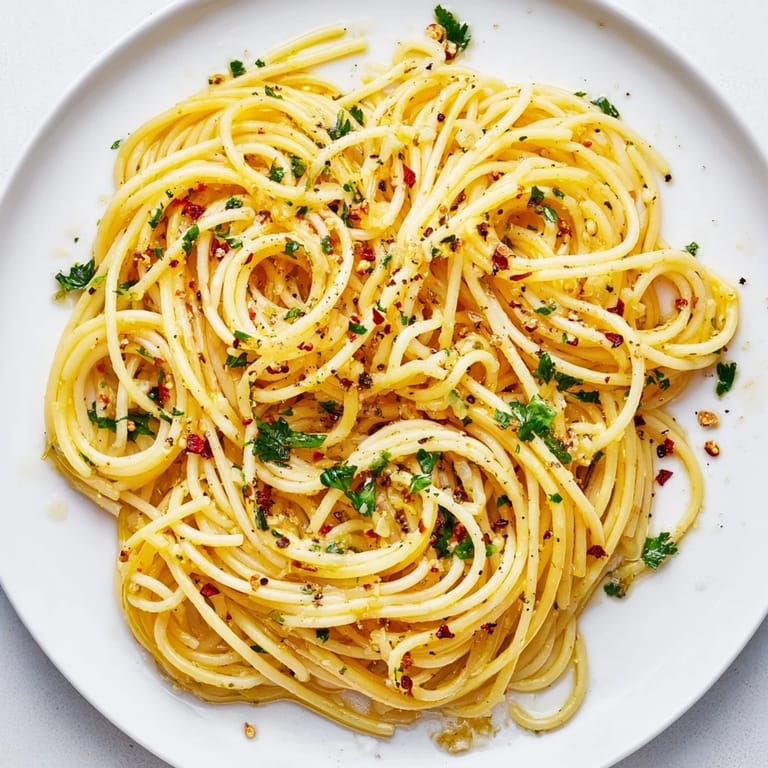
- Spaghetti: 200 grams of dried spaghetti—the thinner the noodle, the more gracefully it holds onto that silky oil.
- Extra-virgin olive oil: 4 tablespoons of quality oil is non-negotiable here; this is where all your flavor lives, so don't reach for the bottom shelf.
- Garlic cloves: 4 large cloves, sliced thin—the thickness of a coin, not a chunk, so they cook through without browning into bitterness.
- Red chili flakes: 1 teaspoon, though I've learned to start conservative and adjust because nobody wants their mouth to regret dinner.
- Fresh parsley: 2 tablespoons, chopped just before serving so it stays bright and alive.
- Black pepper: Freshly ground, because pre-ground tastes like the drawer it's been sitting in.
- Sea salt: For the pasta water and the plate; coarse salt seasons better than fine.
- Parmesan cheese: 2 tablespoons grated fresh, optional but it catches the oil beautifully if you choose to use it.
Tired of Takeout? 🥡
Get 10 meals you can make faster than delivery arrives. Seriously.
One email. No spam. Unsubscribe anytime.
Instructions
- Set the pasta water going:
- Fill a large pot with water and salt it generously—it should taste like the sea. Bring it to a rolling boil before adding the spaghetti, and stir it once so the strands separate and cook evenly.
- Wake up the garlic:
- While the pasta cooks, pour your olive oil into a large skillet and set it over medium-low heat, then add the sliced garlic. You're looking for gentle, patient cooking here—the garlic should turn pale gold and fragrant, not brown and bitter, which takes about 1 to 2 minutes.
- Bring in the heat:
- Scatter the chili flakes over the garlic and stir for just 10 seconds so they bloom and release their warmth into the oil without burning.
- Marry pasta and oil:
- Drain the spaghetti, but first catch about half a cup of that starchy water in a bowl—you'll need it. Pour the hot pasta directly into the skillet with the garlic and oil, then toss everything together with tongs or a wooden spoon, adding splashes of pasta water as you go to loosen and emulsify the sauce into something silky.
- Finish and serve:
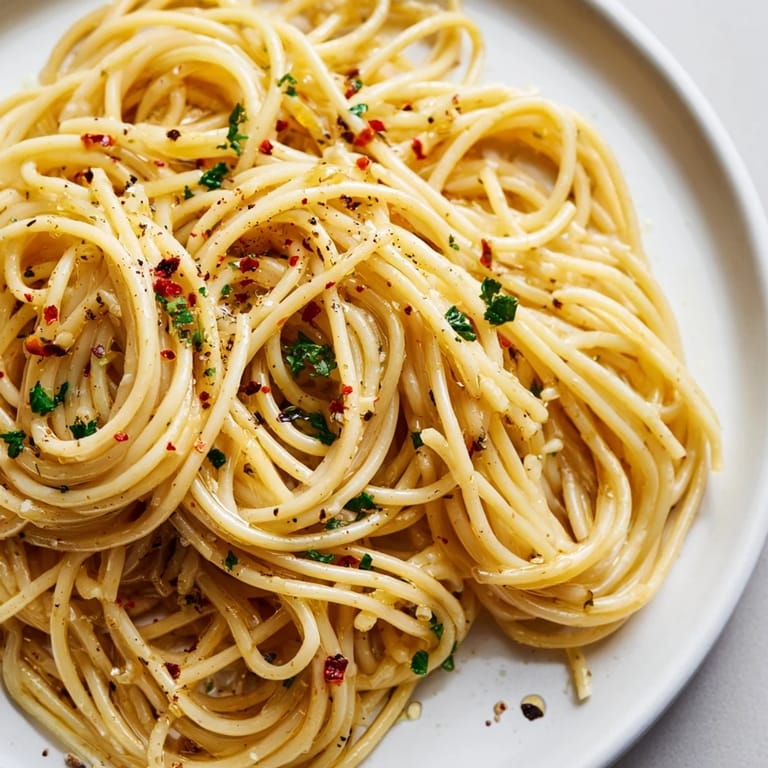
- Season with salt and fresh black pepper, scatter the parsley over the top, and serve immediately on warm plates. If you're using Parmesan, grate it fresh over each portion right before eating.
 Save Pin
 This dish stopped being just dinner the night someone told me it reminded them of eating in a small Roman kitchen they'd visited years ago, cooked by a woman whose name they never learned. It's remarkable how food can hold other people's memories alongside your own.
The Oil Matters More Than You Think
I spent years reaching for whatever olive oil was on sale, thinking all oil was functionally the same. Then I tasted the difference a genuinely good extra-virgin oil makes in a dish where oil is basically the entire point. It's peppery, it's buttery, sometimes it tastes like grass or green tomatoes in the best way. Once you cook with oil that's actually good, you can't pretend the cheap bottle was ever the same thing.
Timing Is Everything Here
This isn't a dish that tolerates distractions or improvisation while you're cooking it. You need to be present, watching the garlic, listening for when the pasta is done, ready to move quickly when everything comes together. That ten-minute window isn't about speed for its own sake—it's about keeping every element at its peak, hot and fresh and exactly what it's meant to be. The moment you plate it is the moment it's perfect, so don't let it sit.
Make It Your Own
The beauty of aglio e olio is that it's a foundation, not a prison. I've squeezed lemon juice over mine when I had a bottle open and the brightness made everything sing. I've added a pinch of red pepper flakes when I wanted more heat, or left them out entirely when I was cooking for someone who doesn't like spice. I've even stirred in a handful of spinach at the end because it was there and it worked.
- Fresh lemon juice added at the very end brings a brightness that cuts through the richness without overwhelming the garlic.
- If you're vegan, skip the Parmesan or use a nutritional yeast instead, which adds a nutty, almost cheesy note.
- Gluten-free pasta works perfectly here—just taste for doneness a minute earlier than the box suggests, since timing varies.
 Save Pin
 Ten minutes is all it takes to remind yourself why simple food, made with attention and care, is sometimes the best kind of food. There's freedom in that.
Questions & Answers
- → How do I prevent garlic from burning?
Sauté garlic over medium-low heat, stirring frequently until it turns just golden to avoid bitterness.
- → Can I adjust the spiciness level?
Yes, vary the amount of red chili flakes to suit your preferred heat intensity.
- → What pasta is best for this dish?
Traditional dried spaghetti works well, but gluten-free versions can be substituted if needed.
- → Is Parmesan necessary?
Parmesan cheese adds richness but can be omitted or replaced with vegan alternatives for dietary preferences.
- → How can I add brightness to the dish?
A squeeze of fresh lemon juice before serving enhances the flavor with a fresh, citrusy note.