 Save Pin
 There's something about the way garlic hits a hot skillet that just stops you in your tracks. One Thursday evening, I was rushing through dinner prep when that smell filled my kitchen, and suddenly I wasn't in a hurry anymore. That's when I first made this Tuscan chicken pasta—not from a recipe, but from pure instinct and whatever was in my pantry. The creamy sauce came together like magic, and it became the dish I now make whenever I want to feel like I'm sitting at a trattoria instead of my own kitchen counter.
I made this for my partner one rainy Sunday, and he asked for it again before he'd even finished his plate. There's something about feeding someone a dish that makes them smile like that—it shifted this recipe from something I made for myself into something that mattered. Now whenever I see sun-dried tomatoes at the market, I think of that moment and how a weeknight dinner became our favorite thing.
Ingredients
- Penne or fettuccine: 350 g (12 oz) of dried pasta works beautifully, though I've found fettuccine catches the sauce better than penne ever could.
- Salt for pasta water: 1 tablespoon might seem like a lot, but it's your only chance to season the pasta itself—don't skip it.
- Boneless, skinless chicken breasts: 2 large breasts give you enough for four generous servings without drying out if you watch them carefully.
- Dried Italian herbs: 1 teaspoon adds warmth without overpowering, though fresh herbs in the garnish are where the real magic happens.
- Olive oil: 2 tablespoons for browning the chicken—use one you'd actually taste on bread.
- Unsalted butter: 2 tablespoons is the foundation of your sauce; salted butter will throw off the seasoning balance.
- Garlic: 3 cloves minced fine, and yes, there's no such thing as too much when it smells this good.
- Sun-dried tomatoes in oil: 120 g (3/4 cup) drained and sliced—these are tart and concentrated, so they anchor the entire sauce.
- Chicken broth: 120 ml (1/2 cup) helps deglaze the pan and keeps the sauce from becoming too heavy.
- Heavy cream: 240 ml (1 cup) is what makes this Tuscan, and honestly, there's no substitute if you want that restaurant feel.
- Grated Parmesan cheese: 60 g (2 oz) freshly grated if you can manage it—pre-grated has anticaking agents that change the texture.
- Fresh baby spinach: 80 g (3 cups) wilts down faster than you'd expect, so don't be scared by the volume.
- Red pepper flakes: 1/4 teaspoon optional, but I add it every time for just a whisper of heat.
- Fresh basil or parsley: Chopped fresh for garnish, because dried herbs on top feels like giving up at the last second.
Tired of Takeout? 🥡
Get 10 meals you can make faster than delivery arrives. Seriously.
One email. No spam. Unsubscribe anytime.
Instructions
- Boil your pasta water:
- Fill a large pot with water, add salt, and bring it to a rolling boil—that's the moment you know it's ready. The water should taste like the sea, and yes, this is the only seasoning your pasta gets.
- Cook the pasta al dente:
- Follow the package instructions but check it a minute early; you want it tender with just a tiny bit of resistance when you bite it. Save 120 ml (1/2 cup) of that starchy pasta water before you drain—this is liquid gold for loosening your sauce later.
- Season and sear the chicken:
- While your pasta cooks, pat the chicken breasts dry with paper towels and season both sides with salt, pepper, and Italian herbs. Heat olive oil in a large skillet over medium-high heat until it shimmers, then add the chicken and let it sit undisturbed for 5-6 minutes until the underside is golden.
- Finish cooking the chicken:
- Flip and cook another 5-6 minutes until the internal temperature hits 75°C (165°F) and the outside is golden. Let it rest on a plate for 5 minutes—this keeps it from drying out when you slice it.
- Build the sauce foundation:
- In the same skillet (all those browned bits are flavor waiting to happen), melt butter over medium heat. Add your minced garlic and let it sizzle and soften for about 1 minute—if it starts to brown, pull it off the heat for a second.
- Add the sun-dried tomatoes:
- Stir in the sun-dried tomatoes and let them warm through for another minute, which releases their tangy depth into the butter and garlic.
- Deglaze and build richness:
- Pour in the chicken broth and use your wooden spoon to scrape up all the golden, crusty bits stuck to the bottom of the pan. Reduce the heat to low and stir in the heavy cream slowly so it doesn't break.
- Melt in the Parmesan:
- Add the grated Parmesan and red pepper flakes, stirring constantly until the cheese dissolves completely and the sauce turns smooth and velvety. Taste and adjust seasoning with salt and pepper.
- Wilt the spinach:
- Add the baby spinach a handful at a time, stirring after each addition until it softens and disappears into the sauce—it goes from a big pile to almost nothing in seconds.
- Bring it all together:
- Add the cooked pasta and sliced chicken to the skillet and toss everything gently to coat. If the sauce looks thick, add reserved pasta water a splash at a time until it looks creamy and clings to the pasta without pooling.
- Taste and serve:
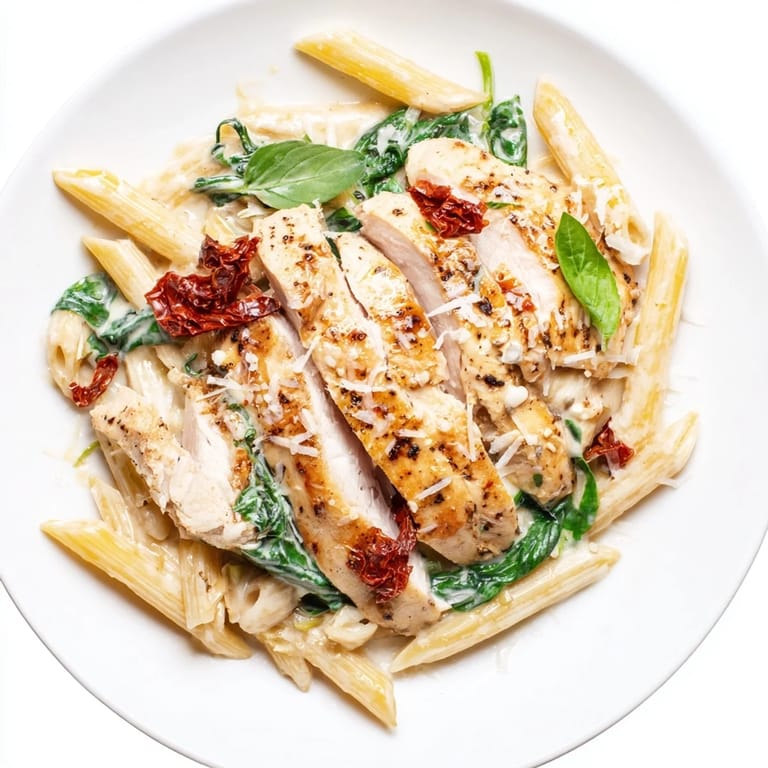
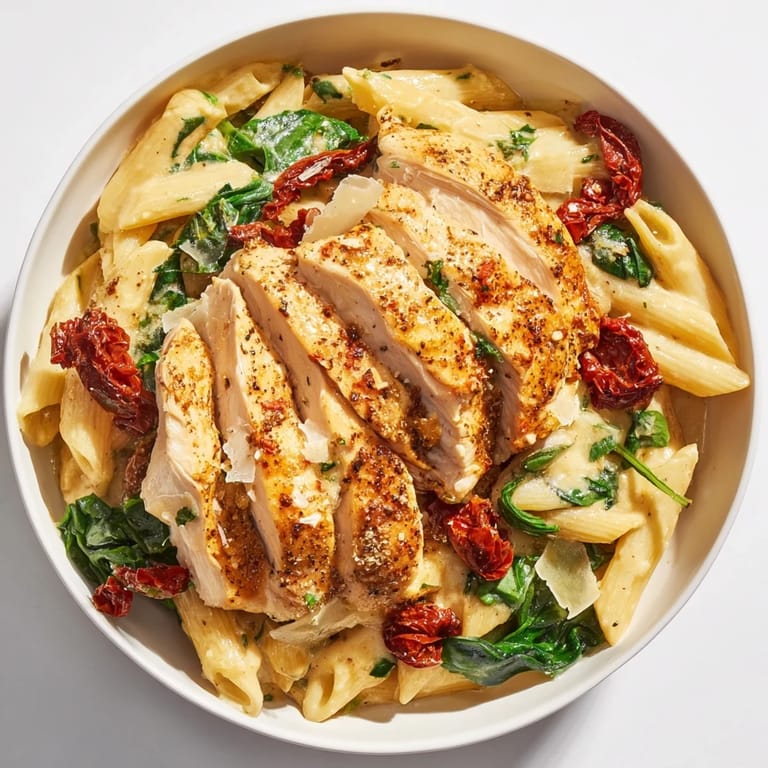
- Give it one final taste and adjust seasoning if needed, then serve immediately topped with fresh basil or parsley and extra Parmesan.
 Save Pin
 My mom tasted this dish on her last visit and just went quiet for a moment, then asked me to write down everything I did. It wasn't fancy or complicated, but it hit that sweet spot where simple ingredients become something that makes you close your eyes while you eat. That's when I knew this wasn't just a good weeknight dinner—it was something worth passing along.
Why This Sauce Works
The Tuscan sauce is really just four elements in conversation with each other: the tang from sun-dried tomatoes cutting through richness, garlic and butter building a savory base, heavy cream tying it all together, and Parmesan adding salt and umami depth. Each one needs the others to shine, which is why you can't just throw everything in at once and hope for the best. The order matters because it builds flavor gradually, and the result feels warm and sophisticated without being fussy.
Making It Your Own
This recipe is flexible in ways that matter. Some nights I use half-and-half instead of heavy cream when I want something a bit lighter, and the dish is still delicious—just less decadent. I've experimented with shrimp instead of chicken, and it works beautifully if you use frozen shrimp that you thaw and pat dry first. Even switching the pasta shape changes how the sauce clings and sits on your plate.
Timing and Prep Work
The beauty of this recipe is that most of the work is chopping and assembly, not actually cooking. If you prep your garlic and sun-dried tomatoes before you start, the whole dish comes together without any moments of panic or rushing. I usually slice the chicken while it rests, mince the garlic while the pasta boils, and by the time I'm ready to build the sauce, everything is already waiting. The actual cooking moves fast—once you start the sauce, you're eating in less than 15 minutes.
- Prep all your ingredients before you turn on the heat; it feels easier and keeps you from scrambling.
- If you're cooking for guests, boil the pasta a minute early and finish cooking it in the sauce—it absorbs more flavor that way.
- Make this dish your own by tasting as you go and adding salt, pepper, or red pepper flakes until it feels right to your palate.
 Save Pin
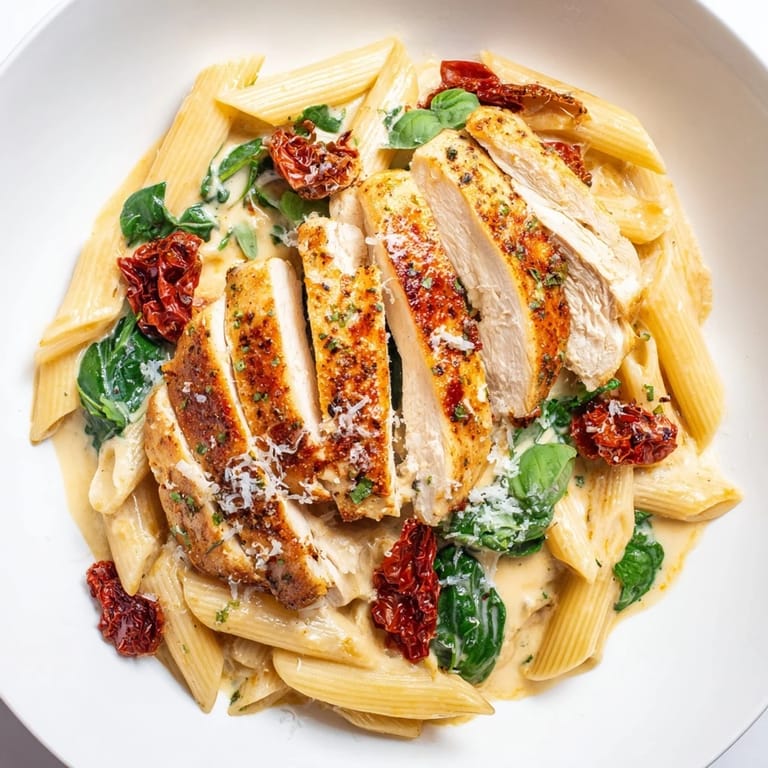
 This is the kind of meal that reminds you why cooking at home matters. It's simple enough to make on a Tuesday night but feels special enough for someone you want to impress.
Questions & Answers
- → What pasta types work best for this dish?
Penne or fettuccine are ideal as they hold the creamy sauce well while complementing the tender chicken and vegetables.
- → Can I substitute chicken with other proteins?
Yes, grilled shrimp or turkey breast can provide a delicious alternative while maintaining a similar texture and flavor profile.
- → How can I make the sauce lighter?
Substitute heavy cream with half-and-half or a mixture of milk and cream to reduce richness without sacrificing creaminess.
- → Is it necessary to reserve pasta water for the sauce?
Yes, adding reserved pasta water helps adjust the sauce consistency and helps it cling to the pasta evenly.
- → What herbs complement the flavors in this dish?
Fresh basil or parsley adds bright, aromatic notes that balance the richness of the cream sauce and sun-dried tomatoes.