 Save Pin
 The first time I tasted zarb, my hands were dusty from digging, and I hadn't expected to eat anything quite that good from what looked like a humble pit in the ground. A Bedouin family invited me to join them for lunch, and as they unwrapped that foil-covered bundle to reveal perfectly steamed lamb, potatoes, and carrots all infused with the most intoxicating smoky warmth, I realized I'd been eating food the wrong way my whole life. There's something about slow-cooked meat that falls from bone without trying, vegetables that have absorbed every spice around them, and a natural broth that pooled at the bottom that made me understand why this dish has fed families and travelers for centuries.
I made zarb for a dinner party once and didn't tell anyone what they were eating until they'd finished their plates—I just said it was something special, slow-cooked. Everyone had seconds, and one guest asked if I'd learned to cook in the Middle East. When I explained it was a Bedouin dish made right here in my oven, the conversation shifted to stories about travel, family recipes, and why some foods just taste like home regardless of where you make them.
Ingredients
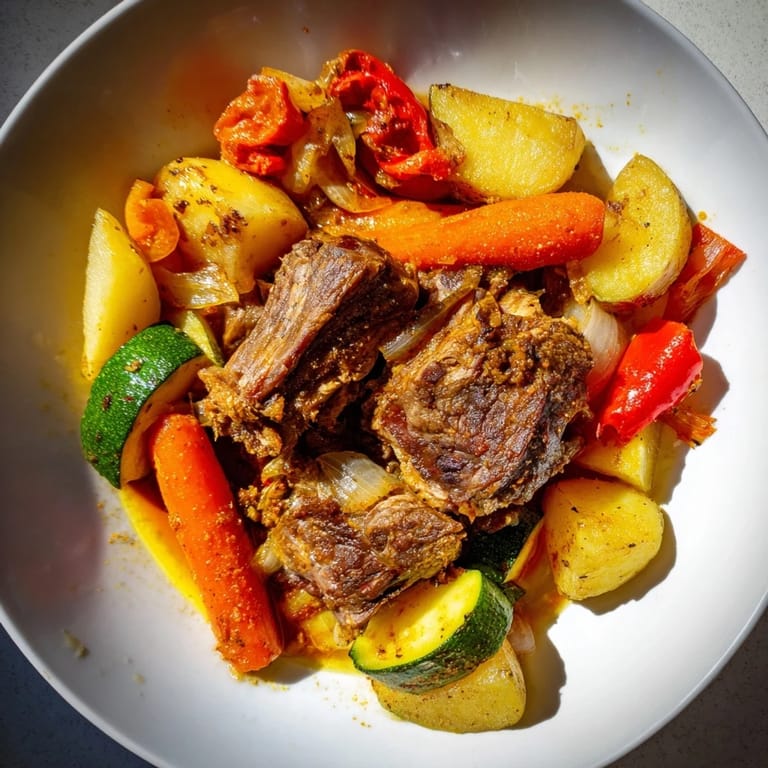
- Lamb shoulder or chicken pieces, bone-in, cut into large chunks (1.5 kg): Bone-in meat stays juicier under the foil and creates a natural broth; shoulder has enough fat to keep everything moist.
- Olive oil (2 tbsp): Use good quality for the marinade so the flavor carries through.
- Ground cumin, coriander, cinnamon, and smoked paprika (2 tsp, 2 tsp, 1 tsp, 1 tsp): This spice blend is the soul of zarb—toast them briefly in a dry pan before mixing if you want even more depth.
- Garlic (4 cloves, minced) and lemon juice (1 lemon): The acid and garlic balance the richness and cut through the smokiness.
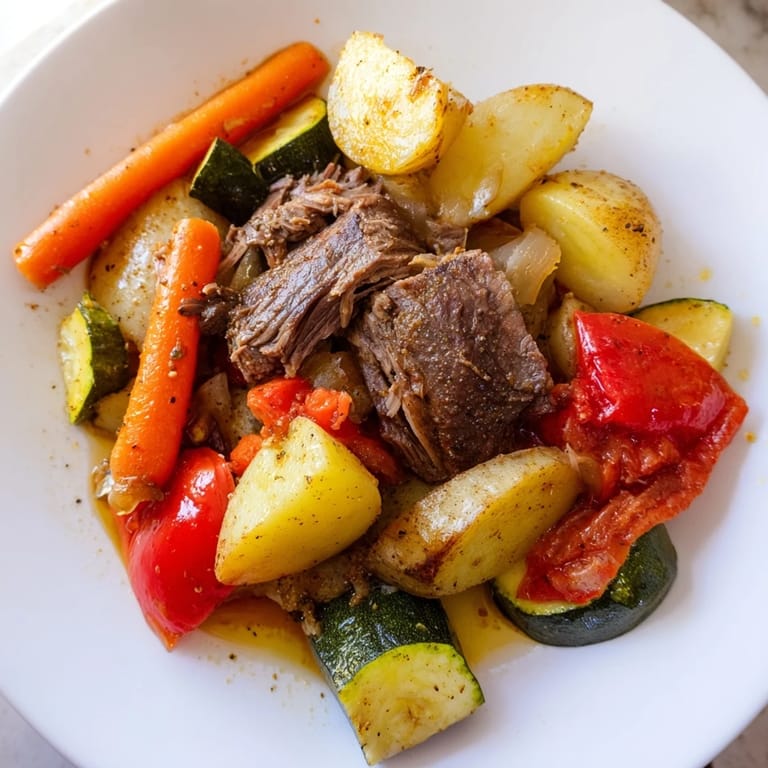
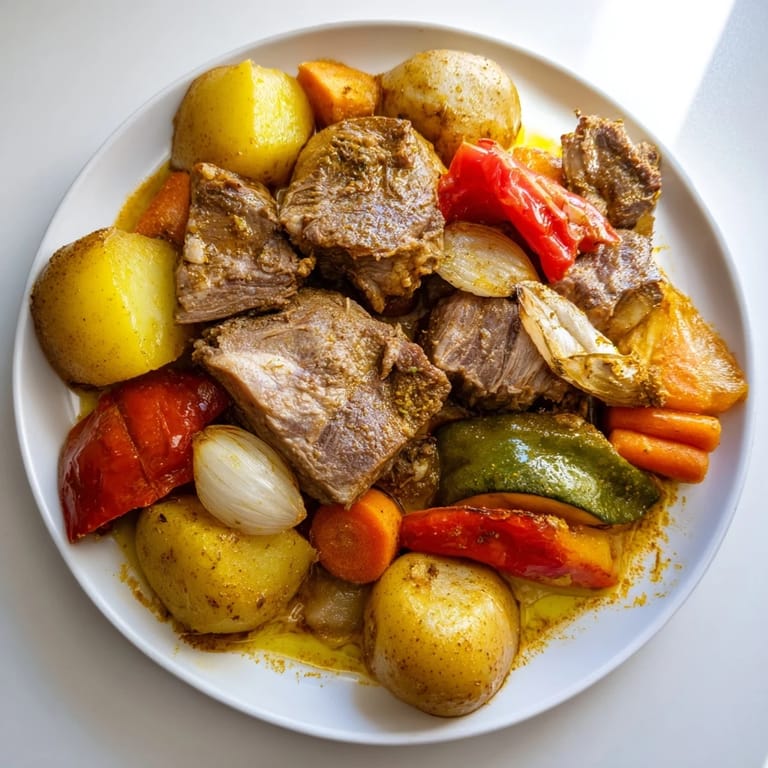
- Potatoes, carrots, onions, zucchini, bell peppers, and tomatoes: Cut everything in large chunks so vegetables stay distinct and don't turn to mush; they'll soften plenty during the long cook.
- Rice (2 cups long-grain, optional) and broth (3 cups): Rice soaks up the flavors beautifully and stretches the dish if you're feeding a crowd.
Tired of Takeout? 🥡
Get 10 meals you can make faster than delivery arrives. Seriously.
One email. No spam. Unsubscribe anytime.
Instructions
- Marinate the meat:
- Mix olive oil, cumin, coriander, cinnamon, paprika, pepper, salt, garlic, and lemon juice in a bowl, then massage this paste into every piece of meat as if you're coaxing out its potential. Let it sit at least an hour in the fridge, or overnight if you can—the spices need time to penetrate.
- Prepare your cooking vessel:
- Preheat your oven to 180°C (350°F) if you're not using a traditional underground pit. Arrange the marinated meat on a wire rack or roasting tray so steam can circulate around it.
- Layer the vegetables:
- In a separate bowl, toss all your vegetables with a splash of olive oil, salt, and pepper, then arrange them around and beneath the meat—they'll cook in the meat's juices and become deeply flavored. Don't crowd them too tightly; they need room for steam to move.
- Seal and steam:
- Cover the entire tray tightly with foil, pressing it down at the edges so no steam escapes. If you want authentic flair, wrap in banana leaves first, then foil over top.
- Slow cook:
- Bake for 2.5 hours until the meat is so tender it nearly falls apart and the vegetables are soft but still hold their shape. If you're using an underground pit, place the wrapped tray in and cover with hot coals and sand, checking occasionally.
- Make the rice (if serving with it):
- While everything cooks, bring rice, broth, butter, and salt to a boil in a saucepan, then cover and simmer gently for 15–20 minutes until fluffy and the liquid absorbs. The butter makes it taste richer, but oil works too.
- Open and serve:
- Carefully unwrap the foil—the steam will be hot and fragrant—and transfer meat and vegetables to a large platter. Spoon all those precious juices over top and serve alongside rice or with flatbreads and yogurt sauce.
 Save Pin
 A friend who grew up eating zarb at family gatherings told me the dish represents something deeper than cooking—it's about patience, trust, and the belief that good things happen when you seal something up and let time do the work. I think about that whenever I wrap a tray in foil, waiting for the smell of cinnamon and cumin to fill my kitchen.
Why Underground Cooking Matters
Traditional zarb cooked in an underground pit gets a subtle smoky flavor that a regular oven can't quite replicate, but here's the secret: the foil-sealed tray method captures almost all of that effect by trapping steam and concentrating flavors. If you ever have the chance to cook in a real pit—with hot coals and sand providing even, gentle heat—take it, because it's an experience that changes how you think about food. For everyday cooking, your oven does the job beautifully, and the results will still make everyone at your table feel like they've traveled somewhere special.
Making It Your Own
I've seen zarb made with sweet potatoes instead of regular ones, with eggplant tucked in between layers, even with a splash of pomegranate molasses stirred into the spice mixture for tartness. The beauty of this dish is that it's flexible—as long as you respect the core idea of slow-steaming marinated meat with vegetables, you can adapt it to what's in your market or what your family loves. The vegetables will taste like whatever meat you use, so if you prefer chicken, it becomes a lighter, brighter zarb; if you add goat, it gets richer and more complex.
Serving Suggestions & Pairings
Zarb is best served family-style on a big platter where everyone can pull from the center, with rice, flatbread, and a cooling dollop of tangy yogurt on the side to balance the spices. I've learned that the yogurt isn't just nice to have—it's essential, because it cuts through the richness and makes you want another bite. A robust red wine works beautifully with the spices, but if you're keeping it traditional, mint tea steeped strong and served hot is the classic pairing, and somehow it feels more right when you're eating this dish.
- Serve immediately after opening the foil while everything is still steaming and flavors are at their peak.
- Leftover zarb reheats gently in a low oven and tastes even better the next day as flavors continue to meld.
- If your guests are unfamiliar with the dish, tell them to try meat, vegetables, and yogurt together in one bite for the full experience.
 Save Pin
 There's something profound about unwrapping a dish that's been slowly transforming under foil—like opening a present you wrapped yourself. Zarb reminds you that the best meals don't need to be complicated, just patient.
Questions & Answers
- → What type of meat is ideal for Jordanian Zarb?
Lamb shoulder or bone-in chicken pieces are preferred for their ability to absorb spices and tenderize during slow cooking.
- → How are the spices used in the marinade prepared?
Spices like cumin, coriander, cinnamon, smoked paprika, and pepper are mixed with olive oil, garlic, lemon juice, and salt, then massaged into the meat for deep, layered flavors.
- → Can Jordanian Zarb be cooked without an underground oven?
Yes, it can be baked in a conventional oven at 180°C (350°F), wrapped tightly to trap steam and maintain moisture.
- → What vegetables complement the marinated meats in this dish?
Potatoes, carrots, onions, zucchinis, bell peppers, and tomatoes are traditionally included, adding sweetness and texture.
- → Is rice traditionally served with Jordanian Zarb?
Rice served alongside, cooked in broth with butter or oil, provides a fluffy base that balances the rich meats and vegetables.
- → Are there common variations to this dish?
Eggplants or sweet potatoes can be added for variety, and serving with tangy yogurt sauce or flatbreads enhances the experience.