 Save Pin
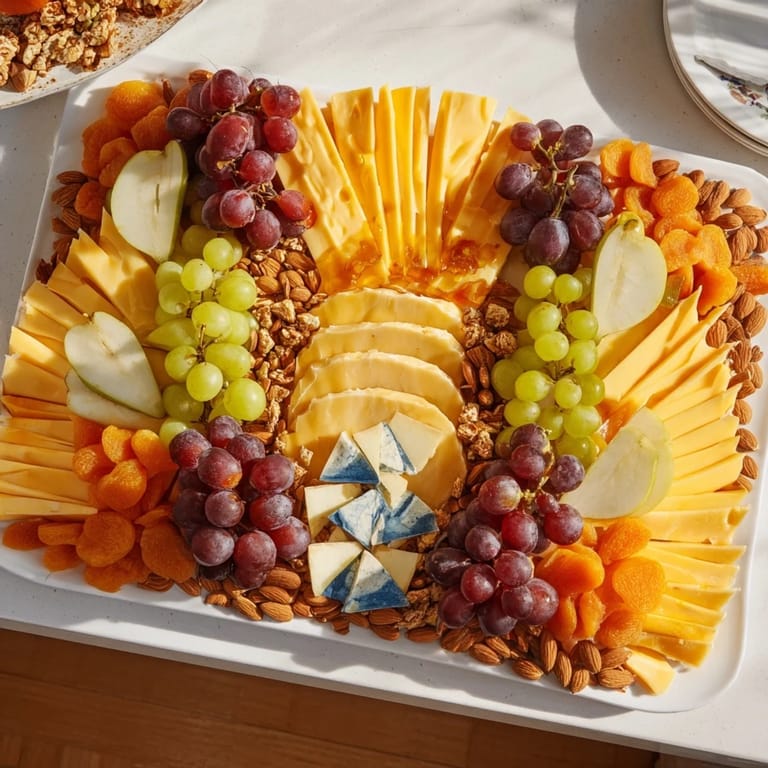
 I was flipping through a coffee table book on Art Deco design when a photo of the Chrysler Building stopped me cold—those gleaming arches, the geometric precision, the pure confidence of 1920s architecture. That evening, I found myself staring at my cheese board, imagining those same lines in aged cheddar and Gruyère. What started as a doodle became an obsession: could I translate that architectural language into something edible, something that would make people pause the same way I had? It turned out, yes—and it tasted even better than it looked.
The first time I made this for a dinner party, my friend Marcus walked in, set down his wine, and just... stared. For a full ten seconds, he didn't reach for anything. He just looked at the platter like it belonged in a gallery. Then he laughed and said, "Did you become an architect when I wasn't looking?" That moment—the pause between beauty and appetite—is exactly why I keep building these.
Ingredients
- Aged cheddar, sliced thin (150 g): The backbone of your arches—its color is half the drama, and the sharpness cuts through rich brie beautifully.
- Gruyère, sliced thin (150 g): This one has nutty sweetness and a firmer texture that holds those fan shapes without drooping.
- Manchego, sliced thin (150 g): The golden child of the trio—creamy, slightly salty, and it catches light like honey.
- Creamy brie, sliced into wedges (120 g): Your architectural base, soft and grounding, something to spread on crackers between admiring glances.
- Blue cheese, cut into small triangles (100 g): The accent pieces at the crown of each arch, sharp and bold like those pointed Art Deco spires.
- Seedless green grapes (1 small bunch): Color contrast and little flavor breaks that refresh the palate.
- Red grapes (1 small bunch): The warmth between the cool cheeses, easy to grab between conversations.
- Pear, thinly sliced (1 small): Delicate and pale, it fills negative space without competing for attention.
- Apple, thinly sliced (1 small): Bright acidity and crisp texture that keeps things lively next to soft cheeses.
- Roasted almonds (40 g): Scatter these like they're decorative studs on an Art Deco brooch—texture and a hint of salt.
- Dried apricots, halved (40 g): Jewel-like pops of sweetness hiding in the architectural gaps.
- Honeycomb or good quality honey (40 g): The final touch of luxury, pooling beside the brie like liquid gold.
- Baguette, sliced (1): Your vehicle for everything, crispy outside and soft inside.
- Assorted crackers (100 g): Variety matters here—water crackers, seeded, whole grain—let people choose their canvas.
Tired of Takeout? 🥡
Get 10 meals you can make faster than delivery arrives. Seriously.
One email. No spam. Unsubscribe anytime.
Instructions
- Start with a clean canvas:
- Lay out your large platter or board and take a breath. You're about to create something that looks like it took hours but will take minutes if you have your mise en place ready.
- Build your first arch:
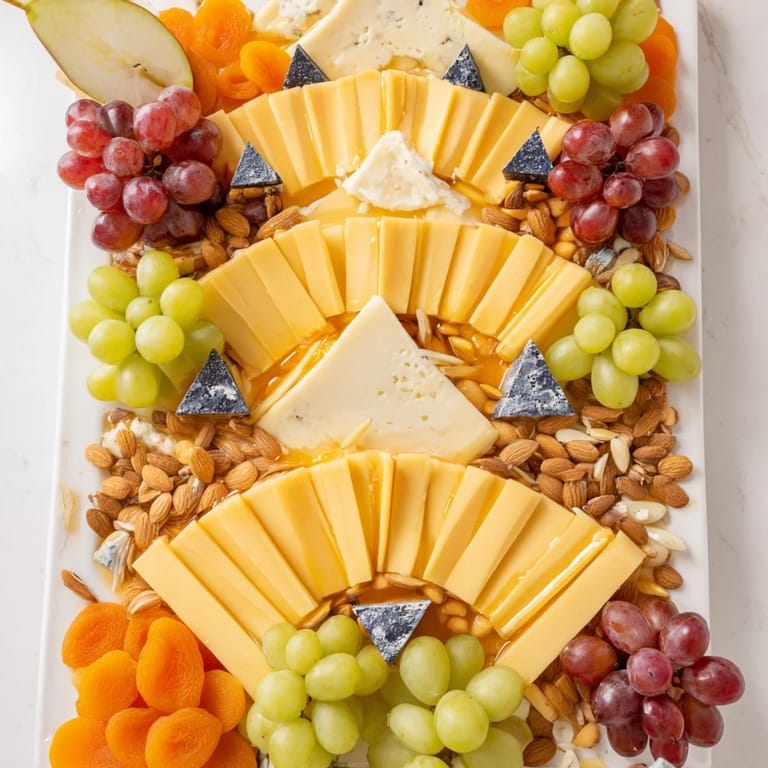
- Take your aged cheddar slices and arrange them in a gentle fan shape, overlapping each slice like roof tiles, working from one side of the board outward. Let the warm orange tones establish the first architectural line.
- Mirror that curve with Gruyère:
- Create a second fan arch, slightly offset or layered, using your Gruyère slices—the contrast in color and tone creates depth without confusion.
- Complete the trio with Manchego:
- Your third arch brings warmth and golden tones, balancing the cooler aged cheddar on the opposite side.
- Ground each arch with brie:
- Place wedges of soft brie at the base where each cheese fan begins, like the solid foundation of a building holding up all that elegant geometry.
- Crown them with blue cheese:
- Position small triangles of blue cheese at the top-center of each arch, creating those signature pointed tips that make everyone think "skyscraper" before you even say the word.
- Fill the negative space:
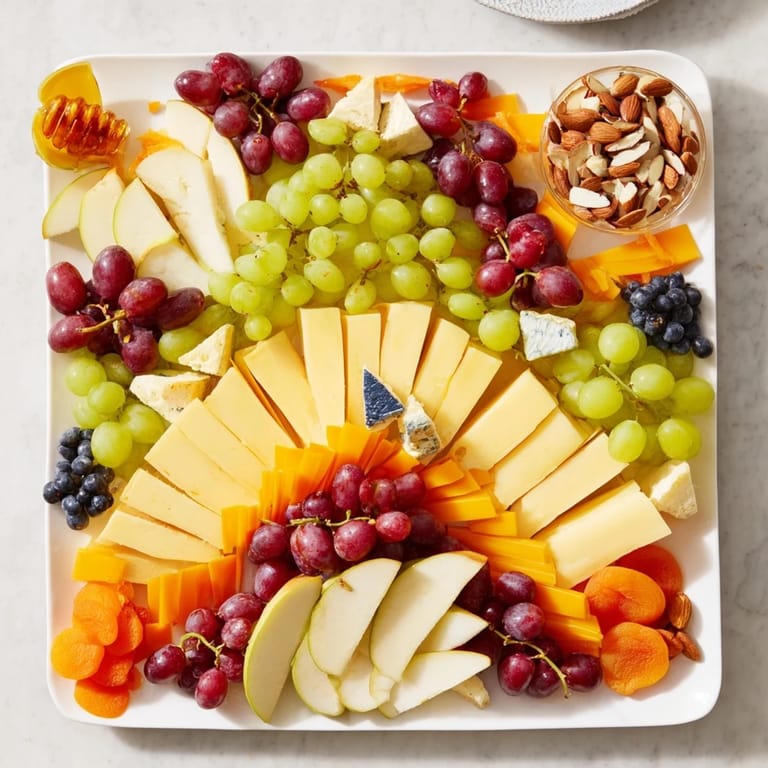
- Tuck bunches of grapes between and around the arches, layer your pear and apple slices into the gaps, letting the pale fruit breathe against the deeper cheese tones.
- Scatter your final details:
- Sprinkle roasted almonds and halved dried apricots around the platter like decorative accents, then drizzle your honey near the brie—let it pool slightly, inviting people to drag their cracker through it.
- Frame it all with crackers and bread:
- Arrange baguette slices and assorted crackers along the perimeter, making sure everyone can reach without disrupting the arches themselves.
- Serve or chill:
- If you're serving now, go straight to the table. If you want to wait a bit, cover loosely with plastic wrap and chill for up to an hour—the cold will keep everything firm and fresh.
 Save Pin
 My grandmother once told me that food isn't just fuel or even flavor—it's the moment when people stop rushing and really *see* each other. Building this platter taught me what she meant. It's not about the individual cheeses or the honey drizzle. It's that pause, that second where someone walks in and forgets what they were about to say because something beautiful is on the table.
Choosing Your Cheeses
The magic of this platter is that it's endlessly personal. You're not locked into these three sliced cheeses—think of them as a template. Comté brings an almost nutty depth that aged cheddar can't quite match. Emmental has a gentler, more delicate flavor. Aged Gouda brings richness and a slightly caramel edge. The only rule is: pick three that look beautiful together and have different enough personalities that they don't blur into one samey flavor. The geometry matters less than the conversation between the cheeses on someone's palate.
Flavor Pairing & Wine
This is where the 1920s theme comes alive. Crisp Champagne is the obvious choice—those bubbles cut through the richness of the brie and blue cheese like little flavor resets. A dry Riesling works too, with enough body to stand up to the aged cheddar but enough acidity to refresh your palate between bites. Even a chilled Albariño brings brightness that keeps everything from feeling heavy. If you're not drinking wine, cold apple cider or sparkling water with fresh mint echoes that crisp, sophisticated vibe.
Assembly Tips & Variations
Think of this platter as a jazz standard—there's a structure, but the magic is in your improvisation. The geometric arches can be more abstract or more precise depending on your mood. Some people make them perfectly symmetrical like architectural blueprints; others let them flow more organically. Both work. For a vegan version, plant-based cheeses have gotten genuinely good, and a quality agave nectar or maple syrup stands in for honey with zero loss of elegance.
- If you're making this ahead, assemble the cheeses and keep them chilled, then add fruits and nuts just before serving so nothing gets soft or oxidized.
- A sprinkle of fleur de sel on the blue cheese brings out its funky, briny notes in the best way.
- Left with scraps? Crumble them into a small board of their own—there's no shame in a casual follow-up platter once the beautiful one is mostly gone.
 Save Pin
 This platter isn't a recipe you master and stop thinking about—it's a language you keep learning. Every time you build one, you'll notice something new: a better way to arrange the grapes, a cheese pairing you didn't expect, the moment someone sets down their phone and genuinely looks. That's the real architecture here.
Questions & Answers
- → How can I create clean cheese slices for this platter?
Using a wire cheese slicer helps achieve even, thin slices for neat fan shapes and a refined presentation.
- → What cheeses work well for the tiered arches?
Aged cheddar, Gruyère, and Manchego provide firm texture and slice thinly to create distinct, layered fans.
- → Can I substitute the accompaniments if I don’t have specific fruits?
Yes, seasonal fruits like figs or berries can replace grapes and apples to add freshness and color.
- → How do the nuts and honey enhance the platter?
Roasted almonds add crunch and warmth, while honey or honeycomb brings a touch of natural sweetness balancing savory cheeses.
- → Is it possible to prepare this platter ahead of time?
Arrange the platter and chill covered for up to 1 hour to maintain freshness before serving.