 Save Pin
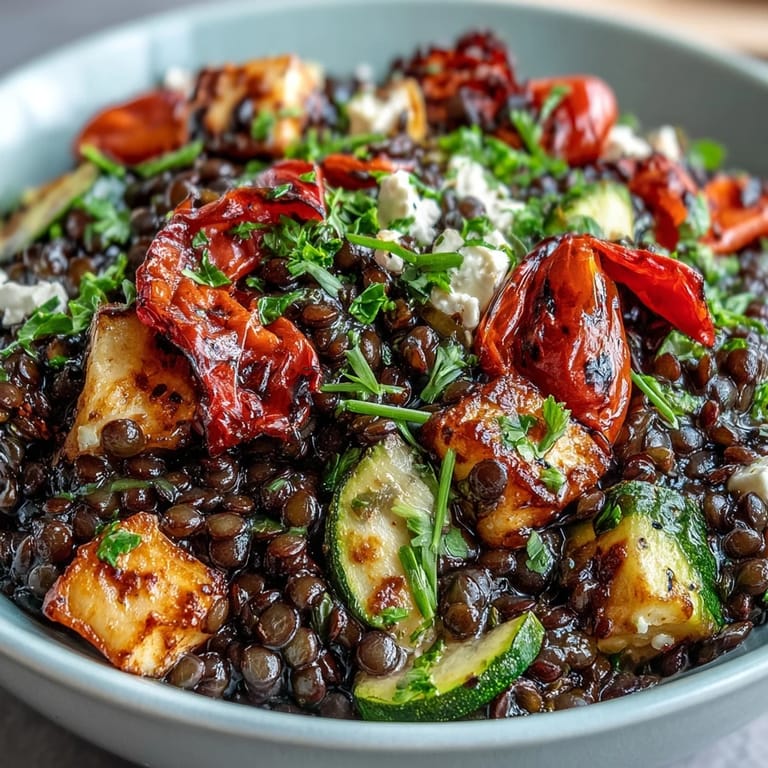
 My neighbor knocked on my door one afternoon with a container of something that looked almost too vibrant to eat—deep purple-black lentils mixed with charred vegetables in shades of gold and crimson. She'd made it on a whim because her farmer's market haul was overflowing, and one taste told me I needed to learn how to make this myself. What struck me most wasn't just how good it tasted, but how it felt substantial enough for dinner yet light enough that I didn't need anything else. That bowl became my go-to recipe when I wanted to feel nourished without spending hours in the kitchen.
I brought a big batch to a potluck at work once, expecting it to disappear among the heavier casseroles, but instead people kept coming back asking for the recipe. Someone told me it was the first salad she'd actually felt full from, and that stuck with me. Now whenever I make it, I remember that kitchen generosity isn't always about complexity—sometimes it's just about getting the ratio of textures and flavors exactly right.
Ingredients
- Black lentils (beluga): These little gems stay firm and don't turn to soup, unlike brown lentils which get soft and split easily—I learned that lesson the hard way.
- Water and bay leaf: The bay leaf adds a whisper of depth without being obvious; don't skip it even though it seems small.
- Red bell pepper: The sweetness that emerges when roasted is nothing like the raw version, so resist the urge to use it fresh.
- Zucchini: Dice it the same size as everything else or the smaller pieces will disappear while larger chunks stay firm.
- Red onion: Cut into wedges rather than dice so the layers caramelize separately and stay tender, not mushy.
- Carrot: Choose a smaller one and cut it to match the pepper; they take about the same time to soften.
- Olive oil for roasting: Two tablespoons is enough to coat everything—too much and you're eating oil, too little and edges dry out.
- Cherry tomatoes: Add these after roasting so they keep their brightness and don't release all their juice.
- Fresh parsley: Its peppery freshness is what makes this feel alive, so don't use dried.
- Feta cheese: Optional but worth it if you eat dairy—it adds a salty, creamy contrast that makes people notice it.
- Extra-virgin olive oil for dressing: This is where you taste the oil, so use one you actually enjoy.
- Lemon juice: Fresh lemon only; bottled changes the entire feeling of the dressing.
- Dijon mustard: Just enough to emulsify and add a subtle sharpness without announcing itself.
- Garlic: Minced fine so it dissolves into the dressing rather than leaving little chunks.
- Honey or maple syrup: A teaspoon might seem like nothing, but it softens the acidity and makes the dressing rounder.
Tired of Takeout? 🥡
Get 10 meals you can make faster than delivery arrives. Seriously.
One email. No spam. Unsubscribe anytime.
Instructions
- Heat your oven and prepare the vegetables:
- Set your oven to 425°F and while it warms, cut your vegetables into roughly the same size so they roast evenly. Toss everything with olive oil, salt, and pepper right on the baking sheet—fewer dishes and the vegetables get coated more thoroughly.
- Get the vegetables golden:
- Spread them in a single layer and roast for 25–30 minutes, stirring halfway through so they color evenly on all sides. You'll know they're done when the edges are caramelized and some pieces have darkened spots; that's where the sweetness lives.
- Cook the lentils while vegetables roast:
- Bring water to a boil with the bay leaf and salt, then add rinsed lentils and reduce heat to a simmer. Cook uncovered for 20–25 minutes, tasting at the 20-minute mark because timing varies; you want them tender enough to break easily but still holding their shape.
- Make the dressing:
- While everything cooks, whisk together olive oil, lemon juice, mustard, minced garlic, honey, salt, and pepper in a small bowl. The mixture should smell bright and taste balanced—taste a tiny bit on your finger and adjust salt or lemon to your preference.
- Bring it all together:
- Drain the lentils and stir in salt while they're still warm so it seasons them properly. Combine warm lentils, roasted vegetables, cherry tomatoes, and parsley in a large bowl, then drizzle with dressing and toss gently so nothing breaks apart.
- Add cheese and rest:
- Crumble feta over the top if using, then let it sit for 5 minutes so flavors start to mingle. Serve warm or let it come to room temperature; both ways are delicious.
 Save Pin
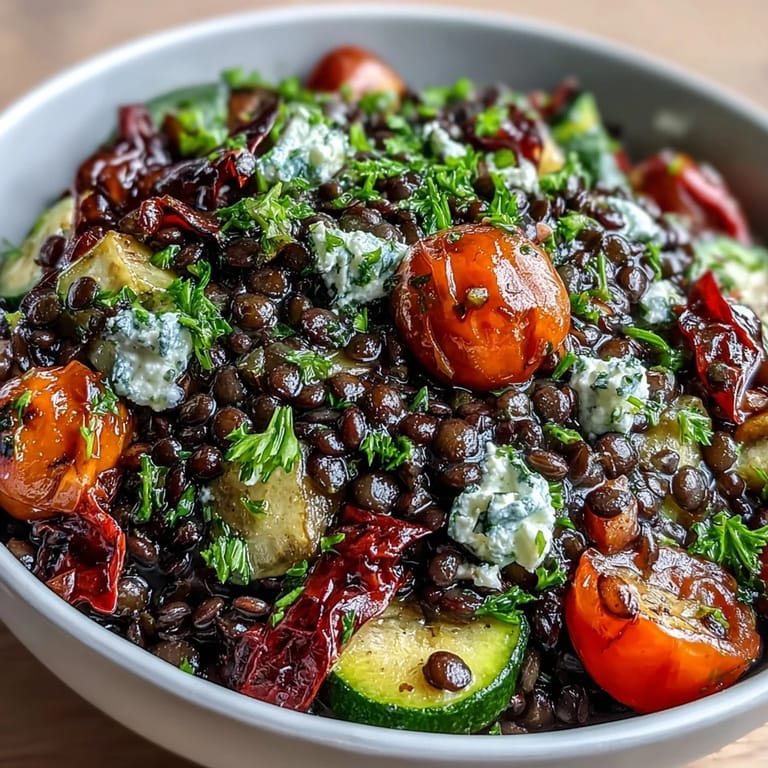
 There's a moment when you're tossing everything together and the warm lentils start releasing their earthiness, the roasted vegetables smell almost caramelized, and the lemon dressing makes everything shine—that's when you know you've got something that goes beyond just lunch. This salad became the dish I make when I want to feel taken care of by my own hands.
Make It Your Own
This salad doesn't demand perfection; it asks for your attention. Swap roasted vegetables based on what's looking good at the market—eggplant, squash, Brussels sprouts, or broccoli all work beautifully. Some people add a handful of arugula or spinach at the end, which adds a peppery edge that plays against the earthy lentils, or scatter some seeds like pumpkin or sunflower on top for crunch. The dressing formula stays the same, but you can adjust the garlic down if you're sensitive or add a touch more honey if you like it slightly sweeter.
Timing and Storage
This salad is genuinely one of those dishes that improves with time as the flavors deepen and mingle, so it's perfect for meal prep. Made it for lunch Monday and it tastes noticeably better by Wednesday, though the texture of the vegetables softens slightly—if you prefer more crunch, add them fresh the day you're eating. Keep it in a covered container in the refrigerator for up to four days, and if the dressing gets absorbed, whisk together another quick batch and drizzle it over just before eating.
Serving and Pairing
Serve this warm if you're eating it right away, or let it settle to room temperature where all the flavors become more pronounced. It stands alone as a complete lunch or dinner, but if you want to add something, grilled chicken, salmon, or even a fried egg on top transforms it into a different kind of satisfying. On its own, it's proof that vegetables and legumes don't need to apologize for being the main event.
- Serve with a simple green salad on the side if you want more vegetables.
- Pair it with crusty bread to soak up any dressing left in the bowl.
- Add a dollop of Greek yogurt or tahini if you want something creamy without feta.
 Save Pin
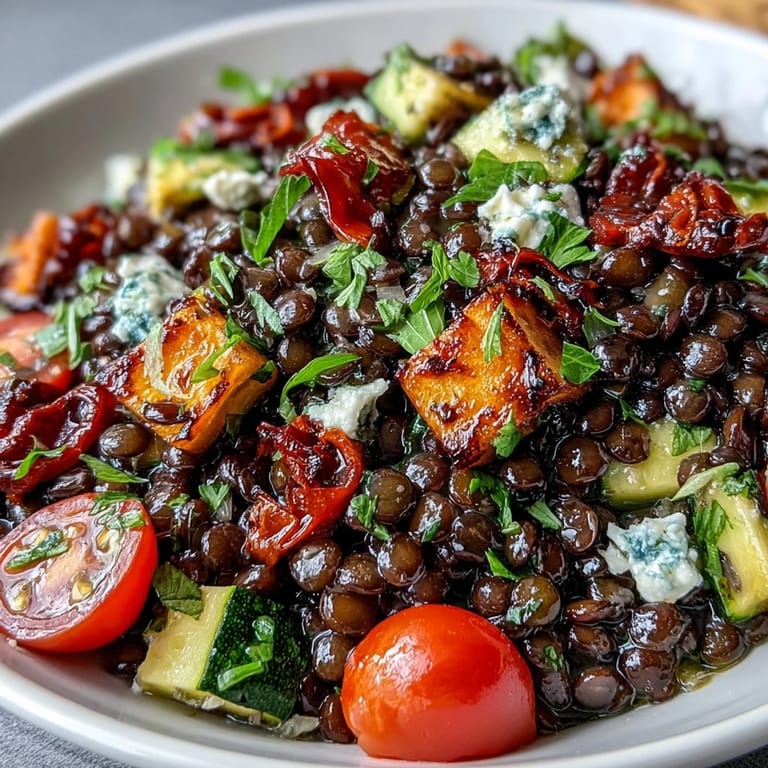
 This salad taught me that nourishing food doesn't have to be complicated, just thoughtful and made with ingredients you actually taste. Once you make it once, it becomes the kind of recipe you return to without thinking.
Questions & Answers
- → What makes black lentils different from other varieties?
Black beluga lentils hold their shape during cooking and develop a rich, earthy flavor. Their small size and firm texture make them ideal for salads, unlike red lentils which break down more easily.
- → Can I make this ahead of time?
Absolutely. The flavors actually improve after a few hours in the refrigerator. Store the dressing separately and toss just before serving to keep the vegetables crisp.
- → What vegetables work best for roasting?
Root vegetables like carrots, sweet potatoes, and beets work wonderfully. For quicker roasting, choose vegetables with similar cooking times like bell peppers, zucchini, and red onions as listed.
- → How do I prevent lentils from becoming mushy?
Simmer lentils uncovered and test frequently after 15 minutes. They should be tender with a slight bite. Drain immediately when done and avoid overcooking.
- → What protein additions complement this bowl?
Grilled chicken, roasted salmon, or chickpeas pair beautifully. For extra protein without meat, consider adding quinoa, walnuts, or hemp seeds.