 Save Pin
 I was standing in my tiny kitchen on a rainy Saturday, craving something fresh but too lazy to order takeout. A half-used bag of sushi rice sat in the pantry, and I had an avocado that needed eating. I figured, how hard could rolling sushi be? Turns out, not hard at all. That first wobbly roll became my gateway into making sushi at home whenever the mood strikes.
The first time I made these for friends, I was nervous theyd fall apart mid-slice. Instead, they came out clean and beautiful, and everyone grabbed seconds before I even sat down. One friend said it tasted better than the spot down the street. I didnt admit how easy it actually was until later.
Ingredients
- Sushi rice: This short-grain rice gets sticky when cooked, which is exactly what you need for rolls that hold together, so dont substitute with regular long-grain rice.
- Rice vinegar: The sweet-tangy seasoning that makes sushi rice taste like sushi rice, not just plain rice.
- Avocado: Go for one thats ripe but still firm enough to slice cleanly without turning to mush under your knife.
- Cucumber: Julienned into thin sticks, it adds that crisp, refreshing contrast to the creamy avocado.
- Nori sheets: These seaweed sheets hold everything together and add a subtle umami flavor that ties the whole roll together.
- Sesame seeds: Optional, but they add a nutty crunch and make your rolls look a little more polished.
Tired of Takeout? 🥡
Get 10 meals you can make faster than delivery arrives. Seriously.
One email. No spam. Unsubscribe anytime.
Instructions
- Rinse and cook the rice:
- Rinse the rice under cold water until it runs clear to remove excess starch, then simmer it covered until tender and fluffy. Let it rest off the heat so the grains finish steaming and become perfectly sticky.
- Season the rice:
- While its still warm, gently fold in the vinegar mixture so every grain gets coated without turning mushy. Let it cool to room temperature before you start rolling.
- Prep your fillings:
- Slice the avocado and julienne the cucumber into thin, even sticks. Uniform pieces make rolling way easier and every bite more consistent.
- Assemble the roll:
- Lay the nori shiny side down on your bamboo mat, spread rice evenly with wet hands, and line up your fillings along the bottom edge. Use the mat to roll tightly away from you, pressing gently as you go.
- Seal and slice:
- Moisten the top border of nori to seal the roll, then use a sharp, damp knife to cut it into 6 to 8 pieces. Wipe the blade between cuts for clean edges.
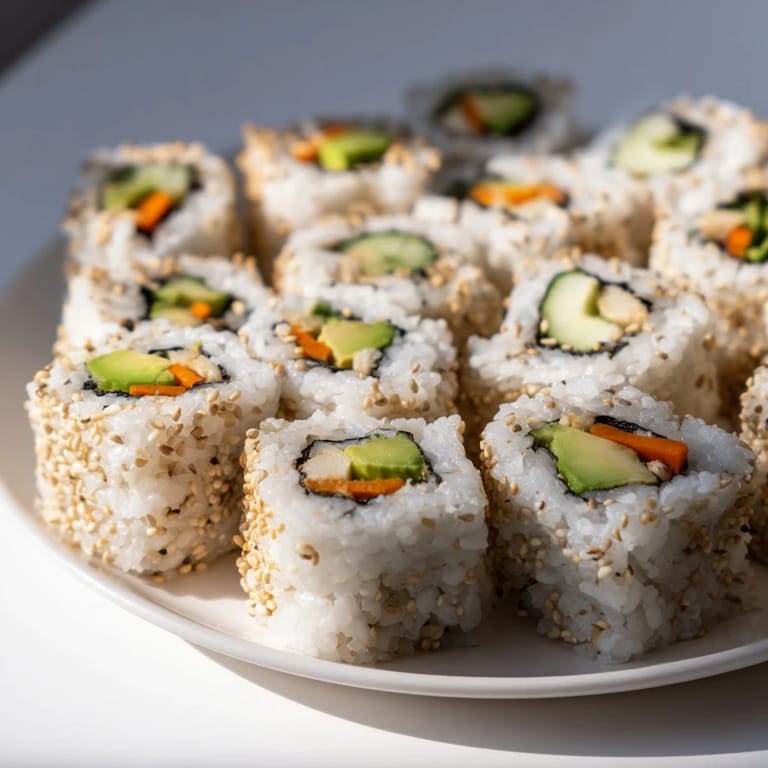 Save Pin
 There was this one evening when I made a double batch and we ate them on the couch, dipping into little bowls of soy sauce and laughing at a terrible movie. The sushi disappeared so fast I barely remembered making it. Thats when I realized this wasnt just a recipe, it was a ritual.
How to Pick the Right Avocado
You want an avocado thats ripe enough to slice easily but firm enough to hold its shape. Press gently near the stem, it should yield slightly but not feel mushy. If its too soft, it will smear all over the rice and make rolling messy.
Why Your Sushi Mat Matters
A bamboo mat gives you control and helps you apply even pressure as you roll. If you dont have one, you can use a clean kitchen towel, but the mat makes the whole process smoother and more consistent. Line it with plastic wrap to keep rice from sticking in the cracks.
Serving and Storage Tips
Sushi is best eaten fresh, but if you have leftovers, wrap each roll tightly in plastic wrap and refrigerate for up to a day. The rice will firm up in the fridge, so let it sit at room temperature for a few minutes before slicing and serving.
- Serve with soy sauce, pickled ginger, and a dab of wasabi for the full experience.
- If youre meal prepping, keep the rolls whole and slice them just before eating.
- Try adding a drizzle of spicy mayo or sriracha for a little kick.
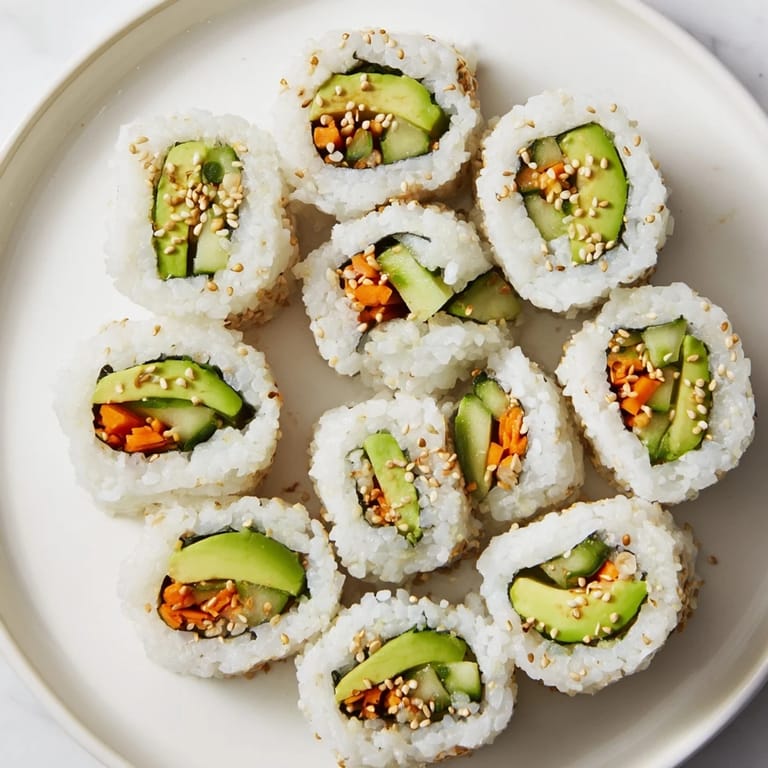 Save Pin
 Making sushi at home used to feel intimidating, but now its one of my favorite low-effort meals that feels special every time. Once you get the hang of it, youll be rolling like a pro.
Questions & Answers
- → What is the best way to cook sushi rice?
Rinse sushi rice thoroughly until the water runs clear, then simmer with water for 18-20 minutes. Let it cool slightly before mixing with vinegar, sugar, and salt for the perfect texture.
- → Can I add other vegetables to these rolls?
Yes, bell pepper, radish, or carrot can be included to add color and crunch to the rolls.
- → How do I prevent the sushi rolls from falling apart?
Use a bamboo mat to roll the sushi tightly, and moisten the edge of the nori with water to seal the roll securely.
- → Are these rolls suitable for gluten-free diets?
They are gluten-free if tamari is used instead of regular soy sauce, as nori and rice are naturally gluten-free.
- → Can I store sushi rolls for later consumption?
It's best to enjoy these rolls fresh, but they can be refrigerated for a few hours; however, rice texture may change over time.
- → What tools are needed for making these sushi rolls?
A bamboo rolling mat, sharp knife, small saucepan for rice, and cutting board are essential for preparation.