 Save Pin
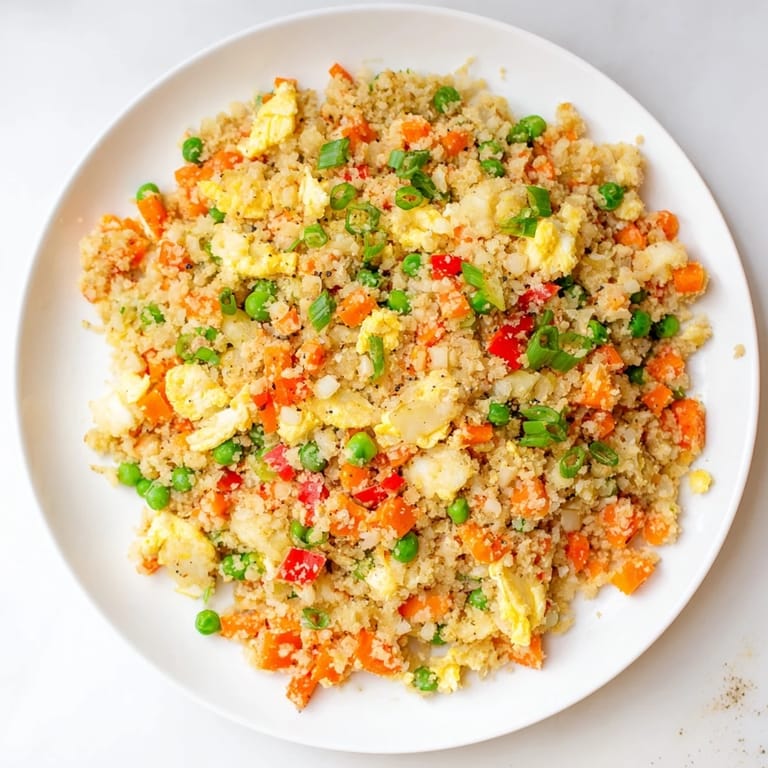
 I discovered cauliflower fried rice during a particularly chaotic month when my kitchen renovation collided with a new low-carb experiment. Standing amid plastic sheeting with only a hot plate and food processor, I skeptically pulsed my first head of cauliflower into rice-like granules. The sizzle when it hit the hot wok and the gradually emerging aroma – ginger, garlic, toasted sesame – convinced me well before the first bite that I hadn't sacrificed anything but the carbs.
Last summer, my sister visited with her gluten-sensitive kids, and I was determined to create a meal everyone could enjoy without drawing attention to dietary restrictions. I served this cauliflower fried rice alongside some grilled salmon, and my nephew was halfway through his second helping before casually asking what kind of rice I had used. The look of genuine surprise on his face when I revealed the truth was worth every second of preparation.
Ingredients
- Cauliflower: Look for a firm, heavy head with tight florets and no brown spots, as fresher cauliflower will yield a more rice-like texture and wont release excess water during cooking.
- Sesame oil: The aromatic foundation that transforms this dish, offering that authentic Asian flavor profile that plain vegetable oil simply cannot match.
- Fresh ginger: Store yours in the freezer and grate it while frozen, the oils release beautifully and you never waste a knob to moldy neglect again.
- Low-sodium soy sauce: Regular soy sauce can quickly overpower the delicate cauliflower, so the low-sodium version gives you better control over the final seasoning.
Tired of Takeout? 🥡
Get 10 meals you can make faster than delivery arrives. Seriously.
One email. No spam. Unsubscribe anytime.
Instructions
- Rice the cauliflower:
- Pulse cauliflower florets in a food processor until they resemble rice grains, working in batches if needed to avoid overcrowding. If you see any large pieces, pick them out rather than continuing to process, or youll end up with cauliflower mush.
- Cook the eggs:
- Heat 1 tablespoon oil in your wok until shimmering, then pour in beaten eggs, swirling to create a thin layer. Let them set for just 30 seconds before gently breaking them into soft pieces.
- Build your flavor base:
- In the remaining oil, sauté garlic and ginger just until their aroma fills your kitchen, about 30 seconds. Add your colorful vegetables and stir-fry until bright but still crisp.
- Cook the cauliflower:
- Add your riced cauliflower to the vegetable mixture, keeping the heat medium-high and stirring frequently. Youll notice it changing from opaque to slightly translucent as it cooks through.
- Season and finish:
- Drizzle soy sauce around the perimeter of the wok so it sizzles down the sides, then mix in your cooked eggs and green onions. A final kiss of toasted sesame oil adds incredible depth right before serving.
 Save Pin
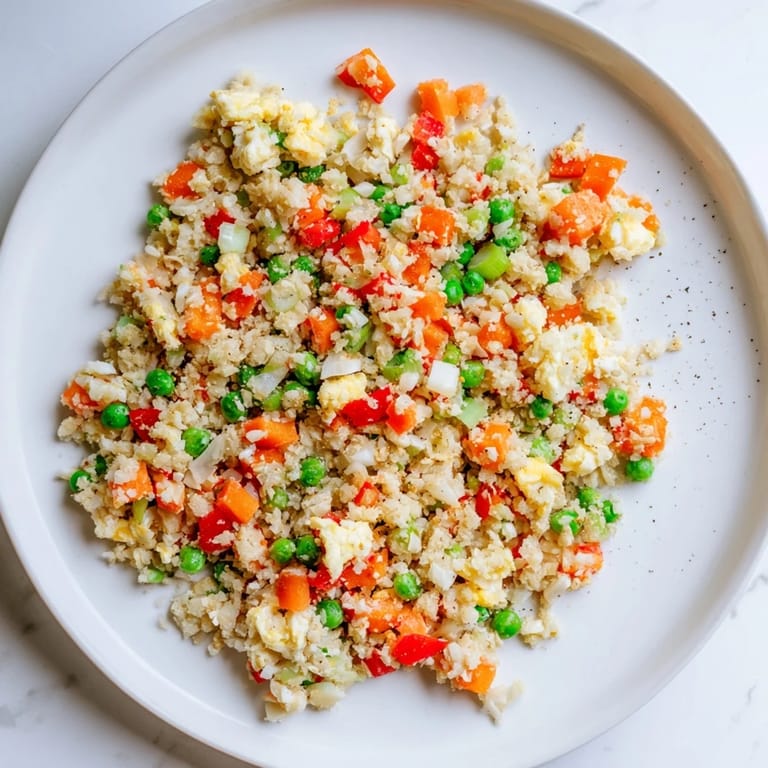
 The true magic of this dish revealed itself during a neighborhood potluck when a friend with diabetes quietly thanked me for bringing something she could enjoy without worry. We stood in the corner of the bustling kitchen, trading cooking tips while she helped herself to seconds, and I realized how food connects us even when adapted for different needs. Her genuine appreciation transformed this simple dish from just another dinner option into something I now make with extra care.
Make It Your Own
While this recipe provides an excellent base, Ive found that cauliflower fried rice actually improves with personalization. Some nights I toss in leftover rotisserie chicken and a handful of cashews for a heartier meal. Other times, Ive experimented with curry powder and coconut milk for a fusion approach that surprised even myself. The key is treating cauliflower rice not as a compromise but as an ingredient with its own merits.
Storage and Reheating
Unlike traditional fried rice, cauliflower fried rice doesnt harden when refrigerated, making it surprisingly excellent as leftovers. Store it in an airtight container where it keeps beautifully for up to three days. When reheating, I add a splash of water to the pan first, then the rice, creating a brief steam that revives the vegetables before finishing with direct heat to restore some of the original crispness.
Troubleshooting Tips
After making this dish countless times, Ive encountered every possible pitfall so you dont have to. The most common issue is watery cauliflower rice, which typically happens when the cauliflower is processed too finely or cooked at too low a temperature. Using high heat and a wide pan creates the evaporation needed for that perfect fried rice texture.
- If your cauliflower releases too much moisture, drain it in a fine-mesh strainer before adding to your wok.
- For extra flavor without added salt, try sprinkling nutritional yeast over your finished dish.
- When using frozen cauliflower rice, thaw and squeeze it in a clean kitchen towel first to remove excess moisture.
 Save Pin
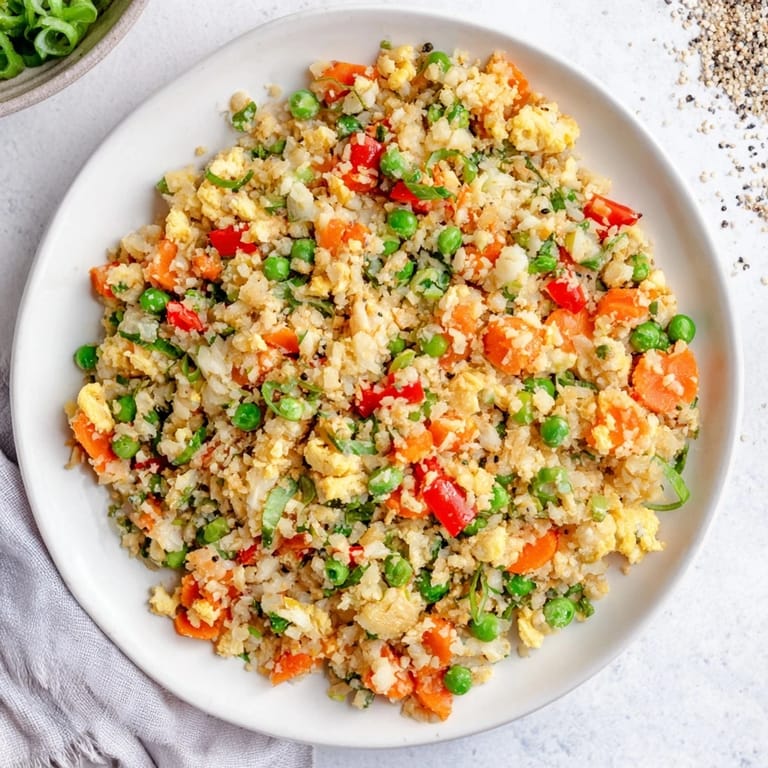
 Cauliflower fried rice reminds us that creative constraints often lead to unexpected discoveries. What began as a carb-conscious substitute has earned its place in my regular rotation simply because it tastes wonderful.
Questions & Answers
- → Can I make this dish ahead of time?
Yes, you can prepare the riced cauliflower and chop vegetables several hours in advance. Store them separately in airtight containers in the refrigerator. Assemble and cook just before serving for the best texture and flavor.
- → How do I rice the cauliflower without a food processor?
Use a box grater to shred cauliflower florets, or chop them finely with a knife. You can also purchase pre-riced cauliflower from most grocery stores to save time.
- → What proteins work best with this dish?
Scrambled eggs, cooked chicken breast, shrimp, firm tofu, and tempeh all pair wonderfully. For a vegan option, tofu scramble or chickpeas add protein and substance without animal products.
- → Is this suitable for meal prep?
Absolutely. Store cooled fried rice in airtight containers for up to 4 days in the refrigerator. Reheat gently in a skillet or microwave, adding a splash of water if needed to restore moisture and prevent drying.
- → How can I add more flavor to this dish?
Try incorporating lime juice, fresh cilantro, sriracha, or chili flakes for heat. A drizzle of toasted sesame oil, a splash of rice vinegar, or additions like cashews and green onions enhance depth and texture.
- → Can I substitute the soy sauce?
Yes. Use tamari for a gluten-free option, coconut aminos for a soy-free alternative, or low-sodium soy sauce to reduce sodium content. Start with less and adjust to your taste preference.