 Save Pin
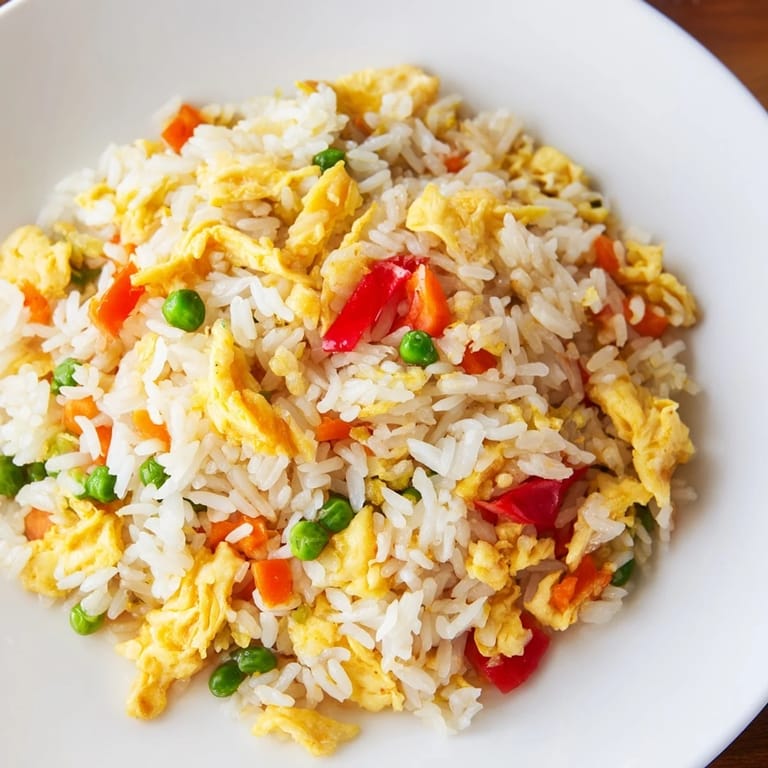
 The first time I attempted egg fried rice, I was running late for a potluck and rummaging through my fridge in panic mode. Finding nothing but leftover rice, a few eggs, and some sad-looking vegetables, I channeled my inner resourcefulness and ended up creating what my friends now request at every gathering. The steam rising from the wok that evening carried aromas that transported me straight to the bustling night markets I'd visited in Taiwan, where vendors would flip rice with mesmerizing speed and precision. That humble, last-minute creation became my signature comfort food.
Last winter, during that three-day power outage, I fired up our camping stove on the back porch and made this fried rice by headlamp. My daughter held the light while I cooked, giggling as snowflakes melted on the lid of the wok. The neighbors, drawn by the promising aroma cutting through the cold night air, appeared with mugs for hot tea, and we ended up having an impromptu block party in the snow. Something about that steaming fried rice passed around in mismatched bowls made everyone forget the inconvenience of the blackout.
Ingredients
- Day-old rice: This seemingly humble ingredient holds the secret to exceptional fried rice, as freshly cooked rice contains too much moisture and will turn your stir-fry into a soggy disappointment.
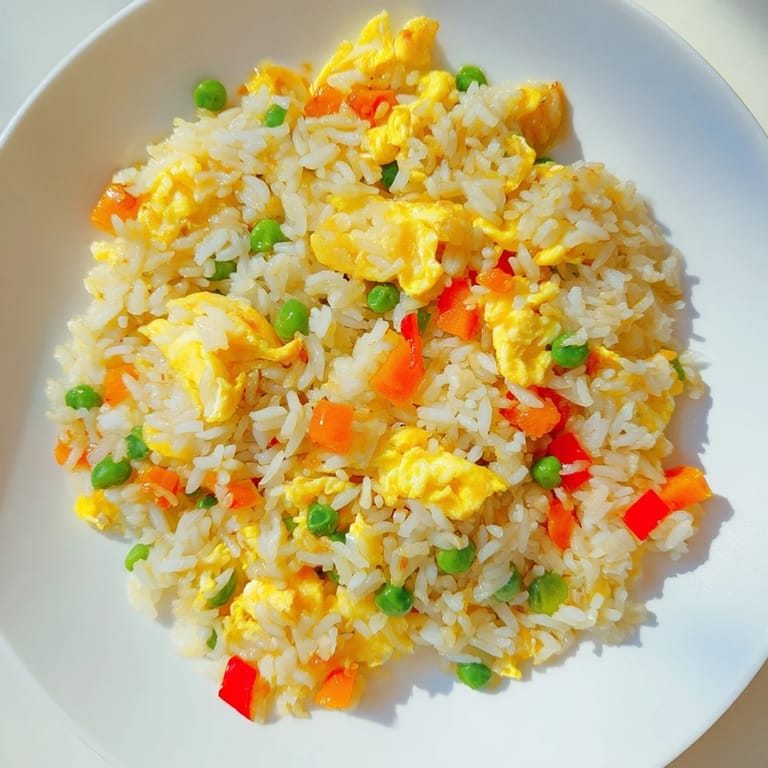
- Eggs: I learned from a Chinese chef to beat them with just a pinch of salt and cook them first until barely set, which creates those delicate golden threads throughout the dish rather than mushy pieces.
- Soy sauce: Sprinkle it around the edges of your wok rather than directly on the rice, allowing it to caramelize slightly before mixing for a deeper flavor profile.
- Sesame oil: A little splash at the final moment transforms the entire dish with its nutty aroma, but adding it too early will burn off all those complex notes.
- Frozen peas and carrots: My emergency backup that has saved this dish countless times, requiring no chopping and adding perfect pops of color and sweetness.
Tired of Takeout? 🥡
Get 10 meals you can make faster than delivery arrives. Seriously.
One email. No spam. Unsubscribe anytime.
Instructions
- Prep your workspace:
- Arrange all ingredients in small bowls within arms reach of your wok or skillet. This five-minute organization prevents the frantic searching that once led me to burn my eggs while hunting for the soy sauce.
- Create golden clouds:
- Heat your wok until a drop of water sizzles instantly, then swirl in oil and pour beaten eggs in a thin layer. Watch for the edges to set but keep the center slightly runny before removing to preserve tenderness.
- Awaken the aromatics:
- Toss garlic, ginger, and white scallion parts into the hot oil, stirring constantly as the kitchen fills with their intoxicating fragrance. Youll know theyre ready when your family members mysteriously appear in the kitchen asking whats cooking.
- Vegetable dance:
- Add your colorful vegetables to the sizzling wok, keeping them moving so they maintain their vibrant colors and slight crunch. Their bright hues against the woks dark surface create a canvas of whats to come.
- Rice resurrection:
- Crank the heat to high and add your cold rice, pressing it against the hot wok surface occasionally to create those coveted crispy bits. Break apart any clumps with your spatula using a cutting motion rather than stirring, which can make the rice gummy.
- Reunion of elements:
- Return your reserved eggs to the party, gently folding everything together as you drizzle soy sauce around the woks edge. Listen for the satisfying sizzle that signals flavor development happening right before your eyes.
- Final flourish:
- Kill the heat before adding sesame oil and white pepper, tossing quickly to distribute their aromatic qualities without burning them off. Scatter fresh green scallions across the top, their brightness cutting through the savory depth like the first day of spring after a long winter.
 Save Pin
 My kitchen smelled of toasted sesame and soy when my son returned from his first semester at college. Without saying a word, I set a bowl of this fried rice in front of him, steam curling upward as his face relaxed into a smile. He took a bite and sighed, Whatever else changes, this tastes exactly like home. In that moment, this simple dish bridged the gap between his new independent life and the familiar comfort of our family table, communicating what words sometimes fail to express.
The Secret of Cold Rice
After dozens of fried rice attempts, I discovered that refrigerating rice uncovered for a few hours after cooking makes a dramatic difference. The cold air draws out excess moisture, allowing each grain to remain distinct when stir-fried. During one experimental batch, I placed half the rice in an airtight container and spread the rest on a baking sheet in the fridge. The difference was immediately apparent when cooked, with the exposed rice developing a delightful chewy-crisp texture that had my family fighting over the last spoonful.
Wok vs. Skillet Showdown
Though traditional wisdom dictates using a carbon steel wok, my trusty cast iron skillet has produced equally delicious results during our weekend fried rice sessions. The key difference lies in technique rather than equipment. With a skillet, I learned to cook in slightly smaller batches and utilize the higher sides for the dramatic sauce tossing that always makes my kids cheer. When my mother-in-law witnessed my skillet approach, she raised an eyebrow before taking a bite, then nodded in reluctant approval, which in our family translates to a five-star review.
Making It Your Own
The beauty of fried rice lies in its chameleon-like ability to transform whatever ingredients you have into something greater than their parts. One memorable Sunday, I discovered the refrigerator nearly empty except for some kimchi, creating what accidentally became our favorite variation with its fermented tang and subtle heat. Another time, diced pineapple found its way into the wok during a tropical craving, introducing a sweet-savory dimension that perfectly complemented teriyaki chicken.
- Raid your refrigerator for overlooked vegetables like the slightly wilted celery or quarter onion that would otherwise be forgotten.
- Leftover protein from previous meals takes on new life when diced small and tossed in during the final minute of cooking.
- Consider keeping a jar of minced garlic and ginger paste in your fridge for those evenings when even basic chopping feels like too much effort.
 Save Pin
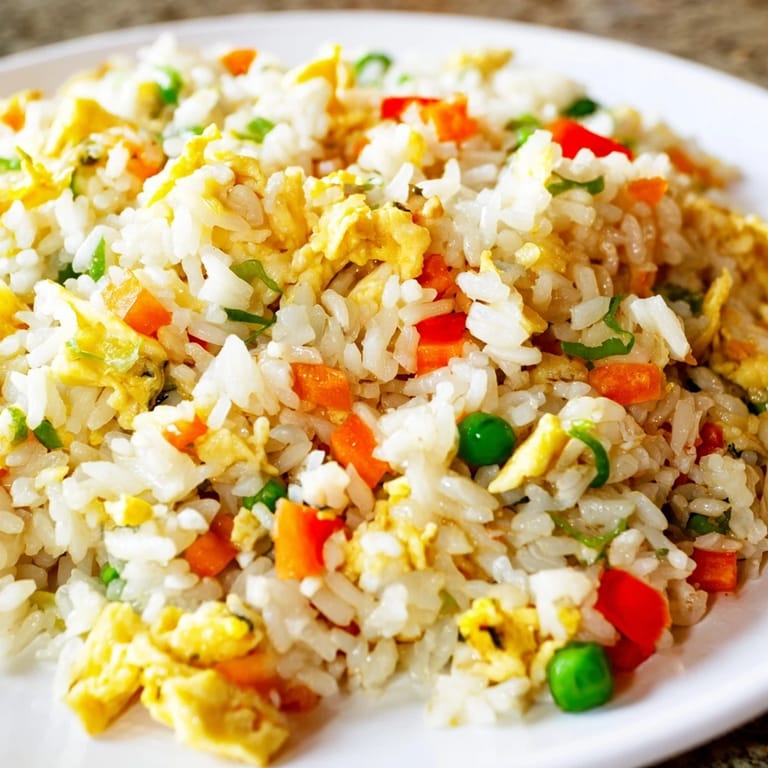
 This humble dish has witnessed countless moments around our table, from heated debates to silent appreciation, always bringing us back to what matters most. Whether made with precision or thrown together with whatever you have, its the love folded into each grain that truly seasons this enduring classic.
Questions & Answers
- → Why should I use day-old rice for fried rice?
Day-old rice has less moisture content, making each grain separate and crispy when stir-fried. Freshly cooked rice is too moist and tends to clump together, resulting in a mushy texture rather than the desired fluffy, slightly crispy consistency.
- → How do I prevent eggs from overcooking?
Scramble the eggs gently over medium-high heat until just set, then remove them from the wok immediately. Return them at the very end of cooking, breaking them into small pieces as you fold them in. This prevents them from becoming tough and rubbery.
- → Can I use frozen vegetables?
Yes, frozen vegetables work perfectly. Thaw them first to release excess moisture, then add them to the wok. Fresh vegetables can also be used, though frozen options are convenient and often just as nutritious while maintaining good texture when stir-fried properly.
- → What's the best way to break up clumpy rice?
Use a wooden spoon or spatula to gently press and separate rice clumps as they hit the hot wok. Work quickly over high heat to allow the grains to separate and develop slight browning without sticking. Patience and quick movement prevent mushiness.
- → How can I add more protein to this dish?
Cooked shrimp, diced chicken breast, or cubed tofu are excellent additions. Cook protein separately first, then add it back in during the final tossing step. For each serving, add 3-4 ounces of protein to boost nutritional content significantly.
- → Is this dish naturally gluten-free?
Standard soy sauce contains wheat, making it unsuitable for gluten-free diets. Substitute tamari or certified gluten-free soy sauce instead. Always verify ingredient labels when using bottled products, as cross-contamination can occur during manufacturing.