 Save Pin
 There's something about assembling a salad that doesn't ask you to cook that makes you feel like you've discovered a secret. My first Italian antipasto bowl came together on a lazy summer afternoon when I had tomatoes at their peak and a block of provolone left over from a dinner party. I mixed them with creamy beans and thin slices of salami, and the whole thing just sang with bright, salty flavors. It became the dish I reach for when I want something that feels fancy but requires almost no effort—just good ingredients talking to each other.
I made this for a potluck once and watched people come back for thirds, which tells you everything. What surprised me was how the red onion mellowed slightly once it hit the vinegar, turning almost sweet while the olives anchored everything with their earthiness. One friend asked for the recipe and said she'd been making it every week since, which felt like the highest compliment a home cook can receive.
Ingredients
- Cannellini beans: These pale, creamy beans are the backbone—they absorb the dressing beautifully and add real substance without heaviness. Drain and rinse them well to remove excess starch, which keeps the salad from becoming gummy.
- Italian salami: Thin slices matter here because they release their oils into the dressing, flavoring everything around them. A good salami has visible fat marbling that makes this dish sing.
- Provolone cheese: Cut into small cubes so it distributes evenly and gets little pockets of dressing around each piece. The slight sharpness cuts through the richness of the salami.
- Cherry tomatoes: Halve them so the insides face out and can soak up the vinaigrette. Summer tomatoes make this dish, but good hothouse tomatoes work in a pinch.
- Roasted red bell pepper: Use jarred roasted peppers if you're short on time—they're already sweet and tender, no apology needed. The slight char is essential to the flavor profile.
- Red onion: The vinegar will soften its sharp bite, but thin slicing helps too. It adds a bright, slightly spicy note that keeps everything from tasting one-dimensional.
- Cucumber: Dice it just before serving if you can, so it stays crisp and doesn't weep into the salad. The cool crunch is an important textural contrast.
- Black olives: Halve them so they distribute throughout rather than hiding in clumps. Look for briny, flavorful ones—this is where you taste the sea.
- Fresh parsley: Chop it roughly and add most of it just before serving, reserving some for garnish. It brightens everything and smells like a Mediterranean kitchen.
- Extra-virgin olive oil: Use something you actually like the taste of, because you'll taste it. The quality of your oil is the difference between good and unforgettable.
- Red wine vinegar: This acid is what brings the whole thing together, making the beans tender and the flavors crisp. Don't skip it or substitute with something else—it's not negotiable.
- Dried oregano: This is the whisper of Italian seasoning that makes you know exactly what you're eating. Crush it slightly in your palm before adding to wake up the flavor.
- Garlic powder: A small amount gives backbone without the bite of fresh garlic, which can become overwhelming as the salad sits.
Tired of Takeout? 🥡
Get 10 meals you can make faster than delivery arrives. Seriously.
One email. No spam. Unsubscribe anytime.
Instructions
- Start with what matters most:
- Pour your drained and rinsed beans into the largest bowl you have. They're the base that everything else will lean on, so give them room to breathe.
- Build your foundation:
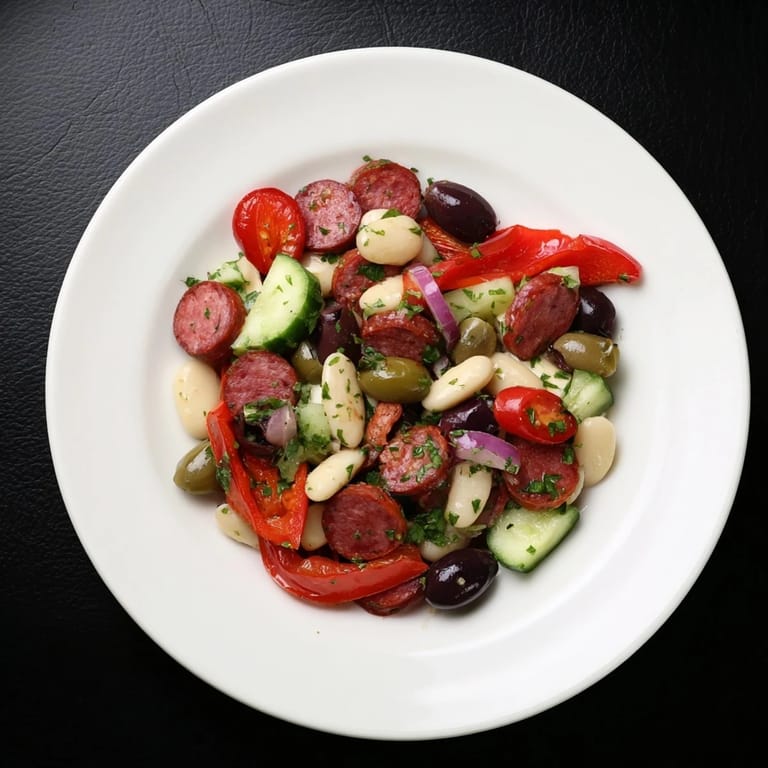
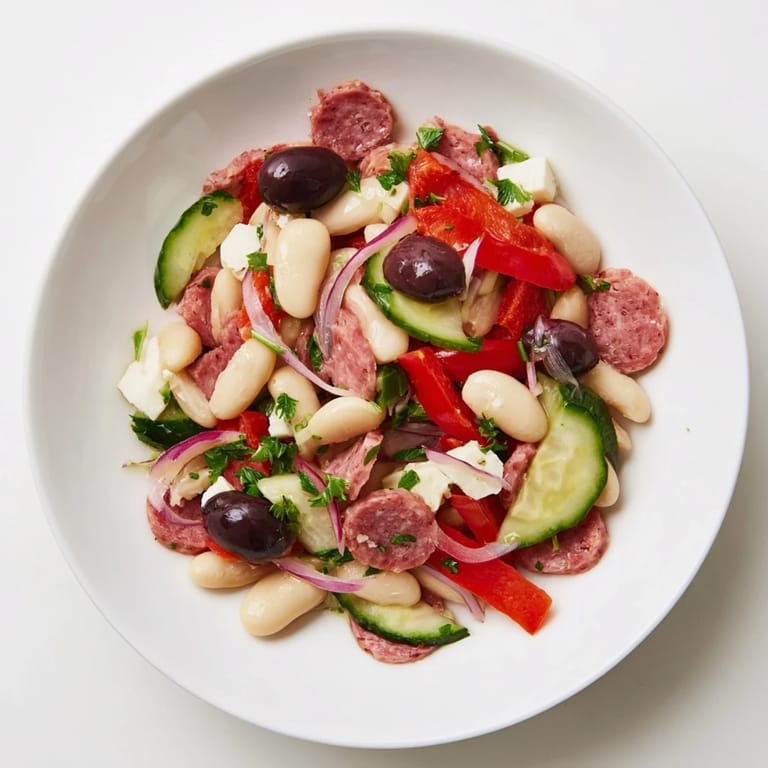
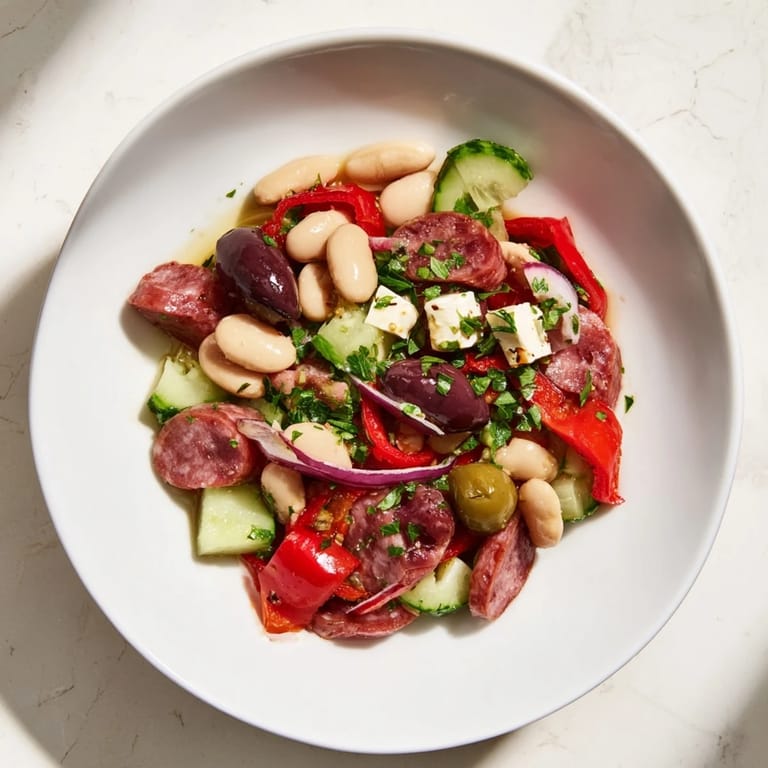
- Add the salami strips, provolone cubes, tomatoes, roasted pepper, red onion, cucumber, olives, and parsley. Toss gently so everything mingles but nothing gets bruised. You should see the colors—bright red, creamy white, deep purple—playing off each other.
- Make the dressing sing:
- In a separate small bowl or jar, whisk together the olive oil, red wine vinegar, oregano, garlic powder, salt, and pepper until the oil stops fighting the vinegar and they start to look like one thing. Taste a tiny bit on your finger—it should make you pucker slightly and want more.
- Bring it together:
- Pour the dressing over everything and toss gently but thoroughly, making sure the beans and vegetables all get coated. The acid will start softening the onion immediately, so don't be gentle out of fear—be gentle because you don't want to break up the cheese cubes.
- Taste and adjust:
- This is the moment to be honest about salt and pepper. The beans might need a touch more salt, or the dressing might need another pinch of oregano. Let your palate guide you.
- Let it rest:
- If you have 10 minutes before serving, let the salad sit in the refrigerator. The flavors will meld and deepen, and the beans will absorb more of the dressing. If you're serving immediately, it's still delicious—the beauty of this dish is its flexibility.
 Save Pin
 This dish transformed from something casual into my answer to almost every question about what to bring. When someone said they needed something that traveled well, felt a little fancy, and fed a crowd, I'd show up with a bowl of this, and it would be the first thing to disappear. It taught me that the best recipes are the ones that work harder than you do and taste like you tried way more than you actually had to.
When to Make This
Pull this together on nights when you're hosting but don't want to stand over a stove, or when you're bringing something to a picnic and need it to taste as good at the end as it did at the beginning. It's perfect for warm weather but honestly works year-round because there are good tomatoes and peppers all seasons if you know where to look. Make it the day before if you're feeling organized—the flavors actually deepen overnight, which is unusual for salads but deeply true for this one.
How to Make It Your Own
The beauty of this salad is that it wants to be customized. If you love heat, throw in some sliced pepperoncini or a pinch of red pepper flakes. If provolone isn't your cheese, swap it for something you actually reach for in the deli case. The same goes for the beans—white beans are traditional, but chickpeas will work if that's what you have, and the salad will still taste like itself.
Serving Suggestions and Pairings
Serve this alongside crusty bread that you can use to soak up every last drop of vinaigrette, and pair it with a cold white wine like Pinot Grigio or something lighter if you're in the mood. On the stovetop, it plays beautifully with grilled fish or chicken, so it works equally well as a starter or a light lunch on its own. The acidity cuts through richness, the protein makes you feel full, and the vegetables remind you that you're eating something alive with flavor.
- Don't dress it more than 30 minutes before serving unless you're doing it the day ahead for the flavors to truly marry.
- If you're feeding vegetarians, remember that salami and some olives contain anchovies or fish, so check labels and have a meatless version ready.
- This salad forgives a lot of substitution, but it never forgives bad vinegar—splurge a little there and taste the difference.
 Save Pin
 This is the salad that taught me that sometimes the best cooking is simply knowing how to choose good ingredients and let them be themselves. It's uncomplicated enough for a weeknight, elegant enough for a dinner party, and honest enough to taste like someone who knows their way around a kitchen made it.
Questions & Answers
- → What beans work best in this salad?
Cannellini beans provide a creamy texture and mild flavor that complement the other ingredients well.
- → Can I substitute the salami?
Yes, for a vegetarian option, replace salami with marinated artichoke hearts or omit it entirely.
- → How long should the salad be chilled?
Chilling for about 10 minutes allows the flavors to meld nicely but is optional depending on preference.
- → What dressing ingredients are used?
The dressing combines extra-virgin olive oil, red wine vinegar, dried oregano, garlic powder, salt, and black pepper.
- → Is this dish gluten-free?
Yes, all ingredients are naturally gluten-free, but check packaged items for possible cross-contamination.