 Save Pin
 I discovered kelp noodles by accident at an Asian market on a Tuesday afternoon, drawn in by their otherworldly translucent appearance sitting in a bin near the checkout. The vendor smiled knowingly when I asked what they were, and within days I'd created this stir-fry almost out of necessity—I needed something that felt substantial but wouldn't weigh me down. What struck me most was how they disappeared into the sauce, taking on every flavor while keeping their satisfying crunch, like they'd been waiting their whole time as a noodle to finally belong in a real dish.
I made this for my sister last spring when she was going through one of those phases where everything else felt too heavy, and watching her face light up when she tasted it—really tasted it—reminded me that food doesn't need to be complicated to feel nourishing. She asked for the recipe immediately, which I took as the highest compliment.
Ingredients
- Kelp noodles (12 oz): Rinse them thoroughly under cold water before soaking, or they'll taste slightly mineraly—a trick I learned the hard way that changed everything about how I prepare them.
- Red bell pepper: The sweet snap against the ginger heat creates this beautiful balance, and slicing it thin means it actually cooks evenly instead of stubbornly staying crisp in the center.
- Snap peas (1 cup): These are non-negotiable for me because they stay crisp-tender and add a subtle sweetness that rounds out the spice.
- Carrot (1 medium): Julienne it fine so it doesn't dominate the bite, letting it play a supporting role rather than stealing the show.
- Baby spinach (2 cups): Don't skip this—it wilts in seconds and adds an earthy depth that the other vegetables can't quite provide.
- Green onions: Added at the very end for that sharp, fresh note that cuts through the richness of the sesame oil.
- Tamari (2 tbsp): Use the good stuff if you can, as this is where most of your umami is coming from in such a simple sauce.
- Toasted sesame oil (1 tbsp): This is non-negotiable for authenticity—regular sesame oil won't give you that nutty, aromatic quality that makes people ask what smells so good.
- Rice vinegar (1 tbsp): Keeps everything bright and prevents the sauce from feeling one-note or too heavy.
- Fresh ginger (1 tbsp): Grate it right before cooking because pre-minced loses its punch, and this dish deserves the real thing.
- Maple syrup or agave (2 tsp): Just enough sweetness to balance the heat and vinegar without making it taste like dessert.
- Garlic (2 cloves): Mince it fine so it distributes evenly and doesn't leave you with surprise garlic chunks.
- Chili flakes (1/2 tsp, optional): If you like heat, don't hold back—but remember you can always add more and never take it away.
- Toasted sesame seeds: This is your finishing touch that transforms the whole plate from simple to impressive.
Tired of Takeout? 🥡
Get 10 meals you can make faster than delivery arrives. Seriously.
One email. No spam. Unsubscribe anytime.
Instructions
- Soften the kelp noodles:
- Soak them in a bowl of warm water for exactly ten minutes—set a timer or you'll forget like I always do. They should feel pliable and slightly springy when you lift them out, not mushy or still stiff.
- Build your sauce:
- Whisk everything together in a small bowl and taste it straight from a spoon before you commit to the pan, adjusting sweetness or heat to match your mood that day. I often find myself tweaking this based on how sharp my garlic was.
- Get the wok hot:
- A large nonstick skillet works fine if you don't have a wok, but the heat needs to be genuinely medium-high so vegetables sear slightly instead of steaming. You're looking for that restaurant-style sizzle when things hit the pan.
- Sauté the firm vegetables:
- Add bell pepper, snap peas, and carrot, stirring constantly for three to four minutes until they're tender on the outside but still have resistance when you bite them. This is where patience matters—rushing this step defeats the whole purpose.
- Wilt the greens:
- Toss in spinach and green onions, stirring for about a minute until the spinach collapses and the green onions soften slightly. Everything should smell incredibly alive and fresh at this point.
- Bring it all together:
- Add the drained kelp noodles and pour the sauce over everything, tossing constantly for two to three minutes so the noodles absorb the flavors and the vegetables get coated evenly. The pan will smell intoxicating—that's how you know you're doing it right.
- Plate and celebrate:
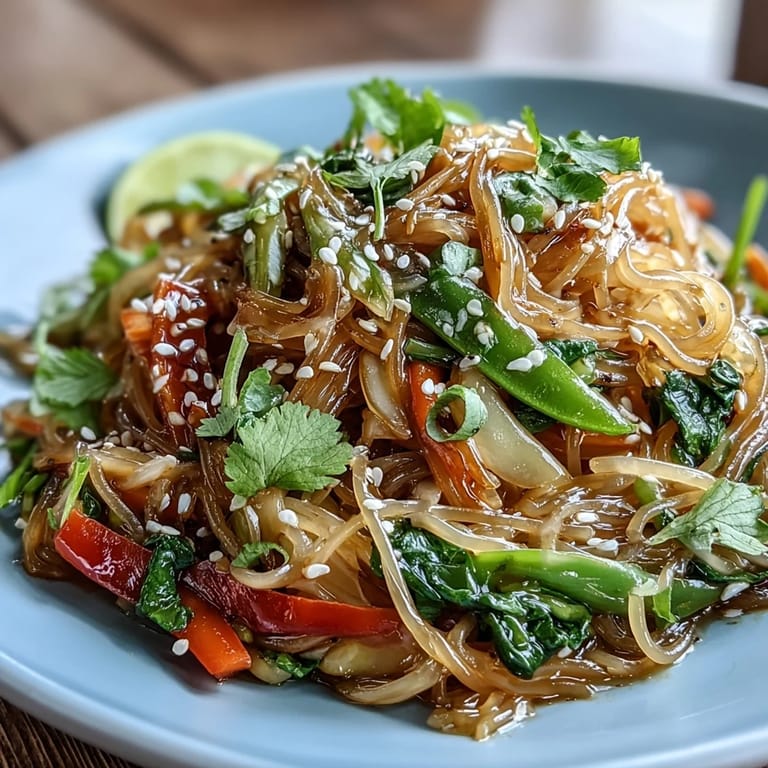
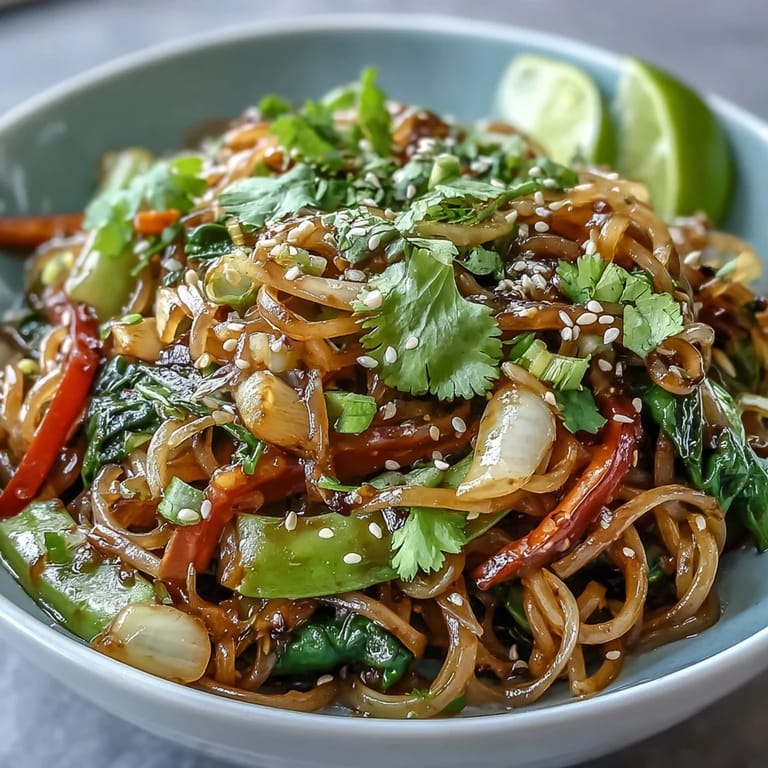
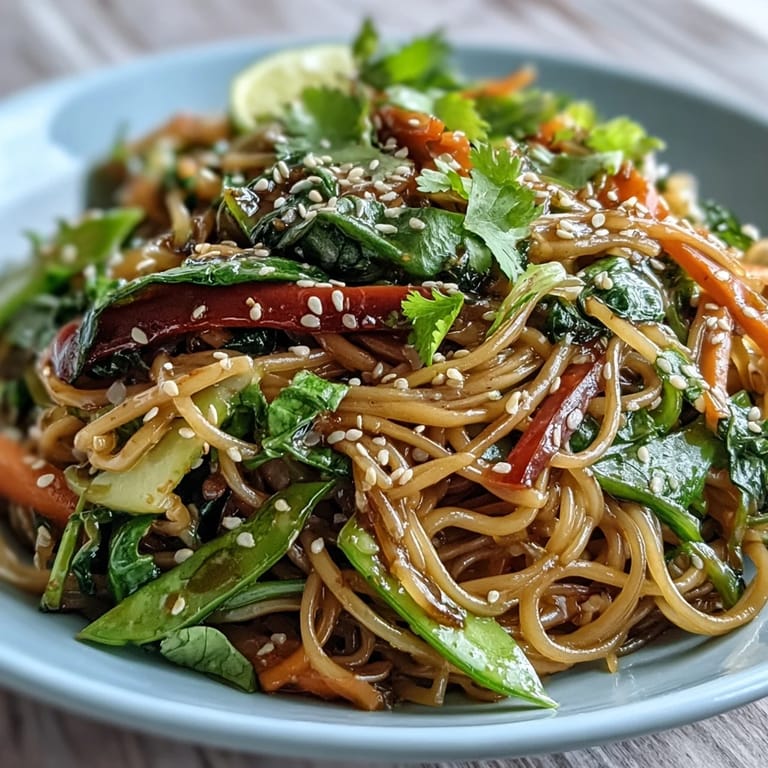
- Serve immediately while the noodles still have that slight firmness, then shower with sesame seeds, cilantro, and a squeeze of lime if you're feeling fancy. The moment someone takes the first bite is always rewarding.
 Save Pin
 There's something unexpectedly meditative about this dish, the way the noodles soak while you prep vegetables, the rhythm of slicing and tossing. It became my go-to when I needed something that felt both nurturing and light, a contradiction I didn't know could exist until I made this.
The Magic of Kelp Noodles
Kelp noodles are nothing like wheat or rice noodles—they're made from seaweed and water, which sounds borderline suspicious until you taste how neutral they are on their own. I spent my first attempt trying to doctor them into something they weren't, when really their superpower is adapting to whatever sauce you give them while maintaining their own integrity. They're also remarkably low-calorie without feeling like a sacrifice, which feels almost too good to be true but genuinely isn't.
Why the Ginger-Sesame Sauce Works
This sauce is simple enough that you'd think nothing special could happen, but the combination of warm ginger, nutty sesame oil, and bright vinegar creates complexity that tastes like you've been simmering this for hours. The maple syrup acts as a bridge, softening the edges without announcing itself, and the tamari brings everything into focus. I've tried dozens of variations, and this specific ratio keeps winning because it respects the noodles and vegetables instead of overpowering them.
Building Flavor and Texture
The real secret to this dish is understanding that texture matters as much as taste—the crispness of the snap peas, the slight char on the bell pepper, the tender wilting of spinach, and the unique chewiness of kelp noodles all playing different roles. Every vegetable should cook for a different amount of time so nothing ends up sad or overdone, and that's why the instructions matter more than usual here. Most failures I've seen come from people throwing everything in at once or cooking it too fast.
- Always taste the sauce before committing it to the pan so you can adjust seasonings when the noodles are still raw.
- Don't skip the sesame seed topping because it's more than garnish—it's where some of the richness and authenticity lives.
- Make this recipe your own by trying different vegetables, but keep the core technique and sauce exactly as written until you've made it three times.
 Save Pin
 This dish proves that eating well doesn't mean eating boring, and that sometimes the simplest meals are the most memorable. Make it when you need something that feels like self-care on a plate.
Questions & Answers
- → Do kelp noodles need to be cooked?
Kelp noodles don't require traditional cooking. Soaking them in warm water for 10 minutes softens their texture while maintaining their satisfying crunch. They absorb flavors beautifully when tossed with sauces and stir-fried briefly.
- → Can I make this dish spicy?
Absolutely. The optional chili flakes add gentle heat. For more spice, increase the amount or add fresh minced chili peppers, sriracha, or sambal oelek to the sauce mixture.
- → What vegetables work best in this stir-fry?
Bell peppers, snap peas, and carrots provide excellent crunch and color. Broccoli, zucchini, mushrooms, cabbage, or snow peas make great substitutes or additions based on what you have available.
- → How do I store leftovers?
Store in an airtight container in the refrigerator for up to 3 days. The kelp noodles maintain their texture well. Reheat gently in a skillet or enjoy cold as a noodle salad.
- → Is this dish gluten-free?
Yes, when using gluten-free tamari instead of regular soy sauce. Kelp noodles are naturally gluten-free, making this an excellent option for those avoiding gluten in their diet.
- → Can I add protein to this dish?
Cubed tofu, edamame, or cooked chickpeas work wonderfully. Add tofu when sautéing the vegetables so it heats through and absorbs the ginger-sesame sauce flavors.