 Save Pin
 The first time I tasted hummus that actually tasted like hummus was at a small family gathering where my neighbor, who grew up in Beirut, brought a container of her homemade version. It was so different from the grainy, underseasoned versions I'd bought before—silky, alive with lemon, with that perfect sesame undertone that made you want another spoonful immediately. She laughed when I asked for the recipe and said the secret wasn't really a secret, just good ingredients and patience with the blender. Now, whenever I make this, I think of that afternoon and how she made something so simple seem almost sacred.
I made this for a potluck once and watched people come back for thirds, piling it on pita and veggies like they'd discovered treasure. One friend asked if I'd bought it from somewhere fancy, and when I said no, she actually looked disappointed that there wasn't some mystical source—just chickpeas and tahini and a food processor doing its thing. That's when I realized hummus doesn't need to be complicated to feel special.
Ingredients
- Chickpeas: Use canned if fresh aren't available, but rinse them well—that starchy liquid clouds the hummus and makes it gritty instead of silky.
- Tahini: This is where quality matters most; cheap tahini tastes thin and bitter, while good tahini is creamy and slightly sweet.
- Lemon juice: Freshly squeezed is non-negotiable here; bottled juice tastes flat and one-dimensional by comparison.
- Garlic: One small clove is plenty; too much overwhelms the delicate sesame flavor and numbs your palate.
- Cold water: This helps achieve that cloud-like texture; room temperature water doesn't blend as smoothly.
- Cumin: Ground cumin adds warmth and earthiness without announcing itself loudly.
- Sea salt: Fine salt dissolves evenly; coarse salt creates little bitter pockets that ruin bites.
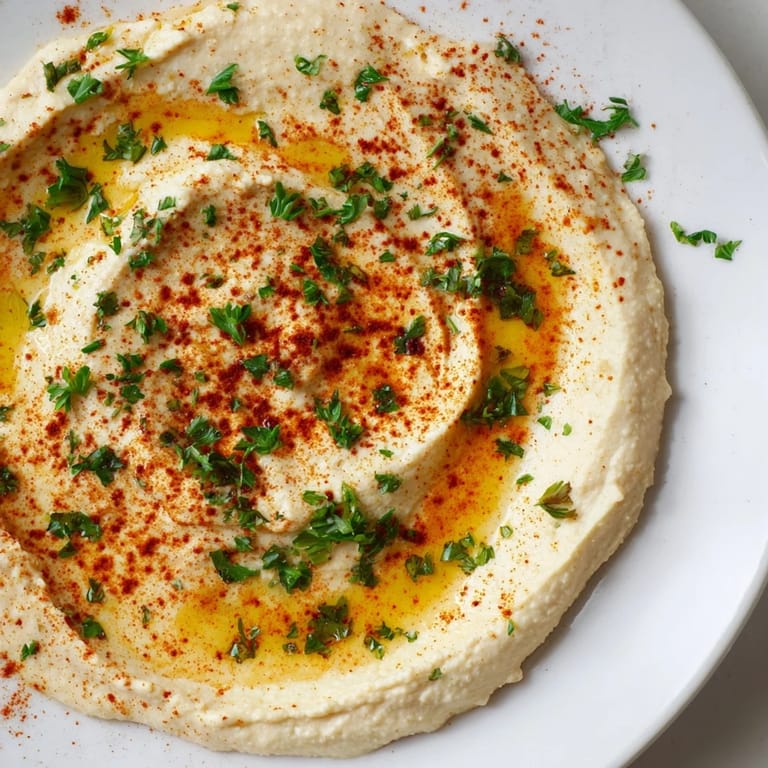
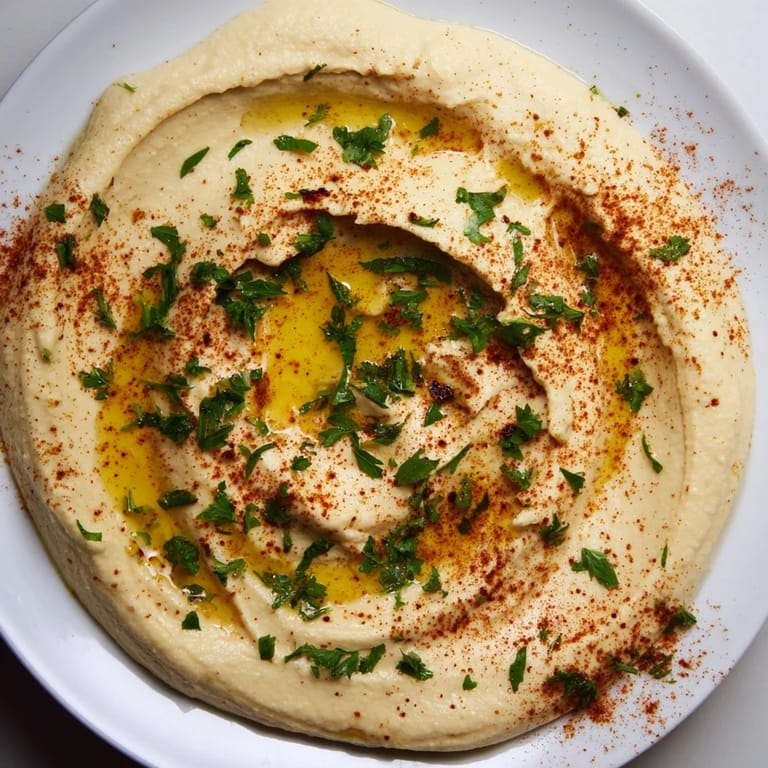
- Olive oil and garnish: Save your best extra virgin oil for the drizzle on top where you'll actually taste it; paprika or sumac adds both color and a subtle tang that lifts the whole dish.
Tired of Takeout? 🥡
Get 10 meals you can make faster than delivery arrives. Seriously.
One email. No spam. Unsubscribe anytime.
Instructions
- Blend the base:
- Put the chickpeas, tahini, lemon juice, garlic, water, cumin, and salt in your food processor and blend on high. You're looking for the moment when everything suddenly transforms from chunky to impossibly smooth—it usually takes about three minutes of continuous blending, but don't rush it.
- Scrape and blend again:
- Stop halfway through to scrape down the sides with a spatula because the chickpeas hide along the walls and won't blend if you ignore them. This pause-and-scrape dance might happen two or three times, and that's exactly right.
- Adjust to silky perfection:
- If the hummus looks too thick or pasty, add cold water one tablespoon at a time while the processor runs—watch it loosen and become almost cloud-like. This is the magic moment where it stops being food processor output and becomes actual hummus.
- Taste and balance:
- Take a small spoon and taste it; hummus should make your mouth water for lemon and sesame, so add more of either if something feels flat. Don't be shy about seasoning—underseasoned hummus tastes like nothing.
- Present like you mean it:
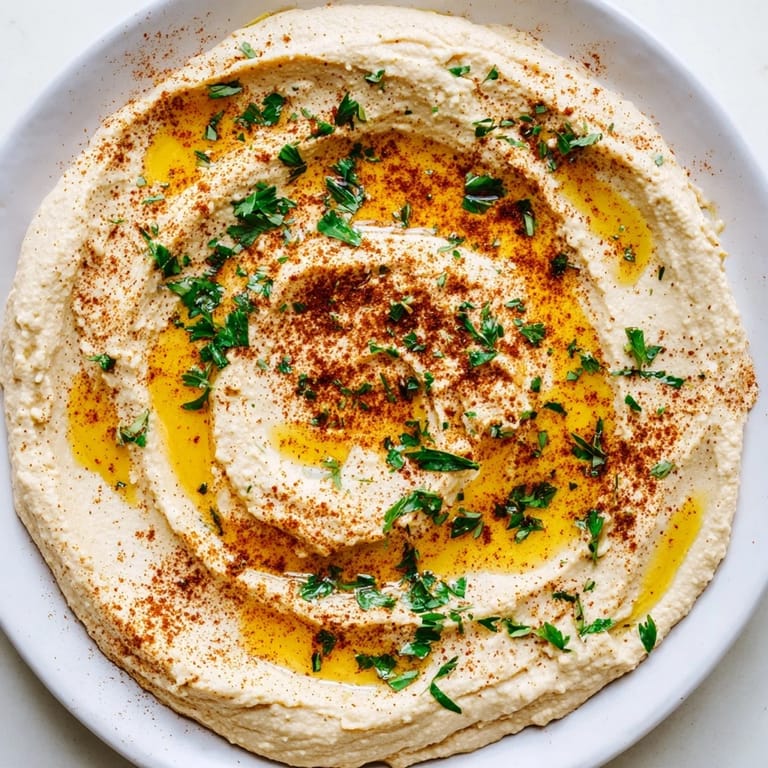
- Spread the hummus into a shallow bowl and use the back of your spoon to create a gentle well or swirl in the center—this isn't just for looks, it's where the olive oil pools and makes each bite richer. Drizzle generously with good olive oil, dust with paprika or sumac for color, and scatter fresh parsley across the top like you're finishing a painting.
 Save Pin
 I served this at a dinner where everyone was eating in near silence, just the sound of forks scraping plates and people sighing contentedly. There's something about hummus that makes people slow down and actually taste their food instead of rushing through a meal. It became the thing that got asked for when people came over, which was its own kind of compliment.
The Tahini Question
Tahini can seem intimidating because it separates when it sits and sometimes looks thin or overly thick depending on the brand. The trick is to stir it well before measuring, and if it seems too stiff, you can loosen it with a tiny bit of the water you're already adding. Once you find a tahini brand you like, stick with it—switching brands mid-recipe is where consistency problems happen.
Serving and Storage Wisdom
Hummus is best served at room temperature because cold hummus tastes muted and loses that silky feel. If you make it ahead, let it sit out for thirty minutes before serving, and if it's been refrigerated, pull it from the fridge and drizzle fresh olive oil on top just before eating. The oil acts almost like a flavor amplifier, so don't skip this step even if the hummus was already oiled during storage.
Beyond the Basic Plate
This hummus works as a dip, a spread on sandwiches, a base for grain bowls, or even a creamy element in a mezze platter where it sits alongside olives, cheese, and roasted vegetables. I've smeared it on warm pita and topped it with a fried egg for breakfast, which turned a simple appetizer into a complete meal. The versatility is part of what makes it so useful to have in your refrigerator.
- A pinch of cayenne or red pepper flakes adds gentle heat that builds rather than burns.
- Roasted garlic instead of raw softens the flavor and makes it almost sweet.
- Reserve a few whole chickpeas to press into the top before serving for a rustic, homemade look.
 Save Pin
 Hummus feels like the kind of recipe that should be difficult because it tastes so refined, but it rewards you instantly for the simplicity. Once you make it once, you'll understand why people in the Levant serve it at nearly every meal.
Questions & Answers
- → What gives hummus its creamy texture?
The creamy texture comes from blending cooked chickpeas with tahini and cold water, which smooths the mixture to a silky consistency.
- → Can I adjust the seasoning in this dish?
Yes, you can enhance flavors by adding more salt, lemon juice, or a pinch of cayenne for subtle heat.
- → How should this spread be served?
It’s traditionally served with pita bread, fresh vegetables, or as part of a mezze platter, drizzled with olive oil and garnished with paprika and parsley.
- → Is peeling chickpeas necessary for smoothness?
Peeling chickpeas before blending makes the texture extra smooth but is optional based on preference and time.
- → How can I store leftovers properly?
Store leftovers in an airtight container in the refrigerator for up to four days, ensuring freshness and flavor retention.