 Save Pin
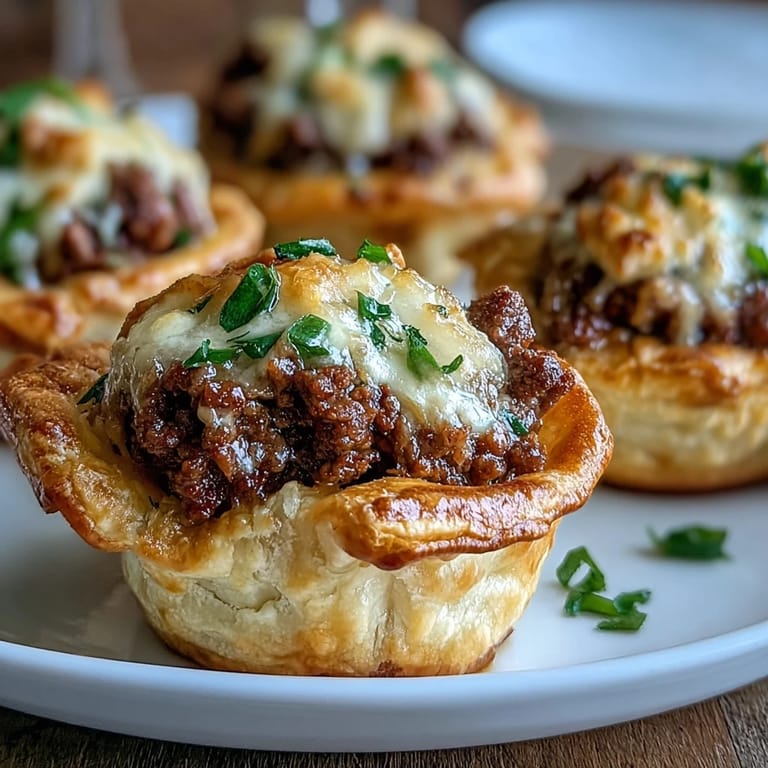
 The smell of allspice and cinnamon browning with beef still brings me right back to my cousin's kitchen in Québec, where I first watched her crimp dozens of these tiny hand pies for a holiday party. She worked fast, folding and sealing with a fork while telling stories about her grandmother's tourtière tradition. I was amazed at how something so small could carry so much flavor. When I finally made them myself, I realized the cream cheese pastry was the secret all along: buttery, tender, and just rich enough to balance the spiced meat. Now I make them every winter, and they disappear faster than I can plate them.
I made these for a potluck once, and a friend who'd never heard of tourtière ate five before admitting she'd skipped dinner just to keep tasting them. She kept asking what spice made them so cozy, and I loved watching her guess (nutmeg, cardamom, ginger) before I finally told her it was the holy trinity of allspice, cinnamon, and cloves. That night, I wrote down the recipe on a napkin for her, and now she makes them every Christmas. It's funny how a little pastry can travel like that, carrying a tradition forward one batch at a time.
Ingredients
- Cream cheese (softened): This is what makes the pastry so tender and easy to work with; let it sit at room temperature for about 30 minutes so it blends smoothly with the butter.
- Unsalted butter (cold and diced): Cold butter creates those flaky layers, so keep it chilled until you're ready to mix, and work quickly to prevent it from melting.
- All-purpose flour: The backbone of the dough; measure it carefully (spoon and level) to avoid a tough pastry.
- Ground beef: Lean or medium ground beef works best; too much fat will make the filling greasy, so drain any excess after browning.
- Onion (finely chopped): Cook it until it's soft and sweet, as it forms the aromatic base that carries the spices through every bite.
- Garlic (minced): Just one clove adds warmth without overpowering the delicate spice blend.
- Allspice, cinnamon, and cloves: This trio is classic tourtière seasoning; the allspice ties everything together, the cinnamon adds sweetness, and the cloves bring a subtle sharpness.
- Dried thyme: A hint of earthiness that balances the sweetness of the warm spices.
- Beef broth: It keeps the filling moist and helps the spices bloom; simmer until almost all the liquid is gone so the pastries don't get soggy.
- Fresh parsley (optional): A small handful of green brightness at the end lifts the whole filling.
- Egg (beaten): Brushing the tops with egg wash gives them that shiny, golden finish that makes them look bakery-perfect.
Tired of Takeout? 🥡
Get 10 meals you can make faster than delivery arrives. Seriously.
One email. No spam. Unsubscribe anytime.
Instructions
- Mix the cream cheese pastry:
- Beat the cream cheese and butter together until they're smooth and creamy, then add the flour and salt, mixing just until a soft dough comes together. Divide it in half, pat each piece into a disk, wrap tightly in plastic, and chill for at least 30 minutes so it's easier to roll.
- Cook the spiced beef filling:
- Melt the butter in a skillet over medium heat, add the onion, and cook until it's soft and translucent, then stir in the garlic for a minute. Add the ground beef and break it up as it browns, then stir in all the spices, salt, and pepper, followed by the beef broth; let it simmer gently until the liquid is nearly gone, about 5 minutes, then stir in the parsley and let it cool completely.
- Preheat and prep:
- Set your oven to 200°C (400°F) and line two baking sheets with parchment paper so the pastries don't stick.
- Roll and cut the pastry:
- On a lightly floured surface, roll out one disk of chilled dough to about 3 mm (1/8 inch) thick, then use a 7 cm round cutter to stamp out circles. Gather the scraps, re-roll, and repeat until you've used all the dough.
- Fill and seal:
- Place half the pastry rounds on your prepared sheets, spoon a heaping teaspoon of cooled filling onto the center of each, then brush the edges with a little water, top with another round, and press the edges firmly with a fork to seal.
- Glaze and vent:
- Brush the tops with beaten egg for a glossy finish, then cut a small slit in the top of each to let steam escape. This keeps the pastry crisp and prevents them from puffing up too much.
- Bake until golden:
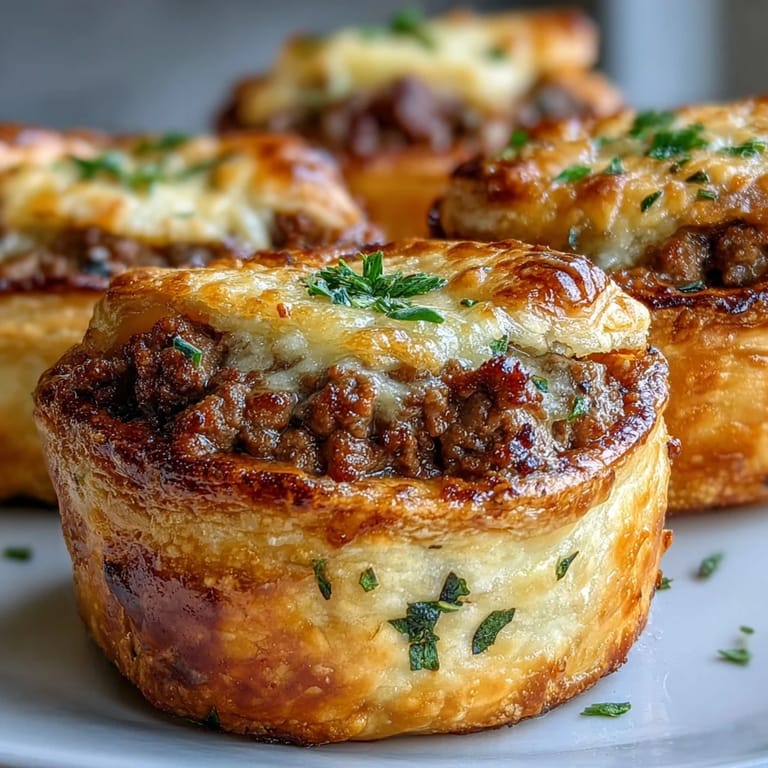
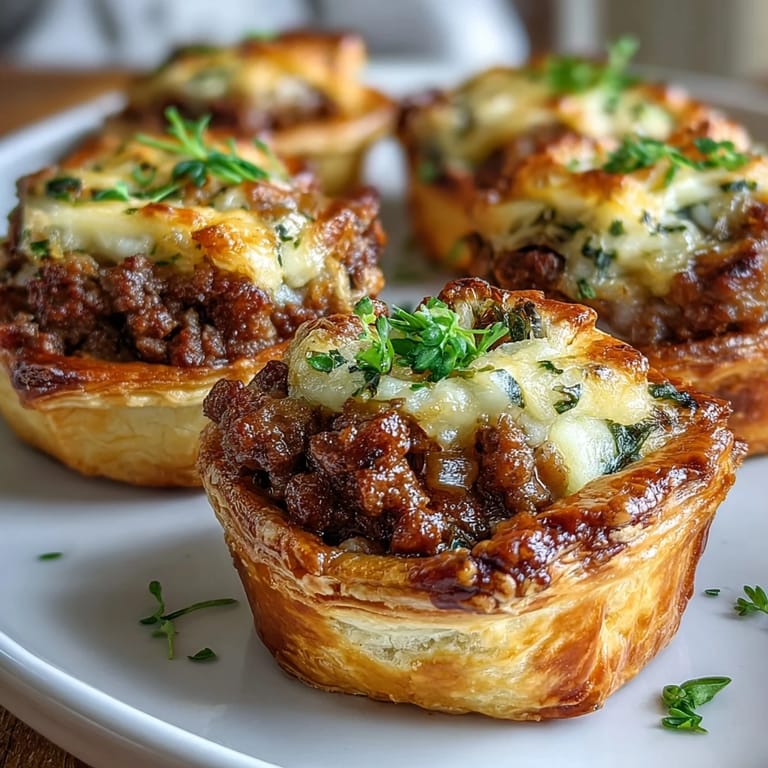
- Slide the sheets into the oven and bake for 18 to 22 minutes, or until the pastries are puffed and deeply golden. Let them cool on the pan for a few minutes before transferring to a platter.
 Save Pin
 One year, I brought a tray of these to a New Year's gathering, and my friend's father, who'd grown up in Montréal, took one bite and went completely quiet. When I asked if something was wrong, he shook his head and said they tasted exactly like the ones his mother used to make for réveillon. He ate three more, slowly, and didn't say much else, but I could see the memory moving across his face. That's when I understood these little pastries weren't just food; they were time machines.
Making the Pastry Ahead
You can make the cream cheese dough up to two days in advance and keep it wrapped tightly in the fridge, which actually makes it even easier to roll because it stays cold longer. If you want to freeze it, wrap each disk in plastic and then foil, and it'll keep for up to a month; just thaw it overnight in the fridge before using. I often make a double batch of dough and freeze half, so I'm always ready to whip up a batch of tourtières or any other small pastries on short notice. The dough also works beautifully for sweet hand pies if you reduce the salt and add a bit of sugar.
Serving Suggestions
These mini tourtières are incredible on their own, but I love serving them with a small bowl of cranberry chutney or grainy Dijon mustard for dipping. The tartness of cranberry cuts through the richness of the pastry, and the mustard adds a sharp, tangy contrast that makes each bite even more interesting. They're perfect for holiday buffets, cocktail parties, or even a cozy Sunday lunch with soup. I've also served them at room temperature for picnics, and they held up beautifully, staying flaky and flavorful even hours after baking.
Storage and Reheating
Leftover tourtières (if you're lucky enough to have any) can be stored in an airtight container in the fridge for up to three days, and they reheat wonderfully in a 180°C (350°F) oven for about 10 minutes until warmed through and crisp again. You can also freeze the baked pastries: let them cool completely, arrange them on a baking sheet to freeze solid, then transfer to a freezer bag for up to two months. When you're ready to serve, bake them straight from frozen at 190°C (375°F) for about 15 minutes, and they'll taste like you just made them.
- If freezing unbaked tourtières, assemble them completely (with egg wash), freeze on a tray, then bag and bake from frozen, adding a few extra minutes to the baking time.
- Always let them cool for at least 5 minutes before serving, or the filling will be molten hot.
- For a crowd, double the recipe and bake in batches; the pastry and filling both scale up easily.
 Save Pin
 Every time I pull a tray of these from the oven, I think about how much joy fits into something so small, and how a simple pastry can carry a whole season's worth of warmth. Make them once, and I promise they'll become part of your own tradition.
Questions & Answers
- → Can I make the pastry dough ahead of time?
Yes, the cream cheese pastry can be prepared up to 2 days in advance and stored in the refrigerator, wrapped tightly in plastic wrap.
- → What spices give tourtières their distinctive flavor?
The combination of allspice, cinnamon, and cloves creates the warm, aromatic profile characteristic of traditional tourtières, complemented by thyme and garlic.
- → Can I freeze these mini tourtières?
Yes, you can freeze them either unbaked or fully baked. Unbaked tourtières can be baked directly from frozen, adding a few extra minutes to the baking time.
- → What can I serve alongside mini tourtières?
Cranberry chutney, Dijon mustard, or fruit preserves complement the savory filling beautifully and add a tangy contrast to the rich pastry.
- → Can I substitute the ground beef with another meat?
Absolutely. Ground pork, turkey, or a combination of beef and pork work well. Adjust cooking time as needed to ensure the meat is fully cooked.
- → Why do I need to cut slits in the pastry tops?
The slits allow steam to escape during baking, preventing the pastries from becoming soggy and helping maintain their flaky texture.