 Save Pin
 There's something about a platter that makes people pause before diving in. I discovered this when a Moroccan friend brought one to a dinner party—not just any platter, but arranged like a tent with vegetables fanning upward and dips glowing at the base. Everyone circled it like it was a centerpiece before someone finally reached out with a carrot stick, and suddenly the whole table came alive. That's when I realized the magic wasn't just the flavors; it was the invitation the shape itself created.
I made this the night before my sister's surprise birthday party, and honestly, I was nervous. I'd never arranged vegetables into something that looked intentional before. But as I started building the tent shape, stacking the cucumber lengthwise and leaning the bell pepper strips against it, something clicked. When she walked into the kitchen and saw it before the party even started, she just stopped and smiled. That's when I knew the presentation was doing half the work.
Ingredients
- Cucumber: Slice it lengthwise so you get long, sturdy pieces that can lean against each other and form the tent's ridge without breaking.
- Red and yellow bell peppers: These are your main structure—they hold their shape beautifully when sliced into strips, and the color contrast keeps the eye moving.
- Carrots: Peel and cut into sticks to match the thickness of the peppers; they're less likely to get lost among the other vegetables if they're substantial.
- Cherry tomatoes: Halving them prevents them from rolling around, and the cut side lets them nestle into gaps like little jewels.
- Red onion: Slice thin so it stays mild and doesn't overpower delicate dips; thinner slices also tuck into the arrangement without taking up much space.
- Radishes: These thin slices add a peppery snap and visual texture—they're the surprise element guests don't expect.
- Pita or msemen: Warming them makes them pliable and easier to cut cleanly into triangles, plus it brings out their subtle toasted flavor.
- Hummus, muhammara, and baba ganoush: Buy quality versions or make your own; store-bought hummus can sometimes taste watery, so taste it first and adjust with lemon or garlic if needed.
- Green and black olives: The contrast between them adds visual depth, and pitting them yourself means you know there are no surprises for guests.
- Fresh cilantro or parsley: Cilantro brings a brighter, more Moroccan note, but parsley is gentler if you have guests who find cilantro soapy.
- Toasted sesame seeds: Toast them yourself in a dry pan for 2–3 minutes; they taste infinitely better than raw and add a nutty finish that ties the flavors together.
- Ground cumin and smoked paprika: These aren't just toppings—they're flavor anchors that make the whole platter taste intentional and cohesive.
Tired of Takeout? 🥡
Get 10 meals you can make faster than delivery arrives. Seriously.
One email. No spam. Unsubscribe anytime.
Instructions
- Build your tent frame:
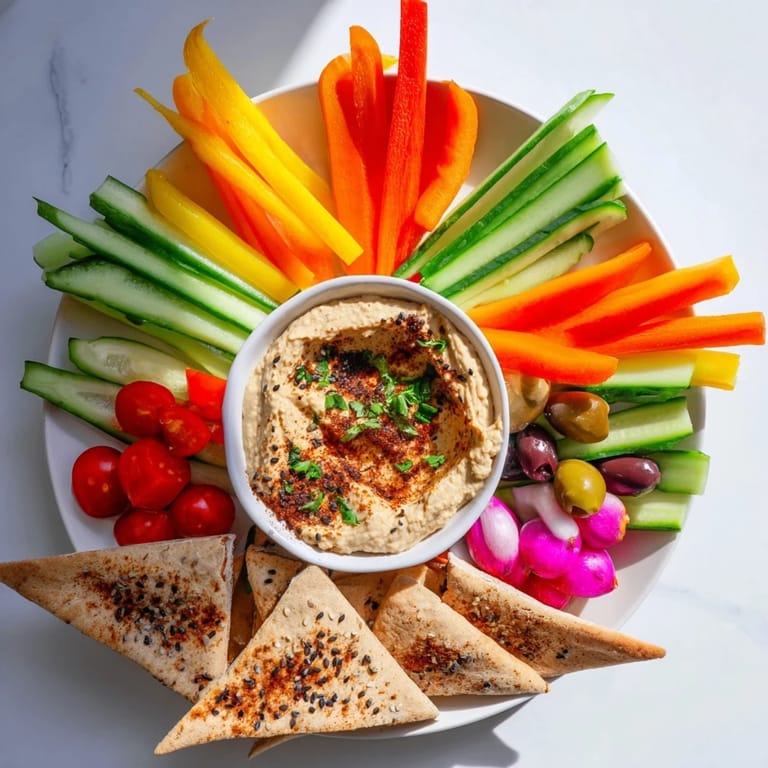
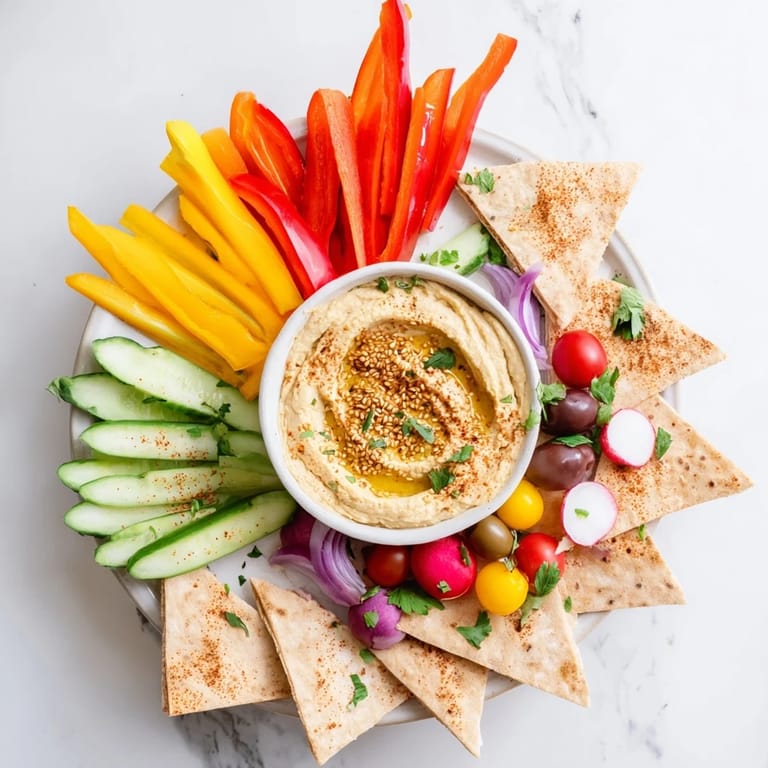
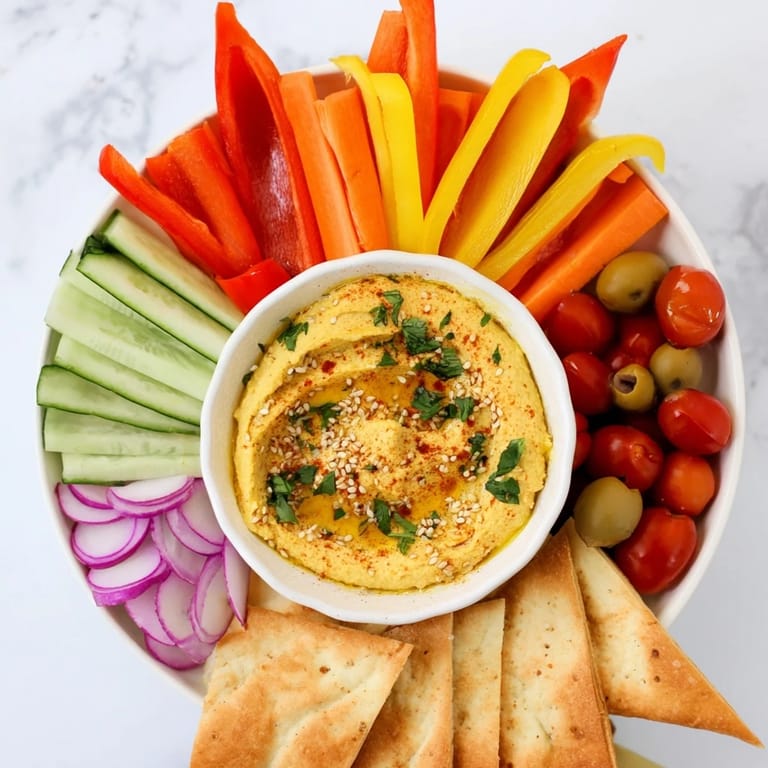
- Arrange your cucumber slice lengthwise down the center of your platter as the ridge. Lean bell pepper strips against it on both sides like rafters, alternating red and yellow to create that visual tent effect. Don't worry about perfection; slight tilts actually look more organic and homemade.
- Fill in the canopy:
- Tuck carrots, radishes, and halved tomatoes into the space between the pepper strips, clustering them by color in a way that creates triangular sections. This natural pointing upward mimics the tent silhouette and guides the eye beautifully.
- Warm your breads:
- Place pita or msemen in a dry skillet over medium heat for about 2 minutes per side, or wrap them in foil and warm in a 350°F oven for 3–4 minutes. They should be warm and pliable, not hot.
- Cut breads into triangles:
- Cut the warmed breads into quarters or triangle shapes; warm bread cuts cleaner and stays softer longer than room-temperature bread.
- Position the dips:
- Spoon hummus, muhammara, and baba ganoush into small bowls and nestle them at the base of your tent, slightly fanned out so each dip is easily reachable. This creates the visual anchor that grounds the whole arrangement.
- Season and garnish:
- Sprinkle cumin and smoked paprika over each dip—just a pinch of each creates visual definition and signals flavor. Scatter sesame seeds across the dips and then add a light shower of fresh cilantro or parsley over the entire platter for a final burst of green.
- Serve immediately:
- This platter is best enjoyed fresh, while the vegetables are crisp and the breads are still warm. Place it at the center of your table and watch people gather.
 Save Pin
 My nephew was maybe four when he first saw this platter, and instead of just eating, he pretended it was a real tent and started whispering secrets into the vegetable canopy before dipping a carrot. That's when I understood: this isn't just food; it's an edible plaything, a reason to linger, and an excuse for the table to slow down together.
The Art of the Arrangement
The tent shape isn't just for show—it's actually practical. By stacking vegetables upward, you're maximizing the space on a platter while making everything visible and accessible. I learned this by accident when I arranged my first one and realized guests could see every option at once, so no one felt like they were reaching past someone else or searching for what to eat. The geometry does the work for you. Start with your sturdy vegetables like cucumber and peppers as your structural pieces, then nestle softer items like tomatoes and radishes into the gaps. Think of it like laying bricks: the strongest pieces create the frame, and the rest fill in naturally.
Building Flavor Layers
Each vegetable on this platter brings a different flavor note, and pairing them with the right dip is half the fun. The creamy earthiness of baba ganoush pairs beautifully with the bright crunch of raw carrots or radishes. Muhammara's smoky sweetness is made for roasted bell peppers—it's like they were meant to meet. And hummus is the neutral player that works with everything, so it becomes the anchor that lets people build their own flavor combinations. The spices sprinkled on top—cumin and paprika—aren't just garnish; they're flavor cues that tell your palate what you're about to taste. I've noticed that people taste more intentionally when there's a hint of spice on the dip, almost like it wakes up their taste buds.
Timing and Freshness Tips
The absolute best moment to serve this platter is within 30 minutes of assembly, while everything is at peak crispness and the dips are cool and creamy. I've made it up to 2 hours ahead for a party and found that if I cover the vegetables loosely with a damp paper towel and keep the dips covered separately, most of the texture holds. The bread, though—always warm it at the last minute. There's nothing worse than stale, chewy pita when you're dipping, and your guests will taste that care immediately.
- If you're preparing this more than 30 minutes ahead, keep vegetables in separate containers with damp paper towels to maintain crispness.
- Bread stays softest if warmed just 5–10 minutes before serving, so time it right before guests arrive.
- Set out the platter slightly off-center on the table so people can move around it naturally and don't feel crowded.
 Save Pin
 This platter taught me that simple food shared beautifully matters more than complicated cooking. It's proof that you don't need fancy techniques or fancy ingredients to create a moment at the table.
Questions & Answers
- → What types of bread work best for this platter?
Pita bread or Moroccan msemen cut into triangles and lightly warmed provide a perfect base for scooping dips and complementing the fresh vegetables.
- → Can I substitute the vegetables in this arrangement?
Yes, snap peas, blanched green beans, or other fresh seasonal vegetables can be used to customize the color and flavor profile.
- → How do the spices enhance the dips?
Sprinkling ground cumin, smoked paprika, and toasted sesame seeds over the dips adds smoky and nutty layers, elevating the taste experience.
- → Is this dish suitable for vegetarians?
Absolutely, the combination of fresh vegetables, spiced dips, and flatbreads fits perfectly within a vegetarian diet.
- → How should I serve the platter for best presentation?
Arrange vegetables in pointed triangular clusters to mimic a tent canopy, fan out warm flatbreads at the base, and place dips centrally with garnishes for a festive look.
- → Can this platter be adapted for a vegan diet?
Yes, by ensuring dips and breads are dairy-free and free from animal products, this platter can easily suit vegan preferences.