 Save Pin
 I'll never forget the first time I saw a properly executed grazing board at a holiday party—it was like walking into a Nutcracker ballet scene right there on the dining table. The colors, the theatrical arrangement, the way guests circled it like it was the main event... I became obsessed. Years later, I realized I could create my own version inspired by the elegant color palette of The Nutcracker Suite, transforming a simple board into a showstopping centerpiece that tells a story through color and flavor.
I made this for my sister's holiday gathering last winter, and watching my 8-year-old nephew carefully arrange the pomegranate seeds into a pattern while my mom sneaked bites of the cranberry goat cheese—that's when I understood this wasn't just food. It became a moment where everyone gathered, mingled, and felt the warmth of the season.
Ingredients
- Brie: The creamy white anchor that everyone gravitates toward—choose a good quality wheel and it practically melts on crackers.
- Aged Cheddar: The golden block that brings sharpness and color; look for something with a bit of character and complexity.
- Blue Cheese: This is your drama—pungent, bold, and beautiful in its blue-veined gorgeousness.
- Gouda: Smoky and slightly sweet, this orange beauty bridges the gap between mild and adventurous.
- Cranberry Goat Cheese: Tart, creamy, and visually stunning in its ruby hues.
- Prosciutto: Slice it thin, drape it loosely, and watch how it catches the light with its rose tones.
- Salami and Soppressata: These cured meats bring depth and that satisfying protein element people need.
- Red and Green Grapes: They're your jewels—choose the plumpest ones you can find, as they carry visual weight.
- Blueberries, Strawberries, and Pomegranate Seeds: Fresh fruit creates natural moisture and brightness; buy them 2-3 days before to ensure peak ripeness.
- Dried Apricots: Chewy, golden, and they provide textural contrast that keeps people coming back.
- Marcona Almonds and Pistachios: Roasted nuts add crunch and anchor the board's sophistication.
- Candied Pecans: Sweet and buttery, these are the edible jewelry of any board.
- Olives: Briny and essential, they provide a savory counterpoint to everything else.
- Crackers and Baguette: Use high-quality versions—they're the foundation, not an afterthought.
- White and Dark Chocolate Bark: Homemade or artisanal, these become the finale people remember.
- Macarons and Petit Fours: Pastry shop finds that elevate the entire presentation to gallery-worthy.
- Fresh Rosemary and Edible Flowers: These garnishes transform a board into a work of art.
Tired of Takeout? 🥡
Get 10 meals you can make faster than delivery arrives. Seriously.
One email. No spam. Unsubscribe anytime.
Instructions
- Build Your Foundation:
- Start with a large wooden board or multiple platters—think theatrical. If you want drama, layer them on cake stands and pedestals of varying heights. It's like setting a stage; the different levels draw the eye upward and make everything feel more generous and impressive.
- Create Your Base Layer:
- Begin at the bottom tier with your neutrals: scattered crackers, fanned baguette slices, and little piles of nuts. This is practical and beautiful—people need vehicles for the good stuff.
- Establish Your Color Blocks:
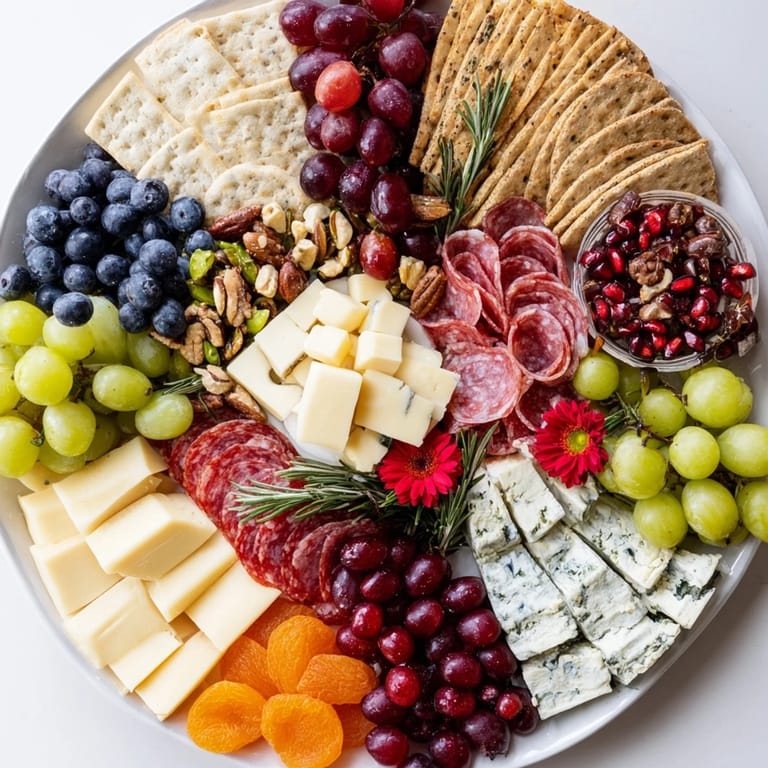
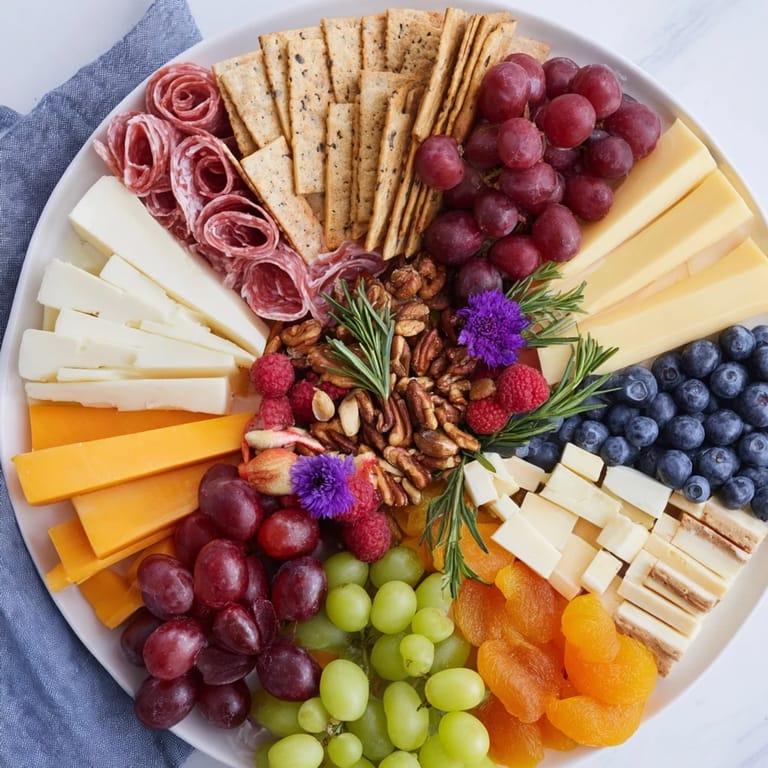
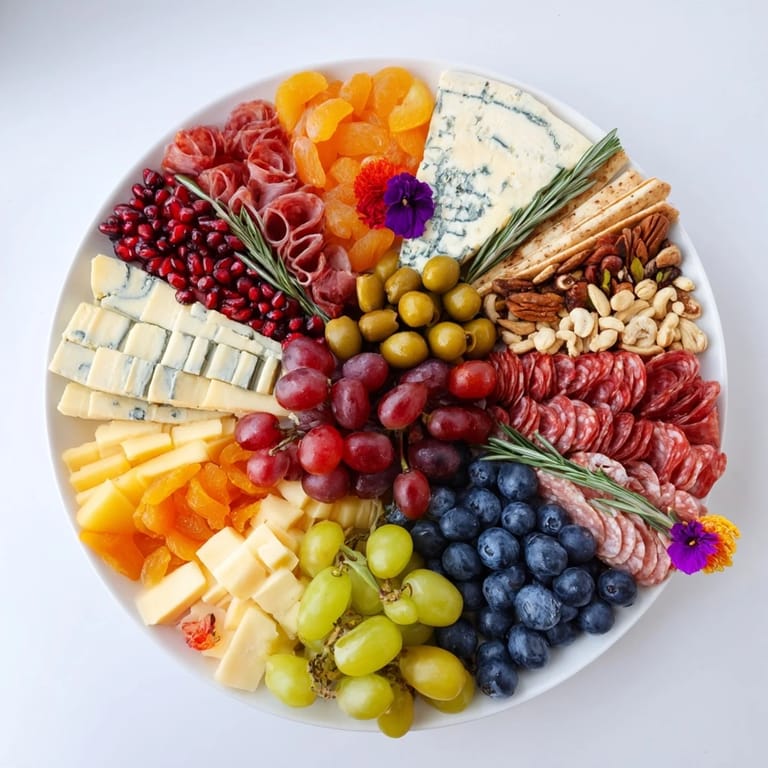
- Now comes the fun part. Visualize your board as five distinct color regions: white (brie and almonds), yellow (cheddar), blue (blue cheese and blueberries), orange (gouda and apricots), and red-pink (goat cheese, prosciutto, strawberries). Keep these blocks clear and intentional; this isn't about chaos, it's about orchestration.
- Position Your Cheeses:
- Cut some cheeses into wedges or cubes to show off their color and texture. Let some pieces stand proud on small risers or bowls; others can recline casually. Arrange them so each cheese has its own spotlight.
- Drape Your Charcuterie:
- Fold and arrange the prosciutto, salami, and soppressata with intention. Think of them as silk ribbons—let them flow between cheese sections, creating movement and elegance.
- Fill with Fruits and Brightness:
- Layer your grapes, berries, and pomegranate seeds within their color zones. Don't scatter randomly; create little clusters that catch light. The grapes can tumble slightly off the edge of the board for that abundant, natural feeling.
- Add Depth with Nuts and Olives:
- Distribute your marcona almonds, pistachios, candied pecans, and olives in small bowls or piles, respecting your color scheme. These elements add sophistication and give people textural choices.
- Crown with Sweets:
- Place your chocolate, macarons, and petit fours in strategic locations—perhaps clustered together for visual impact, or scattered like edible confetti. These are the final flourish, the crescendo of your edible orchestra.
- Garnish for Magic:
- Tuck fresh rosemary sprigs throughout and scatter edible flowers where color feels needed. This is where you stop thinking like a cook and start thinking like a designer.
- Set and Stabilize:
- Double-check that every tier is stable and accessible. The last thing you want is a guest bumping the table and sending cheese cascading. Make sure nothing is precarious.
- Serve with Intention:
- Bring this to the table with pride and confidence. Set out small plates, cheese knives, and appetizer forks. The presentation is part of the experience.
 Save Pin
 What surprised me most about making these boards repeatedly is how they've become less about the food and more about creating a moment. My daughter now asks if we're making 'the beautiful board' when friends are coming over, because she knows it means laughter and lingering around the table rather than formal courses. That's the real magic here.
Choosing Your Cheeses
The secret to a memorable board is understanding that cheeses are personalities. Brie is the gracious host, welcoming and creamy. Blue cheese is the sophisticated guest who tells interesting stories. Gouda is the reliable friend who gets along with everyone. When you choose cheeses with intentionality rather than just grabbing whatever's on sale, you're creating conversations. I always taste each cheese before building the board—sometimes the aged cheddar is more subtle than expected, or the goat cheese is tangier. These discoveries let you adjust your pairings and your color placement for maximum impact. Visit a real cheese counter if you can; the people there are passionate, and they'll help you find exactly what you need.
The Art of the Color Palette
Inspired by Nutcracker costumes and sets, this board succeeds because of color discipline. Every element has a role in the visual story. The white brie and almonds create calm, the golds and oranges bring warmth, the jewel tones (blues, reds, purples from the fruits) add luxury and depth. When you're arranging, step back frequently and look at it from a distance. Does your eye find a natural path around the board? Are there gaps that feel empty or areas that feel cluttered? Rearrange fearlessly. This is edible art, and unlike painting, you can taste it when you're done.
Wine Pairing and Serving Suggestions
A board this beautiful deserves equally thoughtful beverages. Sparkling wine is my go-to because it's festive and its acidity cuts through rich cheeses without overwhelming delicate fruits. A light red wine, if you're in a red wine mood, brings out the earthiness of the nuts and the subtle notes of the aged cheddar. For non-alcoholic options, herbal tea (chamomile or mint) provides an interesting flavor contrast, and it's often what I serve to friends who aren't drinking. The pairing isn't just about taste—it's about maintaining the theatrical, celebratory mood of the whole experience.
- Champagne or prosecco pairs beautifully with brie and the delicate macarons.
- A pinot noir brings out the complexity of blue cheese and aged cheddar without overpowering fruit.
- Herbal tea adds an unexpected elegance and keeps guests refreshed between savory and sweet elements.
 Save Pin
 This board isn't about perfection; it's about creating a moment where people feel celebrated. Every time you make it, you'll find small improvements—a better placement, a discovered cheese, a new fruit combination. That's the joy of it.
Questions & Answers
- → How do I assemble the multi-tiered board?
Use sturdy boards or platters arranged with cake stands or pedestals to create layers. Begin with neutral base blocks, then arrange colorful cheeses, meats, fruits, nuts, and sweets in distinct sections for contrast.
- → Which ingredients create the color blocks?
Cheeses like brie, aged cheddar, gouda, and blue cheese form distinct color sections. Charcuterie, fruits such as grapes and pomegranate, nuts, and sweets add variety and color contrast.
- → How can I adapt the board for vegetarians?
Omit all meats and increase the cheese variety or add marinated vegetables and roasted nuts to maintain flavor and texture balance.
- → What garnishes enhance the presentation?
Fresh rosemary sprigs and edible flowers provide festive color pops and aromatic accents, elevating the visual appeal.
- → What are ideal drink pairings for this board?
Sparkling wine, light red wines, or herbal teas complement the flavors and offer refreshing balance to the assortment.
- → How should I keep the board stable during serving?
Ensure all tiers are well-supported using sturdy cake stands or risers, and arrange heavier items on lower tiers for stability.