 Save Pin
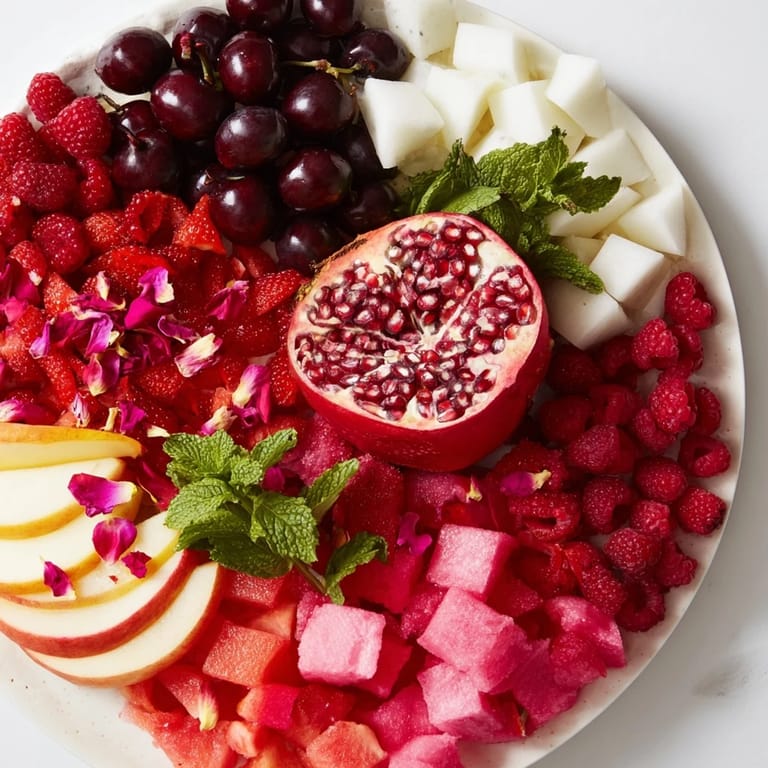
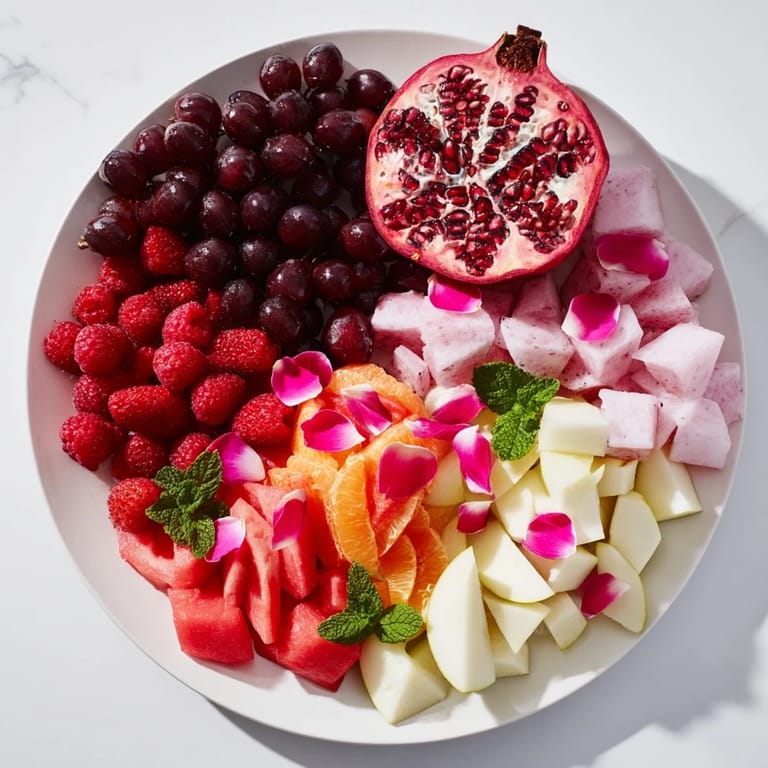
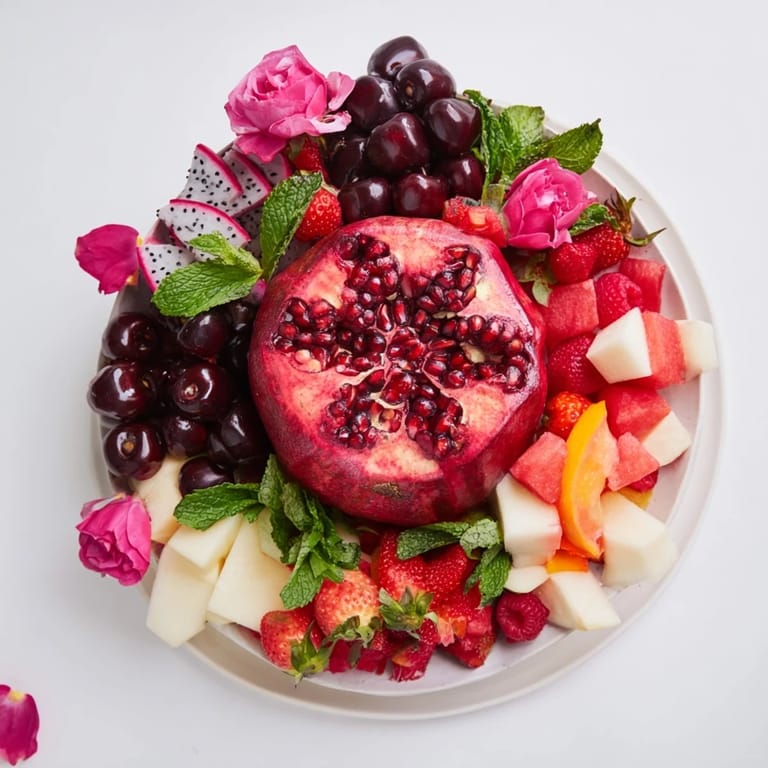
 I discovered the power of color when I was arranging fruit on a platter for a dinner party and realized I'd been thinking about it all wrong. Instead of grouping by type, I decided to create a gradient, moving from the deepest reds through rosy pinks to the palest whites, with a halved pomegranate as the anchor. The moment my guests walked in and saw that intentional color story, something shifted—it wasn't just fruit anymore, it was art you could eat. That's when The Pomegranate Pivot was born, and honestly, it's become my favorite way to make people smile before they even taste anything.
I made this for my sister's birthday last spring, and watching her walk into the kitchen before the party even started—how her eyes went wide at that pomegranate centerpiece—made me realize food doesn't always need to be complicated to be memorable. She took three photos before anyone else arrived, and later told me it was the first thing people asked her about. That's when I knew this platter had something special, something that transcends just being an appetizer.
Ingredients
- 1 large pomegranate, halved: This is your visual anchor, the jewel that everything else orbits around—choose one that feels heavy for its size, which means it's bursting with juice.
- Dark cherries (1 cup, pitted): These deepest rubies start your color story, so pick ones that are almost black if you can find them.
- Red grapes (1 cup): They catch the light beautifully and add a glossy contrast to the matte cherries.
- Strawberries (1 cup, hulled): Slice some lengthwise to show that inner red, which adds depth to this first color layer.
- Raspberries (1 cup): Handle these gently since they bruise easily—they're the bridge between red and pink.
- Watermelon (1 cup, cubed): The palest pink cubes transition your eye toward the lighter shades without any jarring jumps.
- Pink grapefruit segments (1 cup): These segments are almost translucent in places, creating a delicate quality as your platter softens in color.
- Dragon fruit (1 cup, cubed): If you can find it, this pale pink with those tiny black seeds becomes almost ethereal on the outer edge.
- Apple slices (1 cup, pink or blush varieties): Choose varieties like Pink Lady or Gala that have that natural blush—they're essential for that gradient to work.
- Pear slices (1 cup): The palest layer, these almost creamy-white slices should go on the very outside edge.
- Fresh mint leaves and edible rose petals (optional): These add aroma and a final whisper of elegance, but they're truly optional—the fruit does the talking.
Tired of Takeout? 🥡
Get 10 meals you can make faster than delivery arrives. Seriously.
One email. No spam. Unsubscribe anytime.
Instructions
- Set Your Anchor:
- Place that halved pomegranate cut side up in the exact center of your platter—this is where everything else will spiral out from. Make sure it's stable and won't tip, because this centerpiece is non-negotiable.
- Start With Deep Reds:
- Arrange the cherries, red grapes, and some strawberry halves in a loose crescent or ring around the pomegranate, overlapping them slightly so you see the fullness of the fruit. This first ring is your darkest, most dramatic layer.
- Transition to Pink:
- Layer your raspberries, watermelon cubes, and grapefruit segments next, working outward in another ring or band. Let some pieces overlap the red fruits so the gradient feels natural, not like neat concentric circles.
- Soften to Pale:
- Place your dragon fruit, apple slices, and pear slices on the outermost edge, creating that final gentle fade to almost white. Toss the apple and pear in a squeeze of lime juice as you go to prevent them from browning.
- Garnish and Serve:
- If you're using mint and rose petals, scatter them across the platter just before serving—they're like the final brushstrokes on a painting. Serve immediately, or cover loosely with plastic wrap and refrigerate until your guests arrive.
 Save Pin
 I learned something unexpected making this platter: it became a conversation starter in a way homemade desserts never have. People don't just eat it, they pause, they photograph it, they ask how long it took and if they could recreate it at home. That's when it became clear that presentation can be just as important as taste, and sometimes feeding people means feeding their eyes first.
Color Matters More Than You Think
Before I started thinking in terms of color gradients, I'd just toss fruit onto a platter and call it done. But watching this one come together taught me that our eyes eat first. The transition from deep red to pale pink isn't random—it's a visual journey that makes people lean in closer. Spend an extra minute or two really looking at your fruit before you arrange it, and choose placement based on how the colors dance together rather than convenience.
Seasonal Flexibility Is Your Secret Weapon
The genius of this recipe is that it works with whatever's beautiful right now. In summer, I lean heavily on berries and stone fruits. In winter, I might swap in pomegranate seeds, red pears, and perhaps some thinly sliced persimmons. The framework stays the same—from deep to light—but the fruit changes. This means you're never locked into one version, and you can adapt based on what your market has that week.
The Setup and Timing That Works
I used to prepare this platter hours in advance, only to find that some fruits started looking tired by party time. Now I do most of my prep—pitting, hulling, cutting—in advance, but hold off on final assembly until 30 minutes before guests arrive. The whole arrangement takes maybe 10 to 15 minutes, and the fruit stays crisp and glowing instead of sitting around wondering where it went wrong.
- Prep your fruits into small bowls ahead of time, cover them, and refrigerate until you're ready to arrange.
- The pomegranate can be halved a few hours early, but everything else should be cut close to serving time.
- If you need to make it further ahead, a light misting of lime juice and a loose plastic wrap cover will buy you a couple extra hours of freshness.
 Save Pin
 There's something beautiful about a dish that requires no cooking, just intention. This platter sits somewhere between appetizer and art, and that's exactly where I want it to be.